Quick answer
The cost of a roof repair depends on what is actually wrong, what it is made of, how much is damaged, how hard it is to reach and what is found once work starts. So compare written scopes first, then prices. Get more than one estimate, and line them up field by field. We don't have a verified Omaha price data set, so we don't list averages, minimum charges or savings. There is no single age or cost cutoff for repair versus replace.
Scope first, then price
A price only means something when you know what it buys. Two quotes for "fix leak" can be for very different jobs. One might swap a pipe boot. Another might replace flashing, decking and shingles around a chimney.
So before you compare prices, compare the written scope. What did each roofer find? What will they do about it? What is left out? Once the scopes match, the prices are much easier to judge.
What drives the cost
The biggest driver is the actual problem. A loose shingle is a small job. Rotted decking under a valley is a bigger one. The material matters too. Slate, tile and metal often need special skills and parts.
How much is damaged matters. So does how hard the spot is to reach. A steep, high or tight roof needs more safety gear and time. What is found once work starts can change the job, too.
A real diagnosis comes first
A leak inside doesn't always sit right under the hole. Water can travel along boards and pipes before it drips. Guessing wastes money.
Ask how the roofer found the source. Did they look in the attic? Did they look at flashing, vents and valleys? Did they take photos? A clear diagnosis is the base of a fair estimate. Some roofers charge for this step and some don't. Ask.
| Field | Estimate A should say | Why differences matter |
|---|---|---|
| Problem found | The defect and where it is | Two bids may be fixing different problems |
| Materials | Product names and amounts | A cheaper part may not match your roof |
| Extent | How much area or how many parts | One bid may cover more of the roof |
| Access and safety | Ladders, lifts, steep or high areas | Safe access costs time and gear |
| Hidden damage | How rot or wet layers will be handled | Shows how surprises get priced |
| Temporary vs lasting fix | Which work is short-term | A tarp is not a repair |
| Cleanup and disposal | What is hauled away | Leftover debris can cost you later |
| Inside work | Drywall, paint or insulation, if any | Often left out of roof bids |
| Permits | Who checks and pulls any needed permit | Avoid surprises with the city |
| Changes | How extra work is approved and priced | Protects you from open-ended bills |
Temporary versus lasting work
After a storm, you may need a quick fix to stop water, like a tarp. That is a temporary step. It is not the repair.
An estimate should say which work is short-term and which is meant to last. Ask what the temporary step costs and whether it is credited against the full repair. Don't let a tarp sit for months without a plan.
Cleanup, disposal and inside work
Old shingles, nails and flashing have to go somewhere. Ask if hauling away and a magnet sweep for nails are included.
Roof bids often leave out inside work. If a leak damaged drywall, paint or insulation, that may be a separate job with a separate trade. Ask who handles it and get a separate price if needed.
Permits
Some repairs may need a permit and some may not. It depends on the work and the local rules at the time.
Ask the bidder who checks whether a permit is needed and who pulls it. If one is needed, ask if the fee is in the price. We don't state local permit rules here. The local building office has the current answer.
Why get more than one estimate
The FTC's advice on home improvement scams suggests getting more than one written estimate. It also warns against pressure to decide fast and against paying everything up front.
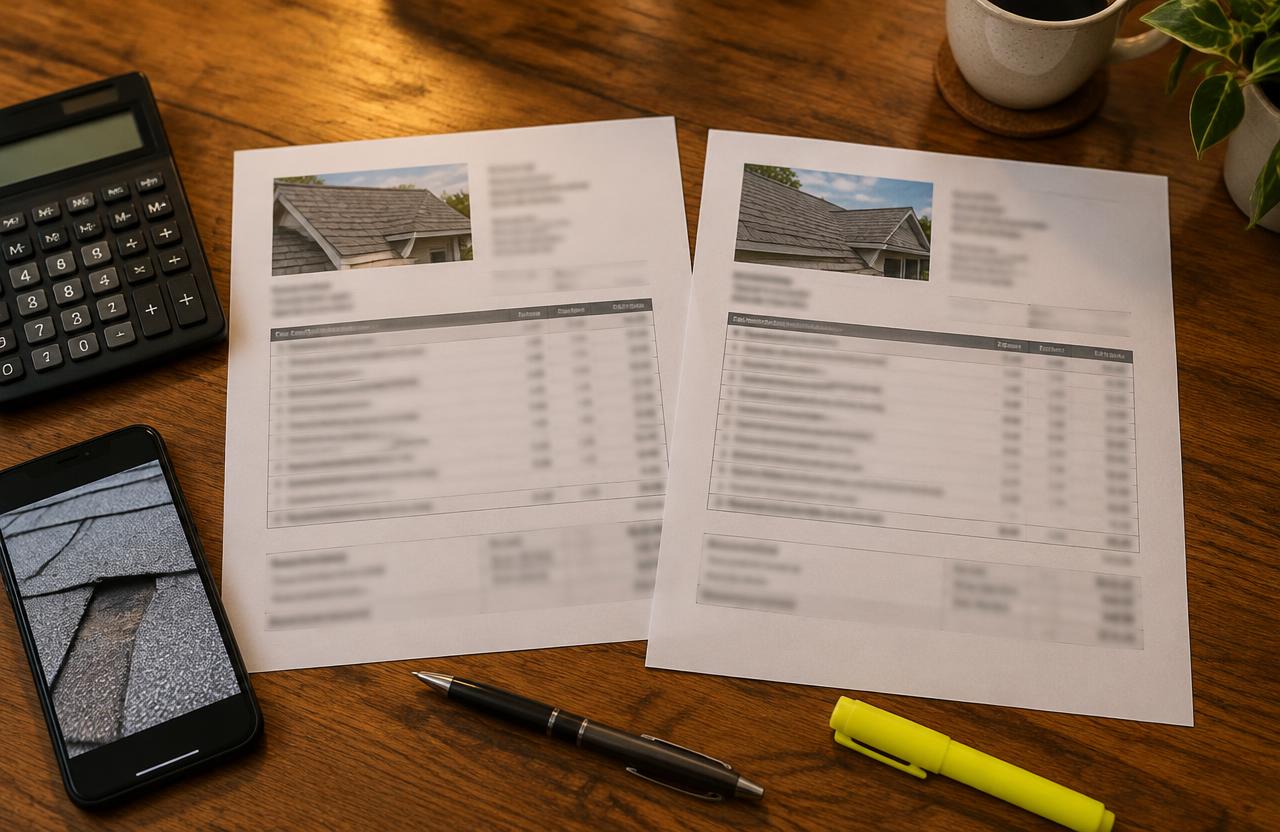
More than one estimate shows you how roofers see the problem. If two agree on the cause and one doesn't, ask why. Use the table on this page to compare them line by line.
Why bids differ
A higher bid is not always a rip-off. It may cover more area, better parts, safer access or hidden damage. A lower bid is not always a deal. It may leave out cleanup, permits or inside work.
Sometimes the price really is just higher. The fields help you tell the difference. Ask each bidder to explain the gaps.
Repair or replace: no single cutoff
You may hear rules like "replace if the roof is over 20 years old" or "replace if the repair is more than a set share of the cost." These are rules of thumb, not facts.
GAF's homeowner guide on repairs lists signs that point toward a bigger job, like widespread wear or many leaks. Look at the whole roof. How many problems are there? How many repairs has it had? What does a qualified roofer find? Our repair-or-replace guide walks through the choice.
Insurance questions
If storm damage caused the problem, your policy may play a part. But coverage depends on the policy, the cause and the insurer's review.
We can't promise a claim result. Read your policy, take photos from safe ground and talk to your agent. Be wary of anyone who says they can get you a free roof or will cover your deductible.
Staying safe while you wait
Don't climb on the roof to look. Falls are a serious risk. Look from the ground or through a window.
Inside, keep people away from sagging or wet ceilings and from wet electrical gear. Put out buckets and move valuables. If a ceiling looks like it may fall, leave the area and call for help.
What a clear estimate looks like
A clear estimate names the problem and its location. It lists the work and the parts. It says how much area is covered. It says what is not included.
It also explains how hidden damage will be handled and how changes get approved. It names the warranty on the work, if any. It has the company's name and contact details. If an estimate is a single line with a price, ask for more detail.
Common small repairs and what changes them
Some repairs come up often. A cracked pipe boot. A few missing shingles. Loose flashing at a wall. A small leak at a chimney.
Even these vary in cost. A pipe boot on a low, easy roof is a different job from one on a steep, high roof. Missing shingles in an old color may be hard to match. Chimney flashing may need masonry work too. That is why we don't list fixed prices.
Payment terms
The FTC suggests not paying the full price up front. Ask about the payment schedule. When is a deposit due? When is the rest due?
Get the payment terms in writing. Pay by a method that leaves a record. Don't pay cash to someone who shows up at your door after a storm and pressures you to decide now.
Warranty on the repair
Ask what warranty, if any, comes with the repair work. How long does it last? What does it cover? What would void it?
A repair warranty usually covers the work done, not the rest of the roof. If a different spot leaks later, that is a new problem. Keep the repair invoice and warranty with your roof papers.
Red flags in an estimate
Watch for estimates with no detail, no company address or no written terms. Be careful with pressure to sign the same day. Be careful with claims that you must replace the whole roof without clear photos and reasons.
Also be careful with prices that seem far lower than others. Ask what is left out. A low price that skips flashing, cleanup or hidden damage can cost more later.
Photos make estimates easier to trust
Ask each roofer for photos of the problem they found. Good photos show the damaged spot up close and a wider view of where it sits on the roof.
Photos help you compare what each roofer saw. They also help you understand the problem without climbing up yourself. After the repair, ask for photos of the finished work. Keep them with your roof papers.
Why timing can change the price
Prices can shift with the season and with demand. After a big storm, many people need roofers at once. Material costs can change too.
That doesn't mean you should rush. It means an estimate is good for a limited time. Ask how long the price holds. If the job is delayed, ask what could change.
How we serve homeowners comparing repairs
We are serving homeowners across the Omaha area who need a roof repair. Use the form on this page to ask for a roof check and a written estimate. Share photos taken safely from the ground if you have them.
We will write out the problem we find, the work we suggest and what is left out, so you can compare it fairly with other bids.
Common questions
What does a roof repair cost in Omaha?
We can't honestly give a number. We don't have a verified local price data set, and repairs vary a lot by problem, roof and access. The best way to learn your cost is to get written estimates based on a real check.
Is there a minimum charge for small repairs?
Some roofers have one and some don't. It is their own policy. Ask each bidder and get it in writing.
Will insurance pay for my repair?
That depends on your policy, the cause of the damage and the insurer's review. We can't promise a result. Read your policy and talk to your agent or insurer.
When is a repair not worth it?
There is no single age or cost rule. Look at the roof's overall condition, how widespread the damage is, how many repairs it has had and what a qualified roofer finds. Our repair-or-replace guide walks through it.
Why is one estimate so much higher?
Line them up field by field. Often the higher one covers more area, better parts, safer access, hidden damage or cleanup that the lower one leaves out. Sometimes it is just priced higher. The fields help you tell which.
Related help
Sources we checked
Official and standards pages we used to check facts on this page. Rules can change, so confirm with the source.