Quick answer
A roof replacement takes the old roof off and puts a whole new one on. It makes sense when wear is all over, not in one spot. The best bids spell out tear-off, wood, the layers under the shingles, attic air flow, product names, cleanup and warranties.
The short answer
A roof replacement means the old roof comes off and a new one goes on. It is a big job, and it costs much more than a repair. So it is worth taking your time to compare bids.
The best bids are clear. They say how many layers come off, what happens to bad wood, what new parts go on, and how the yard gets cleaned. This page walks you through each part in plain words.
We connect you with a local roofer who serves your area, and this page helps you read their bid.
Signs it may be time for a new roof
No one sign settles it. But when you see several of these, a full check is a good idea.
- Shingles curl at the edges or cup in the middle
- Many shingles are cracked or bald (the grit is gone)
- Leaks show up in more than one room
- The roof line sags in spots
- You see daylight through the roof boards in the attic
- The roof has been patched many times
- Neighbors with homes built at the same time are getting new roofs
Repair or replace: a simple way to think about it
Think of it like a pair of old shoes. One loose lace is a quick fix. But when the soles are worn through all over, new shoes make more sense.
Ask the roofer for photos of every side of the roof. If the wear is everywhere, a new roof may save money over many small patches. If the wear is in one spot, ask about a repair first.
You can read more on our repair or replace guide. It has a side-by-side table.
| Line item | What a clear bid says | What a vague bid says |
|---|---|---|
| Tear-off | Number of layers removed | "Remove old roof" |
| Wood deck | Sheets included and price per extra sheet | Nothing, or "as needed" |
| Underlayment and ice shield | Product and where it goes | "Underlayment" |
| Flashing and drip edge | New or reused, and where | Not listed |
| Attic air flow | Vents added or changed | Not listed |
| Shingles | Brand, product line and color | "Shingles" |
| Warranty | Maker and roofer terms in writing | "Lifetime" with no details |
Step one: tear-off
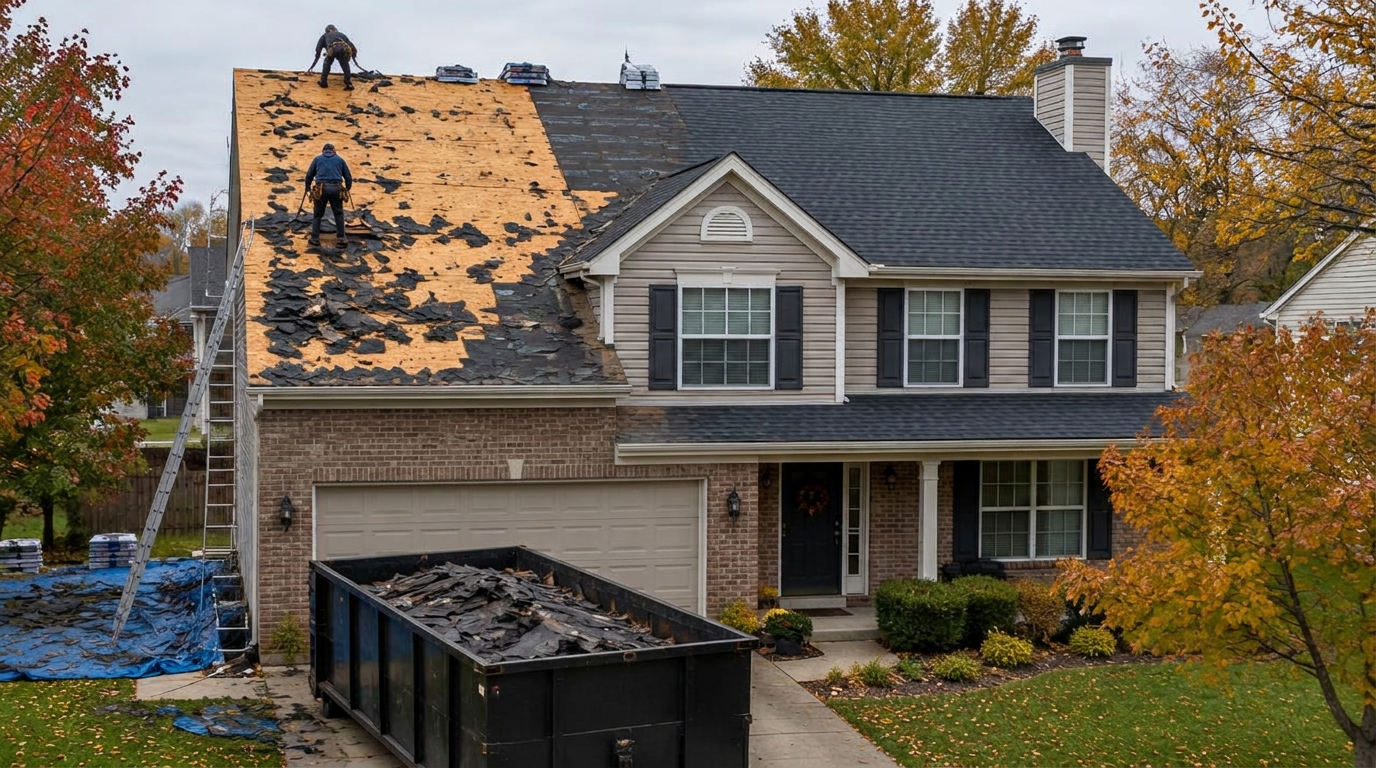
Tear-off means the crew scrapes the old shingles off down to the wood. Most good jobs do a full tear-off. It lets the roofer see the wood and fix it.
Some homes have two layers of old shingles. Each layer adds work and trash. Ask how many layers your roof has and if the price includes all of them.
Some roofers offer to put new shingles over old ones. This is called a layover. It can cost less now, but it hides problems and adds weight. Many codes limit how many layers a roof can have. Ask your roofer what is allowed where you live.
Step two: the wood deck
The deck is the flat wood under the shingles. Once the old roof is off, the crew can see if any of it is soft or rotten.
No one can know how much bad wood there is until the shingles are off. So good bids list a price for each sheet of wood that needs to be replaced. This is often called a decking allowance.
Ask: how many sheets are included? What is the price for each extra sheet? Will you show me photos before you replace it? Clear answers here stop surprise bills later.
Step three: the layers under the shingles
A roof is more than shingles. These layers keep water out when the shingles cannot.
- Underlayment: a sheet laid over the wood before the shingles. It is a second shield against water.
- Ice and water shield: a sticky sheet used at the edges and valleys. It helps stop water from ice dams, which can form in cold winters.
- Drip edge: a metal strip at the roof edge. It sends water into the gutter, not behind it.
- Flashing: metal around chimneys, walls and skylights. Ask if old flashing will be replaced or reused.
- Starter strip and ridge caps: special shingles for the edges and the top of the roof.
Step four: air flow in the attic
Many homes have a vented attic. In a vented attic, air should come in low, near the edges, and go out high, near the top. This is called ventilation. Some homes are built with a sealed attic on purpose. Those do not use roof vents, so more vents are not always right.
In a vented attic, good air flow keeps the attic cooler in summer. In winter it helps stop ice dams and wet wood. Many shingle makers also ask for good air flow to keep their warranty valid.
Ask the roofer what kind of attic you have and how they checked it. If they plan to add or change vents, ask why that fits your home.
Step five: the new shingles or metal
Asphalt shingles are the most common roof on homes in the U.S. Some people choose metal. Each has trade-offs in cost, look and how long it lasts.
Thicker shingles with stronger hail ratings cost more. Some insurers may give a discount for them. Ask your insurance agent if that applies to you.
Ask each roofer to write down the exact product line and color. Then you can compare bids fairly. Two bids that both say just shingles may not be the same at all.
Step six: cleanup
A tear-off makes a big mess. Old nails can end up in the grass and driveway. A good crew lays tarps, uses a dumpster, and runs a magnet over the yard to pick up nails.
Ask: where will the dumpster go? Will you protect my plants and siding? Will you sweep for nails at the end of each day? Who do I call if I find a nail later?
What changes the cost
We do not list prices. Real prices depend on your roof. Ask each roofer to show these items in their bid.
- Roof size (roofers measure in squares; one square is 100 square feet)
- How steep the roof is
- How many old layers must come off
- How much wood must be replaced
- Number of chimneys, skylights and vents
- The shingle or metal product you choose
- New gutters, if you add them
- Permit and dump fees
Warranties: two kinds
There are two kinds of roof warranty. Know both before you sign.
The maker warranty comes from the company that made the shingles. It covers defects in the product. Some longer maker warranties need the roofer to use certain parts or be trained by the maker.
The workmanship warranty comes from the roofer. It covers mistakes in how the roof was put on. These vary a lot. Get the length and what it covers in writing.
Ask: who do I call if there is a leak in year two? What would void the warranty? Can it move to a new owner if I sell the house?
Insurance and storm claims
If hail or wind damaged your roof, your insurance may help pay. Each policy is different. Some pay the full cost. Some pay less for older roofs.
Call your agent or read your policy first. Take photos and write down the storm date. Only your insurance company decides what is paid. No roofer can promise a claim will be approved.
How long the job takes
Job length depends on size, slope, layers and weather. Ask each roofer how many work days they plan once work starts. Rain and wind can pause the work.
Waiting for a start date can take longer, especially after a big storm when many homes need roofs. Ask for a planned start window in writing.
Shingles or metal: a quick look
Asphalt shingles cost less up front. They come in many colors. Most roofers put them on, so it is easy to get several bids.
Metal costs more up front. It is light and can last a long time when it is put on well. It can be noisy in rain if the attic has little insulation. Fewer roofers do metal, so ask about their past metal jobs.
Either can be a good roof. The crew and the parts under the roof matter as much as what you see on top. Read our metal vs. shingles guide for more.
How to compare three bids
Try to get at least two or three bids. Give each roofer the same facts about your house. Ask each one the same questions.
Then make a simple chart. Put each roofer in a column. Put each line item in a row: layers, wood, underlayment, flashing, vents, shingles, cleanup and warranty. Empty boxes show you what a bid left out.
The lowest total is not always the best deal. A bid that leaves out wood or flashing may cost more in the end. A bid that is much higher should explain what extra you get.
Getting your home ready
A few simple steps make the job go smoothly and protect your things.
- Move cars out of the driveway so the dumpster and trucks can get in.
- Take pictures and mirrors off walls on the top floor. Hammering can shake them loose.
- Things stored in the attic can get dusty. If you want them covered, ask the crew to do it, or only go up if there is a safe floor and good light. Do not step between the boards.
- Move patio chairs, grills and pots away from the house.
- Keep kids and pets inside or away from the work area.
- Tell your neighbors. There will be noise and trucks for a while.
After the new roof is on
Walk the yard with the crew lead before they leave. Look for nails, shingle bits and any damage to plants, gutters or siding.
Ask for the final paperwork. This should include the receipt, the warranty papers from the roofer and the maker, and photos of the job. Keep them together in a safe place.
Check the attic and ceilings after the first heavy rain. If you see a new stain, call the roofer right away. Small problems on a new roof are easier to fix early.
Questions to ask before you sign
Ask every roofer the same list. Then line up the answers.
- How many layers will you tear off, and is that in the price?
- How many sheets of wood are included? What does each extra one cost?
- Which underlayment and ice shield will you use, and where?
- Will you replace the flashing and drip edge?
- What will you do about attic air flow?
- What exact shingle line and color is this bid for?
- Who pulls the permit?
- What warranties come from you, and from the maker?
- How will you protect my yard and clean up nails?
- When do you need payment, and how much up front?
Red flags
Most roofers do honest work. Still, watch for these.
- A bid with no product names, just the word shingles
- No plan for bad wood
- Pressure to sign today
- Asking for full payment before work starts
- Promises that insurance will pay for everything
How our request form works
We serve homes and businesses across the Omaha area. This website is a preview right now. The online form checks your answers, but it does not save or send them yet, so no roofer gets your request from it.
When online requests are turned on, this note will change. Until then, the form is a way to see what we will ask: your town or ZIP, what you see and what kind of help you need. We do not sell your details.
Common questions
Do I need to be home during the job?
Not always. Many people stay home so they can answer questions. Ask the roofer how they will reach you if they find bad wood or a surprise.
Can new shingles go over my old ones?
Sometimes, but it hides problems in the wood and adds weight. Codes limit layers. Most roofers suggest a full tear-off. Ask what is allowed where you live.
Will a new roof lower my energy bills?
We cannot promise that. Attic air flow and insulation matter more than the shingles. Ask the roofer what they found in your attic and what would help.
What if they find rotten wood?
A good bid lists a price per sheet of new wood. The roofer should show you photos before they replace it. That way there are no surprise bills.
How do I get started?
Use the short form on this page. We connect you with a local roofer who serves your area. They contact you to set up a visit. A request is not a booked visit.
Related help
Sources we checked
Official and standards pages we used to check facts on this page. Rules can change, so confirm with the source.