Quick answer
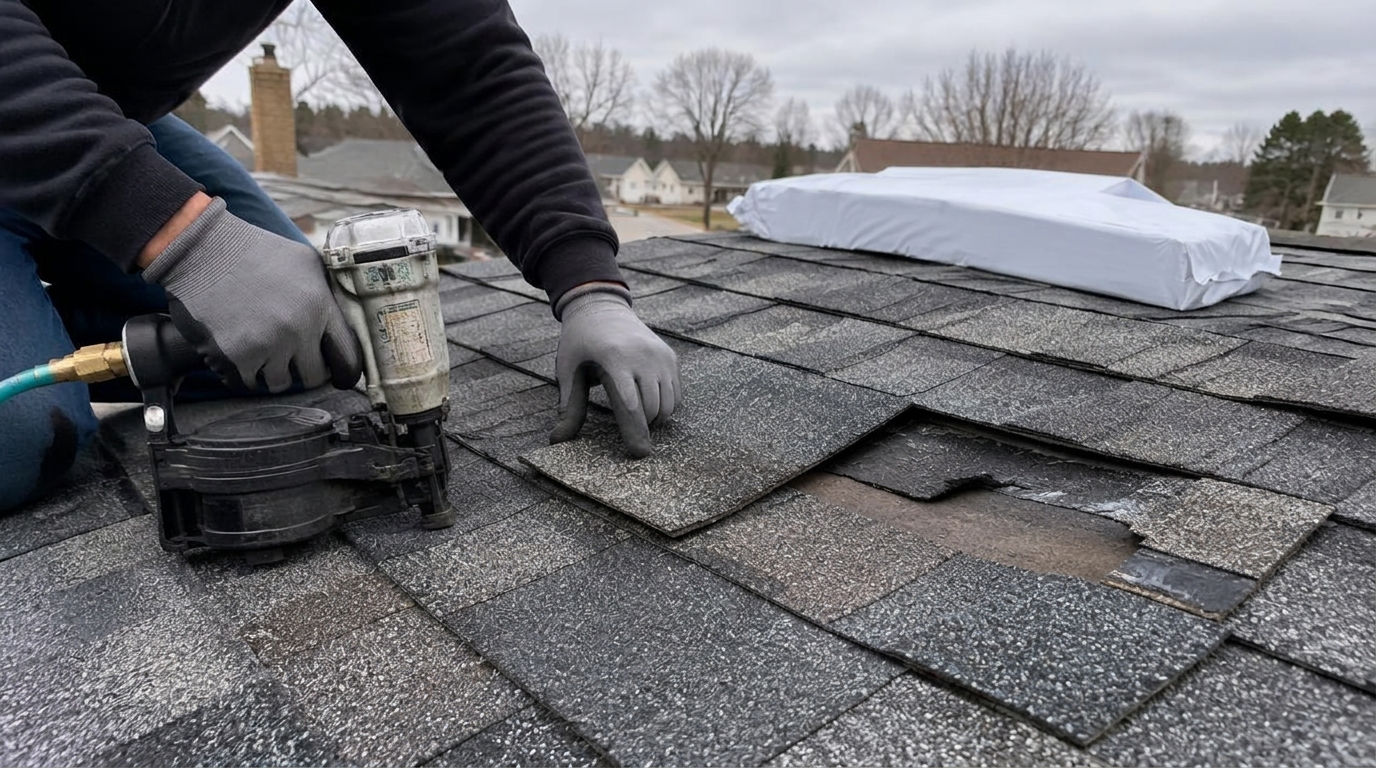
A roof repair fixes one bad spot, like a cracked pipe boot or a few lost shingles. It is the right choice when the rest of the roof is still in good shape. Get photos of the whole roof, a written list of the work, and a clear warranty before you say yes.
The short answer
Most roof leaks start small. A few bad shingles or one loose piece of metal can let water in. A good repair fixes that spot and leaves the rest of the roof alone.
But a patch is not always the right call. Sometimes the whole roof is worn out. Then a patch just buys a little time. This page helps you tell the two apart. It also shows you what to ask a roofer before you say yes.
We connect you with a local roofer who serves your area. This page helps you know what to look for first.
Stay safe first
Please do not climb on your roof. Roofs are steep. Shingles can be slick from rain, frost or dust. Falls from roofs hurt many people each year.
You can learn a lot from the ground. Walk around the house and look up. A phone camera with zoom helps. Inside, look at ceilings and the tops of walls.
If your attic has a hatch, you can shine a flashlight in from the ladder. Do not crawl in. Attic floors are often just thin ceiling board. A foot can go right through. Leave the attic walk to a roofer.
If water is near a light, an outlet or wires, stay back. Do not touch the wet spot. Only flip a breaker if the panel is dry and you can reach it while standing on a dry floor. If not, call an electrician or the power company. Water and power do not mix.
What a roof repair usually covers
A repair fixes one part of the roof. Here are the most common jobs. Each one has a short meaning next to it.
- Shingle swap: the roofer takes out a few broken or missing shingles and puts in new ones.
- Flashing fix: flashing is thin metal that seals the gaps around chimneys, walls and vents. When it gets loose, water slips in.
- Pipe boot: this is the rubber collar around a plumbing pipe on your roof. Sun makes the rubber crack. A new boot is a small, common fix.
- Vent repair: roof vents let hot, wet air out of the attic. A cracked vent cover can leak.
- Valley repair: a valley is where two roof slopes meet. Lots of water runs there, so wear shows up first.
- Small deck patch: the deck is the wood under the shingles. A small soft spot can sometimes be cut out and replaced.
| What you see | Often points to | Ask the roofer |
|---|---|---|
| One stain under one roof spot | A small repair, like a pipe boot or flashing | Can you show me the exact source? |
| A few shingles gone after wind | A shingle swap | Can you find a close color match? |
| Stains in many rooms | Wear in many places | Is a patch worth it, or is the roof worn out? |
| Curled or bald shingles all over | An old roof near the end | Please show me photos of every side. |
| Soft spots when the roofer walks | Wet or rotten wood | How much wood is bad, and what does each sheet cost? |
Signs you may need a repair
Look for these from your yard or from inside. One mild sign may not mean a leak. But a drip, a sagging ceiling or missing roofing needs help right away.
- A brown or yellow stain on a ceiling or upper wall
- Paint that bubbles or peels near the ceiling
- A few shingles missing after a windy day
- Shingle pieces or bits of metal in the yard
- Lots of small grit in the gutters (this grit is the top coat of the shingle)
- A drip sound in the attic when it rains
- Damp or dark spots on the attic wood
- Light coming through the roof boards in the attic
When a repair makes sense
A repair is often the smart choice when the problem is in one place. It also makes sense when the rest of the roof still looks healthy.
Here is a simple test. Ask the roofer to show you photos of the whole roof, not just the bad spot. If most shingles lie flat, still have their grit, and are not cracked, a repair may be all you need.
A repair also makes sense when the roof is fairly young. Shingles that are only a few years old should not need to come off because of one storm or one bad pipe boot.
When a repair is not enough
Sometimes a roofer will tell you a patch will not hold. That can be true. Here are honest reasons a repair may not be the best use of your money.
- Shingles all over the roof are curled, cracked or bald (lost most of their grit).
- There are leaks in many places, not just one.
- The wood deck is soft in large areas.
- Patches have been done again and again in the same spot.
- New shingles will not match. A color gap alone does not prove you need a new roof, but it is fair to weigh it with the roofer.
- The roof has two layers of shingles. That alone does not prove it is worn out, but it can make fixes harder.
Why a small leak should not wait
Water does not stay put. It runs along wood and soaks into insulation. Wet insulation does not keep your home warm. Wet wood can grow mold and rot.
A leak you can see on the ceiling may have started weeks ago. The sooner a roofer finds the source, the smaller the job usually is.
We cannot tell you a price. But we can tell you this: fixing one pipe boot is a much smaller job than fixing a rotten deck, wet insulation and a stained ceiling.
Omaha weather and your roof
The Omaha area has hot summers and cold winters. Spring and summer storms can bring hail and strong wind. Each of these can hurt a roof in a different way.
Hail can knock the grit off shingles or crack them. Wind can lift the edge of a shingle and break its seal. Then the next storm can pull it off.
In winter, snow can melt and freeze again at the roof edge. That makes a ridge of ice called an ice dam. Water backs up behind it and can sneak under shingles. For a vented attic, good air flow and insulation help stop ice dams.
Because of this weather, it is smart to have your roof looked at after a big storm, even if you do not see a leak yet.
What a good roofer does on the first visit
A good first visit is calm and clear. You should not feel rushed. Here is what to expect.
- They look at the whole roof, not just one spot.
- They check the attic if they can reach it safely.
- They take photos and show them to you.
- They tell you what they think caused the problem.
- They explain if it is a repair or a bigger job, and why.
- They give you a written list of the work before they start.
What changes the cost of a repair
We do not list prices on this site. Prices change by roof, by season and by roofer. Instead, here is what makes a repair bigger or smaller. Ask each roofer to point to these in their bid.
- How steep and how high the roof is (steep roofs need more safety gear)
- How easy it is to reach the bad spot
- What the roof is made of
- If the wood under the shingles is wet or soft
- If shingles that match can still be found
- If flashing or vents need new parts
- If a permit is needed in your city
Insurance and storm damage
If a storm caused the damage, your home insurance may help. Every policy is different. Read yours, or call your agent to ask what it covers.
Take clear photos of damage from the ground and inside. Write down the date of the storm. Keep any receipts for tarps or emergency work.
Be careful with anyone who says they can promise your claim will be paid. No roofer can promise that. Only your insurance company decides.
Common leak spots, one by one
Roofers find most leaks in the same few places. Knowing them helps you follow along when a roofer explains what they found.
- Pipe boots: the rubber collar dries out and cracks. Water runs down the pipe into the attic. The stain often shows up near a bathroom or kitchen.
- Chimney flashing: the metal around the chimney can pull away from the brick. Water runs behind it. Look for stains on the ceiling or wall near the chimney.
- Skylights: the seal around the glass or the frame can fail. Drips often start at a corner of the skylight.
- Valleys: so much water runs here that shingles wear faster. Leaves can also pile up and hold water.
- Roof edges: if the drip edge is missing or gutters overflow, water can creep under the first row of shingles.
- Nail pops: a nail can work its way up and push through the shingle above it. That tiny hole can let water in.
How to read a repair bid
A good repair bid is short and clear. It names the problem, the fix and the price.
Look for the exact spot, the parts they will use, and what happens if they find wet wood.
If two bids are very far apart, ask each roofer why. One may be fixing more than the other. Line them up item by item, not just by the total.
After the repair
Ask for before and after photos. Keep them with your receipt.
After the next rain, check the old stain. If it grows or feels damp, call the roofer back. Most good roofers want to know if the fix did not hold.
Once the spot is fully dry, you can paint over the stain.
Questions to ask before you hire
Ask each roofer the same list so you can compare.
- Can you show me photos of each problem you found?
- Is this a repair, or does the roof need more?
- What exactly will you fix, and what will you leave alone?
- Will you check the wood under the shingles?
- What happens if you find more damage once you start?
- Who pulls the permit, if one is needed?
- What warranty do you give on your work, and is it in writing?
- Do you carry the license and insurance my city needs?
Red flags to watch for
A few warning signs are worth knowing.
- They want full payment before any work starts.
- They will not put the job in writing.
- They push you to sign the same day.
- They knock on doors right after a storm and say your roof must be replaced, without showing proof.
- They say they can get your insurance to pay for anything.
Quick fixes you can do while you wait
You can lower the harm from a leak while you wait for a roofer. Put a bucket under the drip. Move furniture and rugs away. Use towels to catch water.
If a ceiling spot is bulging with water, keep people away from it. A roofer or handyman can help drain it safely.
Do not go on the roof to put up a tarp yourself. Ask a roofer to do it. A tarp is a short-term cover. It keeps rain out until the real repair. Ask when they can come, and get the answer in writing.
How our request form works
We serve homes and businesses across the Omaha area. This website is a preview right now. The online form checks your answers, but it does not save or send them yet, so no roofer gets your request from it.
When online requests are turned on, this note will change. Until then, the form is a way to see what we will ask: your town or ZIP, what you see and what kind of help you need. We do not sell your details.
Common questions
Can a roofer fix just one spot?
Yes. Most leaks come from one part, like a pipe boot, flashing or a few shingles. A good roofer fixes that part and leaves the rest alone. They should still look at the whole roof so you know its shape.
Will new shingles match my old ones?
Not always. Old shingles fade in the sun. Some colors and styles are no longer made. Ask the roofer to bring a sample and hold it next to your roof before the job.
Can a roof be fixed in winter?
Often, yes. Cold makes shingles stiff, so roofers take more care. Some sealants need warm days to stick well. Ask what they will do now and what they may come back to finish.
Does a repair come with a warranty?
Many roofers give a short warranty on their own repair work. It varies a lot. Ask how long it lasts and what it covers, and get it in writing.
Do you send someone to my house?
We connect you with a local roofer who serves your area. That roofer sets up the visit with you. A request is not a booked visit.
Related help
Sources we checked
Official and standards pages we used to check facts on this page. Rules can change, so confirm with the source.