Quick answer
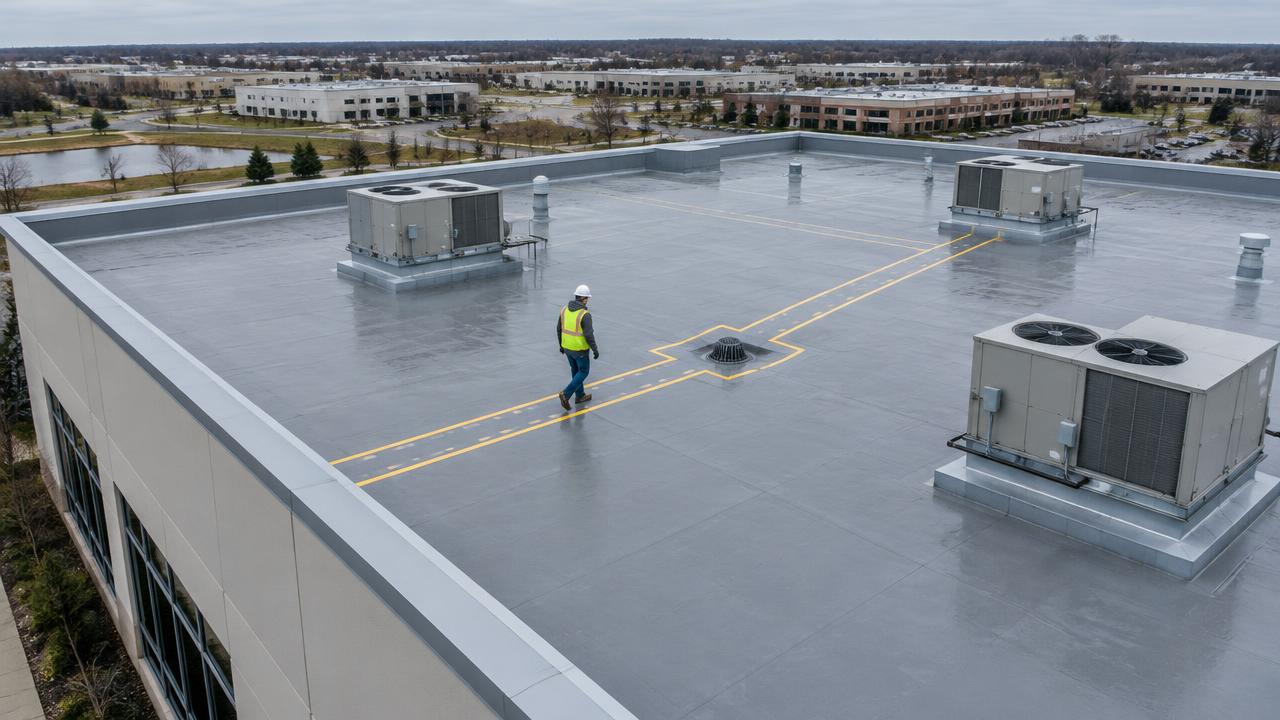
Commercial roofs are mostly low-slope roofs with a membrane, drains and rooftop units. Good help starts with a full assessment: the roof system, drainage, wet insulation and what your business needs to keep running. We serve building owners and managers across the Omaha area and connect them with commercial roofers.
The short answer
Most business roofs are low-slope roofs. People often call them flat, but they have a slight tilt so water can drain. They are covered with a membrane, which is a large waterproof sheet, or with metal, coatings or layered asphalt.
These roofs need different skills than house roofs. Drains, seams, rooftop units and wet insulation matter a lot. So does keeping your business running while work happens.
We serve building owners, property managers and facility teams across the Omaha area. We connect you with commercial roofers and help you know what to ask.
Who this page is for
This page is for people who are in charge of a building roof. That can include:
- Business owners with a shop, office or restaurant
- Warehouse and plant managers
- Property managers with many buildings
- Church, school or nonprofit building teams
- Apartment and HOA boards
- Facility and maintenance staff
Common commercial roof types
Each roof type has its own strong points and weak spots. Here is a plain look at the most common ones.
- TPO: a white or light single-ply sheet. Seams are joined with heat. It reflects sun well.
- EPDM: a black rubber sheet. It bends well in the cold. Seams are joined with tape or glue.
- PVC: a single-ply sheet that holds up well to grease and some chemicals. Often used on restaurants.
- Modified bitumen: layered asphalt sheets, often torched or glued down. Tough and easy to patch.
- Built-up roofing: many layers of tar and felt, often with gravel on top. An older, heavy system.
- Metal: panels with seams or screws. Common on warehouses and shops.
- Coatings: a liquid layer over an existing roof that can add years when the roof is still sound.
| What is going on | Start here | Why |
|---|---|---|
| Water is dripping inside now | Commercial emergency help | Protect people, stock and equipment first. |
| One leak keeps coming back | Leak detection | Water travels far under a membrane. |
| Water sits on the roof after rain | Ponding water | Drainage problems wear the roof fast. |
| Roof is aging; wet areas replaced, rest dry | Inspection or coating options | You may extend its life. |
| Many buildings to manage | Property manager planning | One plan, one set of records. |
Why drainage matters most
A low-slope roof only works if water leaves it. Water should flow to drains, scuppers or gutters. A scupper is an opening in the wall at the roof edge.
When water sits for days after rain, that is called ponding. Ponding adds weight. It wears out seams and coatings faster. It can also show that the deck below has sagged.
Clogged drains are a common cause. Leaves, trash and gravel can block them. Keeping drains clear is one of the cheapest ways to protect a roof.
Leaks on a flat roof are tricky
On a flat roof, water can travel a long way under the membrane before it drips. The drip inside may be far from the hole on top.
Many leaks start at seams, at the edges, or around things that go through the roof. These are called penetrations, like pipes, vents and the curbs under air units.
Roofers may use special tools to find wet spots. Infrared cameras can show wet insulation by how it holds heat. Moisture meters and core cuts can confirm it. Ask what method they will use and why.
Keeping your business running
Roof work on a business is a project, not just a job. Ask each roofer how they will handle:
- Work hours, so noise does not hit your busiest times
- Smells from glues or hot work, and how they will vent them
- Crane or lift days, and where trucks will park
- Safe paths for staff, tenants and customers
- Covering stock, machines and computers under the work area
- Fire safety for any torch or heat work
- Who your staff should call with questions each day
Access and safety on the roof
Commercial roofs need safe access. That can mean a roof hatch, a fixed ladder or a lift. Ask where crews will climb up and how they will keep the area closed off.
Edges, skylights and roof openings are fall risks. Ask for the crew's fall safety plan for this roof and this job. A warning line alone does not protect every worker in every spot. Near the edge, workers need real fall protection, like guardrails, nets or a harness system.
Rooftop units are often serviced by other trades. Walk pads, which are strips laid on the roof, help protect the membrane where people walk often.
Repair, coating or replacement
A repair fixes one problem area, like a split seam or a leaking curb. It makes sense when the rest of the roof is sound and mostly dry.
A coating adds a new liquid layer over the whole roof. It can extend the life of a roof that is still sound. It is not a fix for wet insulation or a sagging deck. Coatings must also fit the roof type.
Replacement removes the old roof, or adds a new roof over it where code allows. It makes sense when wear and wet areas are widespread. Ask each roofer to explain why they chose their option.
What changes the cost
We do not list prices. Each building is different. Ask each roofer to show these items in their bid.
- Roof size and shape
- Roof type and how many layers are already there
- How much insulation is wet and must be replaced
- Number of drains, curbs, pipes and skylights
- Access: hatch, ladder, lift or crane
- Work-hour limits and business needs
- Warranty length and type
Warranties for commercial roofs
There are two common kinds. The maker warranty covers the product. Some cover only materials. Some, often called NDL or no-dollar-limit, can cover materials and labor if certain rules are met.
The roofer's workmanship warranty covers how the roof was put on. Get its length and terms in writing. Ask what upkeep you must do to keep each warranty valid.
Planning for many buildings
If you manage several roofs, a simple plan helps. Start with a check of each roof. Write down the roof type, age if known, size and main problems.
Then sort roofs into three groups: fix now, plan for soon, and maintain. This helps you budget over several years instead of being surprised.
Keep one folder per building with photos, reports, bids and warranties. Ask roofers to use the same report format so you can compare.
Commercial roof problems we help with
These are the problems building owners ask about most. Each one has its own page with more detail.
- Ponding water that sits for days after rain
- Split or open seams in the membrane
- Clogged or broken roof drains
- Leaks around pipes, vents and air unit curbs
- Wet insulation under the membrane
- Wind that lifts edges or loose sheets
- Old coatings that peel or crack
Roofs by building type
A warehouse roof is often large and open, with few things on top. Long runs of seams and many drains matter most. Stock and machines below need to stay dry.
A restaurant roof often has grease from kitchen vents. Grease can harm some membranes. Ask about systems that hold up to it and about grease catch boxes.
A church may have both steep and flat roof parts. Tall roofs and old flashing make access and repair harder.
Apartments and retail centers have many tenants. Clear notice, safe paths and work hours matter a lot. See our pages for warehouses, restaurants, churches, apartments and retail buildings.
What a good commercial assessment covers
A full assessment helps you make a plan instead of just patching. Ask if it includes:
- A walk of the full roof, with photos of each area
- Drains, scuppers and gutters, and signs of ponding
- Seams, edges, parapet walls and metal trim
- Every curb, pipe and skylight
- A moisture check, like infrared or core cuts, when needed
- Notes on roof type, layers and condition
- Clear choices: repair, coat, recover or replace, with reasons
Upkeep that adds years
Small steps can keep a commercial roof working longer. Clear drains often, and after big storms. Keep trash and leaves off the roof.
Ask other trades to use walk pads and to tell you when they work on the roof. Tools dropped on a membrane can puncture it.
Have the roof checked on a set schedule, and after hail or high wind. Fix small seam and flashing problems quickly. Keep a log of every visit and repair.
Questions to ask a commercial roofer
Ask each roofer the same list. Clear answers help you compare.
- Which roof types do you work on most?
- How will you check for wet insulation?
- Can you work around our open hours?
- Where will cranes, trucks and trash bins go?
- Who is our daily contact during the job?
- Which warranties come with this work, and what upkeep do they need?
- Can you send photos and a written report for each building?
Commercial roofing across our towns
We serve business buildings in Omaha, Bellevue, Papillion, La Vista, Elkhorn, Gretna, Bennington and Council Bluffs. Each town has its own commercial roofing page with links to every service and roof type.
If you have buildings in more than one town, one request can cover them. Tell us each address and roof type you know.
How our request form works
We serve homes and businesses across the Omaha area. This website is a preview right now. The online form checks your answers, but it does not save or send them yet, so no roofer gets your request from it.
When online requests are turned on, this note will change. Until then, the form is a way to see what we will ask: your town or ZIP, what you see and what kind of help you need. We do not sell your details.
Common questions
Do you work on flat roofs?
Yes. Most commercial roofs are low-slope, often called flat. We connect owners and managers with commercial roofers who work on membrane, coating and metal systems.
Can work happen while my business stays open?
Often, yes, with planning. Ask the roofer about work hours, smells, noise, crane days and safe paths for staff and customers.
How do I know if my roof can be coated?
A coating needs a roof that is dry and sound. A moisture check can show wet insulation. Wet areas must be cut out and replaced first.
Do you handle more than one building?
Yes. Property managers can send one request for several sites. Ask for one report format so you can compare buildings.
Is a request a booked visit?
No. A request starts the match. A commercial roofer contacts you to set up the assessment.
Related help
- Commercial roof repair
- Commercial roof replacement
- Commercial roof inspection
- Commercial roof maintenance
- Leak detection
- Commercial emergency roofing
- TPO roofing
- EPDM roofing
- Roof coatings
- Ponding water
- Warehouse roofs
- Help for property managers
- TPO vs. EPDM
- What changes commercial roof cost
- Restaurant roofs
- Church roofs
- Apartment and multifamily roofs
- Retail building roofs
- Seam failures
- Roof drains
- Wet insulation
Sources we checked
Official and standards pages we used to check facts on this page. Rules can change, so confirm with the source.
Topics in this section
- Commercial Roof Repair Omaha
- Commercial Roof Replacement Omaha
- Commercial Roof Maintenance Omaha
- Commercial Roof Inspection Omaha
- Roof Leak Detection Omaha
- Emergency Commercial Roof Repair Omaha
- Commercial Roof Installation Omaha
- Flat Roofing Omaha
- Flat Roof Repair Omaha
- TPO Roofing Omaha
- EPDM Roofing Omaha
- PVC Roofing Omaha
- Modified Bitumen Roofing Omaha
- Built Up Roofing Omaha
- Commercial Metal Roofing Omaha
- Metal Roof Retrofit Omaha
- Commercial Roof Coatings Omaha
- Silicone Roof Coating Omaha
- Acrylic Roof Coating Omaha
- Metal Roof Restoration Omaha
- Flat Roof Ponding Water
- Commercial Roof Seam Repair
- Commercial Roof Drain Repair
- Commercial Roof Penetration Leak Repair
- Wet Roof Insulation Repair
- Commercial Roof Wind Damage
- Warehouse Roofing Omaha
- Industrial Roofing Omaha
- Multifamily Roofing Omaha
- Church Roofing Omaha
- Retail Roofing Omaha
- Restaurant Roofing Omaha
- Commercial Roofing Property Management Omaha