Quick answer
For a property manager, good roof care starts with a list of every roof section and the records for each one. Rank sections by their real condition and what a leak would harm, not by a guessed number of years left. Each roof system has its own care steps and warranty duties. Reports, dashboards and response times are things to ask a provider about in writing, not things to assume.
Why managers need a roof list
If you manage more than one building, roofs can blur together. One leaks, someone patches it, and the notes get lost. A year later, it leaks again and no one knows what was done.
A roof list fixes that. Each roof section gets a name and a record. Every check, leak and repair goes into the record. Over time, you can see which roofs are steady and which keep causing trouble.
Split each roof into sections
One building can have more than one roof. A main roof, a lower roof over an entry and a canopy may each be built in a different way and at a different time.
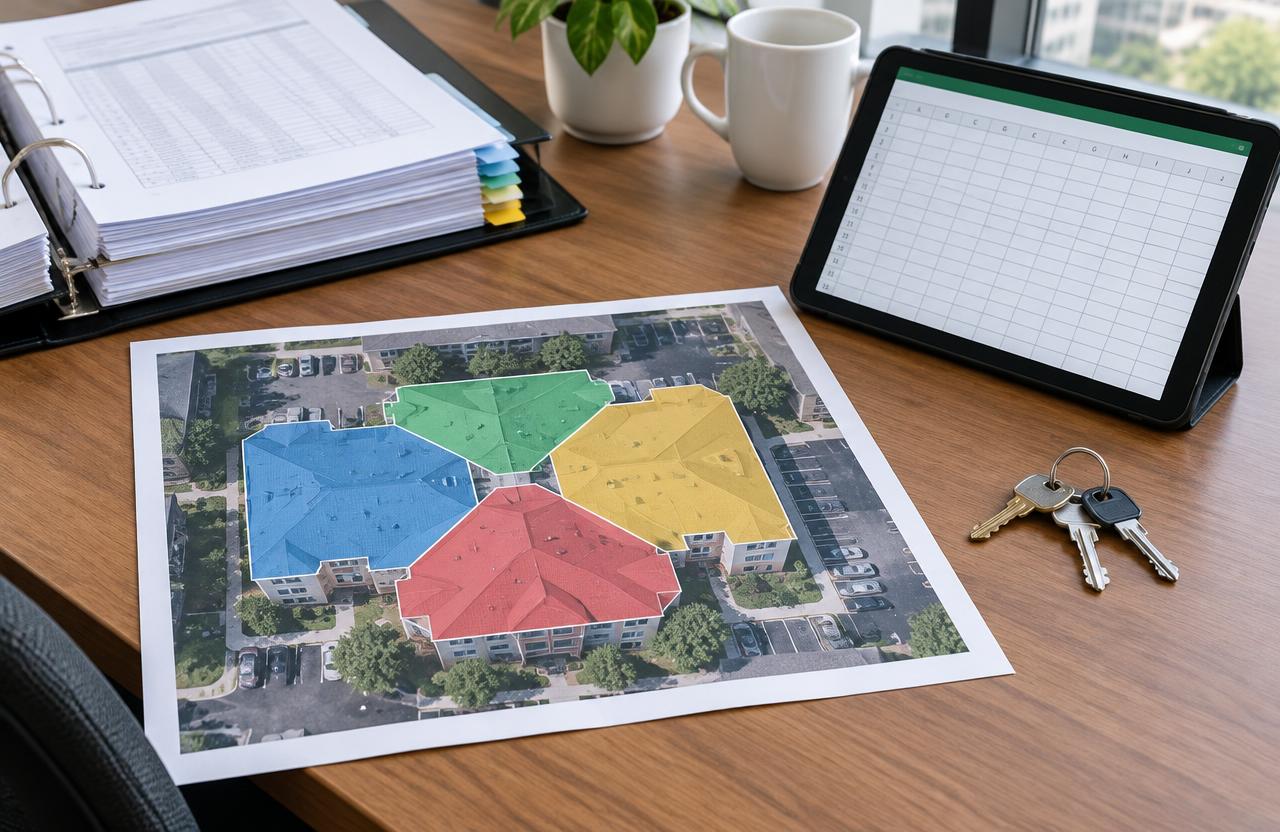
Give each section its own ID. Mark it on a roof plan. Record its rough size and its system. Use the same IDs with every vendor, so reports and bids line up.
Records to gather for each section
Start with what you have. Look for the install contract, the product names, the install date and the installer. Find the warranty and read its duties.
Then add the history. Pull past inspection reports, leak notes and repair invoices. Note any rooftop equipment and who owns it. If records are missing, write that down too. A gap is useful to know about.
| Field | What to record | Why it helps |
|---|---|---|
| Section ID and size | A name for each roof area and its rough size | Keeps every report and bid on the same map |
| System and install | Membrane or shingle type, installer, install date | Picks the right care and warranty steps |
| Warranty | Issuer, term, duties, contact | Shows what must be done to keep coverage |
| Inspections | Date, who, findings, photos | Tracks change over time |
| Leaks and repairs | Where, when, cause found, fix done | Spots repeat trouble |
| Rooftop equipment | Units, owners, vendors who go up | Links damage to traffic and holes |
| What is below | Tenants, goods, uses | Shows what a leak would harm |
Rank by condition and consequence
It is tempting to rank roofs by age. But age alone can mislead. A well-kept older roof may be in better shape than a younger one that has had heavy foot traffic and poor repairs.
Rank each section on two things. First, its real condition from a recent inspection. Second, what a leak would harm below. A roof over a data room or a pharmacy is different from one over a storage closet.
Avoid fixed claims about years left. No honest inspector can give an exact remaining life from age. Instead, use condition, findings and risk, and update the ranking after each check.
Care steps differ by system
TPO, PVC, EPDM, built-up, modified bitumen, metal and shingle roofs each need different care. The things to look for, the repair methods and the cleaners all vary.
GAF's guide on scheduled maintenance for commercial roofs explains regular checks and keeping records. Other makers have their own guides. Use the guide for each section's actual system.
Warranty duties
Many roof warranties come with duties. Some need regular checks. Some need notice of a leak within a certain time. Some need the maker to approve repairs or need a certain kind of contractor to do them.
Read each warranty and list its duties in the section's record. Set reminders. Missing a duty can put coverage at risk. When in doubt, call the warranty issuer before work starts.
Inspection schedules
Many guides suggest checks on a regular schedule, often in spring and fall, and after big storms. Your warranty may set its own rules. Follow those first.
Each inspection should cover the same items each time: the field, seams, edges, flashings, drains and rooftop gear. Ask for photos tied to the section ID. That makes it easy to compare one year with the next.
Leak response
Write a simple leak plan. Who do tenants call? Who goes to look? Who calls the roofer? What gets recorded?
Inside, protect people and property first. Keep people away from wet ceilings and electrical gear. Then record the location, time and weather. When the roofer comes, ask them to note the cause they found and the fix, not just "patched leak."
Control roof traffic
HVAC techs, sign vendors, cable installers and others go on roofs. Each visit can puncture or scuff the roof.
Keep a log of who goes up and why. Ask vendors to use walk pads and to report any damage. Lock roof hatches. When damage is found, the log helps find out how it happened.
Plan budgets with ranges
Owners want to know what is coming. Use your ranked list to plan. Put the highest-risk sections first. Note which ones may need repair soon and which may need bigger work later.
Get written bids for real work, not guesses. Prices depend on the roof, access, the system and the market at that time. We don't publish local price averages, because we don't have a verified data set.
Questions to ask a roof provider
Do you inspect by section ID and send photos tied to it? What does your report include? Do you offer a shared dashboard, and can we see a sample?
What response time do you put in writing for leaks? Can you work within our warranty duties? Who is our contact? How will you handle tenants and rooftop vendors? Ask for these answers in writing, and compare providers on the same terms.
Start small if records are thin
Many managers inherit buildings with few roof records. That is normal. Don't wait for perfect records to start.
Begin with a walk-through by a qualified inspector. Name each section and take photos. Record what is known and what is missing. Then fill in gaps as you find old invoices or talk to past vendors. A rough list now is better than none.
Tie leaks to sections
When a tenant reports a leak, record which roof section sits above it. Over time, this shows patterns. A section with three leaks in a year tells a different story than one with a single leak after a big storm.
Ask roofers to note the cause they found. Was it a seam, a flashing, a drain or foot traffic? Causes help you decide whether to repair, change how vendors use the roof or plan bigger work.
Drains and gutters need regular care
Clogged drains and gutters are a common cause of roof trouble. Leaves, trash and debris build up. Water then backs up and finds new paths.
Add drain and gutter checks to your schedule. Seasons with falling leaves may need more checks. Record what was cleaned and when. If a drain keeps clogging, ask why. There may be a fix upstream.
After storms
After a big storm, check roofs that face the most risk first. Look from safe ground or ask a qualified pro to look. Record what was found by section.
If storm damage is found, follow your insurance and warranty steps. Take photos. Keep notes. Don't let temporary fixes sit for months without a plan for the lasting repair.
Talking to owners
Owners want to know what is coming and why. Use your ranked list to explain. Show the condition, the risk below and the options.
Keep it simple. Group sections into a few levels, like steady, watch and act soon. Share photos. Explain that rankings change after each check. This helps owners plan without relying on guessed numbers.
When repair stops making sense
At some point, a section may need more than repairs. There is no single age or cost rule for when. Look at how widespread the problems are, how wet the layers below are and what a qualified inspector finds.
A moisture survey can help show how much of a section is wet. Core cuts confirm it. Ask for options: repair, partial replacement, or full replacement. Compare them in writing.
Make bids comparable across buildings
When you ask for bids on more than one building, give every bidder the same section map and the same scope. Ask them to price each section on its own line.
This lets you compare bids fairly. It also lets you pick which sections to do now and which to do later. Ask bidders to note anything they found that is not in your scope, so you don't miss it.
Rooftop equipment changes
Tenants and owners add and remove gear over time. New units, solar, antennas and signs all add holes and weight. Old gear may leave open curbs behind.
Ask that every rooftop change go through you first. The roofer should flash new holes to fit the roof system. Some warranties need notice or approval for new holes. Update the section record after each change.
Snow and ice on roofs you manage
Heavy snow and ice add weight and can block drains. Watch for signs inside, like sagging ceilings, new cracks or doors that stick. If you see them, get people out of the area and call for help from a safe place.
Don't send staff onto a snowy roof to shovel without a safety plan and fall protection. Shovels can also cut the roof. If snow load is a concern, a structural engineer should advise. Record any snow events and what was done.
How we serve property managers
We are serving property managers and owners across the Omaha area with one or many buildings. Use the form on this page to ask for a roof check or bid. Tell us how many buildings and roof sections you manage.
We can work with your own records and section IDs. Any service level, report or response time would be set in a written agreement, not on this page.
Common questions
How many years does each of our roofs have left?
No one can honestly give an exact number from age alone. Condition, moisture, repairs and use all matter. Rank roofs by what an inspection finds and what a leak would harm, and update the list after each check.
Do you offer a portfolio dashboard?
This site does not claim one. If a provider offers reports or a dashboard, ask to see a sample and get its terms in writing. You can also keep your own records with the fields on this page.
How often should roofs be checked?
Many makers and guides suggest regular checks, often twice a year, and after big storms. Your warranty papers may set their own rules. Follow those first.
Can any roofer repair a roof under warranty?
Not always. Some warranties need the maker to approve the repair or need a certain kind of contractor. Read the paper before work starts, or coverage may be at risk.
What response time can we expect for leaks?
That depends on the provider and the agreement. Ask each provider to put it in writing. We do not promise a response time on this page.
Related help
Sources we checked
Official and standards pages we used to check facts on this page. Rules can change, so confirm with the source.