Quick answer
After hail or high wind, check from the ground, write down the storm date and take photos. Do not climb up. Have a qualified roofer look at the whole roof and give you written photos and notes. Only your insurance company decides what a claim pays.
The short answer
Storms can hurt a roof in ways you cannot see from the yard. Hail can knock the grit off shingles. Wind can lift shingles and break their seal. A small hurt today can turn into a leak months from now.
So after a big storm, slow down. Stay safe. Take notes and photos. Then have a qualified roofer look at the whole roof. Get what they find in writing, with photos.
We connect you with a local roofer who serves your area. Your insurance company handles the claim itself.
Safety first after a storm
Do not climb on your roof after a storm. Wet shingles are slick. Hail can leave little balls of ice that roll under your feet. Wind may have loosened parts you cannot see.
Stay far away from any power lines that are down or sagging. Treat every downed line as live. Call the power company and keep kids and pets away.
If water is coming in near lights or outlets, stay back. Do not touch wet wires or a wet panel. Call an electrician or the power company.
If a tree or big limb is on the roof, do not try to move it. Get everyone out of the rooms under it. A tree service and a roofer can work on it safely.
What hail does to a roof
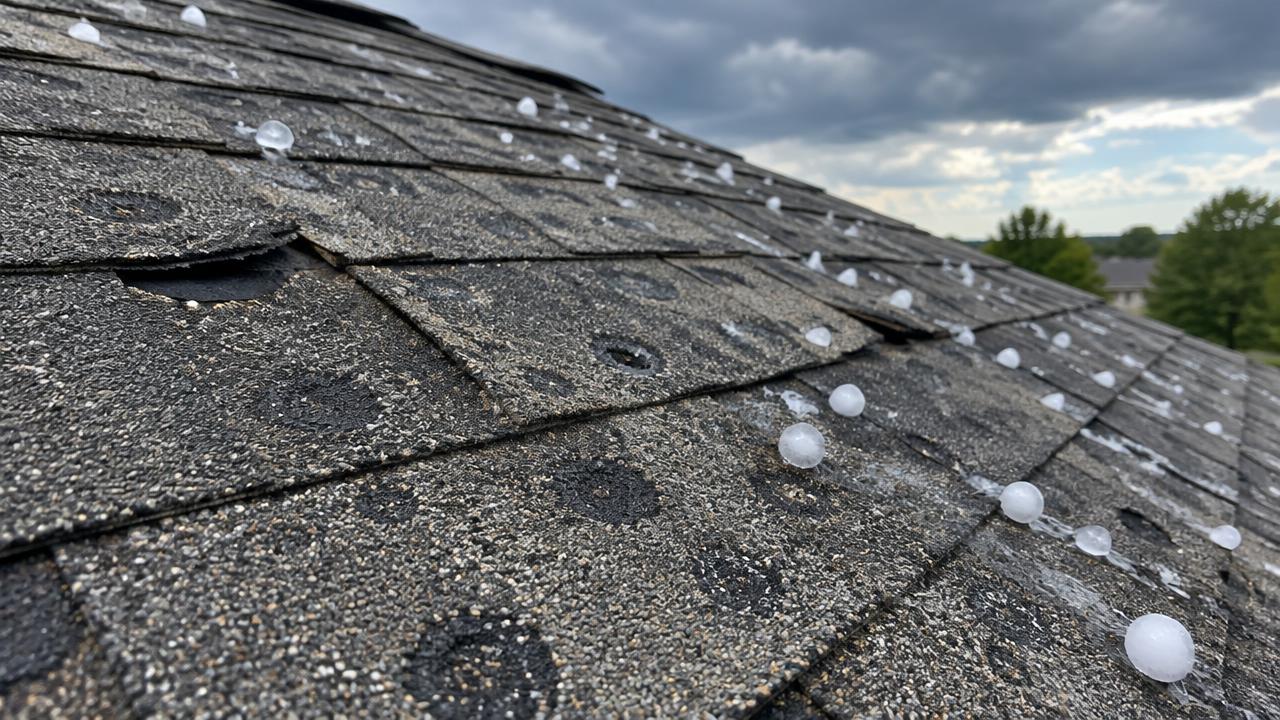
Shingles have a top coat of small grit. The grit shields the shingle from the sun. Hail can knock this grit off in round spots. But grit loss alone does not prove hail damage. Old age and foot traffic can also wear grit away. A roofer looks for other signs before calling it hail.
Without grit, the sun dries out the shingle faster. It can crack and wear out sooner. That is why a roof with hail damage may not leak right away.
Big hail can also crack or punch holes in shingles. It can dent metal vents, flashing and gutters. Dents on soft metal do not always mean the shingles are hurt. A roofer looks at both.
| When | What to do | Why it helps |
|---|---|---|
| Right after the storm | Stay inside until it passes. Stay away from downed lines. | Your safety comes first. |
| Same day | Write the date and time. Take photos from the ground and inside. | Notes made now are clear and easy to trust. |
| If water is coming in | Catch drips, move things, and ask a roofer about a tarp. | Less water means less damage inside. |
| Within days | Read your policy or call your agent. | Many policies have time limits for reporting. |
| Before you sign anything | Get a written roof check with photos. | You know what is really damaged. |
What wind does to a roof
Shingles stick to each other with a strip of seal. Strong wind can lift the edge and break that seal. The shingle may lay back down and look fine.
The next storm can then grab that loose edge and tear the shingle off. That is why missing shingles often show up after the second or third windy day.
Wind can also bend flashing, pull ridge caps loose and drop limbs on the roof. Look for shingle pieces in the yard. They can come from your roof or a neighbor's.
What you can check from the ground
You can spot many clues without a ladder. Walk all the way around the house. Use your phone zoom. Write down what you see.
- Shingles that are missing, folded or hanging down
- Dents on gutters, downspouts and window frames
- Dents on metal vents or the chimney cap
- Piles of shingle grit at the bottom of downspouts
- Broken screens, siding or fence boards on the side the storm came from
- Limbs or tree parts on the roof
- New stains on ceilings or the tops of walls inside
Take good notes and photos
Good notes make every next step easier. Write down the date and the time of the storm. Write what you saw, like hail size compared to a coin or a ball.
Take wide photos of each side of the house. Then take close photos of dents, missing shingles and stains. Photos of hail on the ground with a coin next to it can help too.
Keep receipts for anything you buy to stop more damage, like a tarp or buckets. Save these in one folder. You may need them later.
Stop more water from getting in
If water is dripping inside, put a bucket under it. Move rugs, beds and electronics away. Lay towels down.
If a ceiling spot sags with water, keep people out from under it. It can fall. A roofer or handyman can help drain it safely.
Ask a roofer to put a tarp on the roof if there is an opening. Do not do it yourself. Ask when they can come and what the tarp will cost. Get it in writing.
What a good storm check looks like
A good roofer takes time and shows you the proof. Here is what a careful storm check usually covers.
- Every side of the roof, not just the front
- Shingles, ridge caps, flashing, vents and pipe boots
- Gutters, downspouts and the metal edge of the roof
- The attic, if they can reach it safely, for wet spots or light coming in
- Clear photos of each problem, with notes on what it is
- A plain answer: no damage, repair, or a bigger job
Insurance basics in plain words
Home insurance may help pay for storm damage. Every policy is different. Some pay the full cost of a new roof. Some pay less for an older roof. Some have a separate, higher deductible for wind or hail.
A deductible is the part you pay yourself before insurance pays. Read your policy to find yours. Call your agent if you are not sure.
An adjuster is the person the insurer sends to look at the damage. It can help to have your roofer's photos and notes ready. Only your insurance company decides what is covered and paid.
Many policies have a time limit for reporting damage. Check yours soon after the storm so you do not miss it.
Watch out for storm chasers
After big storms, some crews come from far away and knock on doors. Many are honest. Some are not. They may leave once the storm work dries up.
Be careful if someone says your roof must be replaced but will not show you photos. Be careful if they ask you to sign a paper on the spot. Read anything before you sign it.
No one can promise your insurance will pay. If a crew says they will cover your deductible for you, ask your agent. In many places that is not allowed.
Ask for a local address, proof of insurance and the right license for your city or state. Take your time. A good roofer will still be there tomorrow.
Repair or replace after a storm
A few missing shingles on a young roof is often a repair. The roofer swaps out the bad ones. Ask if they can find a close color match.
Hail hits all over the roof can be a different story. Grit loss by itself does not mean you need a new roof. Ask the roofer to show what else they found, with photos of every side.
Your insurer may see it one way and a roofer another way. That is normal. Keep your photos and notes, and ask both to explain what they see.
Omaha area storms and your roof
The Omaha area sits in the middle of the country. Spring and summer storms here can bring hail and strong wind. Winter can bring heavy snow and ice.
That mix means roofs work hard. A storm check is a smart step after any big hail or wind event, even if you see no leak yet. The sooner small hurts get fixed, the less water can get in.
Gutters, siding and windows count too
A storm does not stop at the roof. Hail can dent gutters and downspouts. It can crack vinyl siding and chip paint. It can tear window screens.
Write these down with the roof notes. A roofer may only look at the roof. You may need a different trade for siding or windows. Keep all the photos in one place so the full picture is clear.
Damage you cannot see right away
Some storm damage shows up slowly. A shingle with a broken seal may stay put for months. A bruise from hail may only crack after a hot summer.
That is one reason a careful check soon after the storm helps. Photos from that time show what the roof looked like right after. If a leak starts later, you can compare.
Look at your ceilings after each heavy rain for a few months. Look in the attic from the hatch with a flashlight. Do not crawl in.
Questions to ask a roofer after a storm
Ask each roofer the same questions. Write down the answers.
- Can you show me photos of every side of the roof?
- Which damage is from this storm, and which is older wear?
- Is this a repair, or does the whole roof need work? Why?
- Will you check the gutters, vents and flashing too?
- Will your notes and photos be in writing?
- If I file a claim, how will you share your photos with me?
- What will you charge if insurance does not pay?
If you rent or own a business
If you rent, tell your landlord about storm damage right away. Send photos by text or email so there is a record. The owner usually handles the roof.
If you own a business building, the steps are close to the same. Keep people safe. Take notes and photos. Read your policy. Our commercial roofing page explains flat roof damage, drains and wet insulation.
How our request form works
We serve homes and businesses across the Omaha area. This website is a preview right now. The online form checks your answers, but it does not save or send them yet, so no roofer gets your request from it.
When online requests are turned on, this note will change. Until then, the form is a way to see what we will ask: your town or ZIP, what you see and what kind of help you need. We do not sell your details.
Common questions
How do I know if hail hurt my roof?
You often cannot tell from the ground. Look for dents on gutters, vents and the car, and grit piled at downspouts. Those are clues. A roofer can check the shingles up close and show you photos.
Should I call my insurance company first or a roofer first?
Many people read their policy and call their agent first. Others get a roof check first so they know if there is damage. Either way, keep notes and photos. Only your insurer decides what is paid.
Can a roofer handle my claim for me?
A roofer can show you damage and give you photos and notes. Rules about who can talk to your insurer for you depend on your state. Be careful with anyone who asks you to sign over your claim.
Is a tarp the same as a repair?
No. A tarp is a short-term cover to keep rain out. A real repair or a new roof still needs to happen. A tarp can blow loose, so check it after wind.
Do you serve Council Bluffs and the Nebraska towns?
Yes. We serve Omaha, Bellevue, Papillion, La Vista, Elkhorn, Gretna, Bennington and Council Bluffs. Each town has its own storm page under Areas.
Related help
Sources we checked
Official and standards pages we used to check facts on this page. Rules can change, so confirm with the source.