Quick answer
GAF is a large maker of roofing products. If you are thinking about a GAF roof, compare the exact system being offered and the actual warranty you would get. Warranty coverage often depends on which parts are used and who installs them. Roofing contractors are independent businesses, not GAF employees or agents. You can check a contractor's status on GAF's own site.
GAF: a maker, not a roofer
GAF makes shingles, underlayment, ventilation and other roofing products. It does not install roofs itself. Independent roofing contractors buy GAF products and put them on homes.
GAF has programs that give credentials to some contractors. These contractors are still independent businesses. GAF's choose-a-roofer page explains how its programs work and what to look for.
We serve homeowners across the Omaha area. This page does not claim any GAF certification, affiliation or badge. It helps you compare GAF roof offers carefully, whoever installs them.
Compare the system, not just the shingle
A roof is more than shingles. It has underlayment, starter strips, ridge caps, flashing and, on a vented attic, vents. GAF makes many of these parts. Some GAF warranties ask for certain GAF parts to be used together as a system.
When you get a bid, make sure it names each part. A bid that just says GAF shingles does not tell you what else is going on the roof. Two GAF bids may be very different if one uses a full GAF system and the other uses mixed parts.
The drawing below shows the main parts and who usually stands behind each kind of coverage.
Warranties: which one, exactly?
GAF offers several warranties. Its warranties page lists them and their terms. Some cover only manufacturing defects in the products. Some extend coverage when certain products are used and the roof is installed by a contractor with certain credentials. Some include coverage for installation mistakes.
Terms and names can change. Do not rely on a summary or a sales pitch. Ask which warranty you will get by name. Ask for a sample of the written warranty before you sign, and the final certificate after the job.
Words like lifetime have specific meanings in each warranty. The FTC explains how to read warranties. Read what lifetime means in yours, and how coverage may change over time.
| Item | What to look for | How to check |
|---|---|---|
| Shingle | Exact product line and color | Bid names the product, not just GAF |
| Other parts | Underlayment, starter, ridge cap, and vents if the attic is vented | Bid lists each part by name |
| Warranty | Which warranty, and its written terms | GAF's warranties page and the actual certificate |
| Contractor status | Any GAF credential claimed | GAF's contractor verify tool |
| Registration | Whether the warranty must be registered, and by whom | Ask, and get proof it was done |
Installer eligibility
Some GAF warranties can only be offered by contractors with certain GAF credentials. If a crew offers one of these warranties, they need to qualify. Credentials can change over time.
GAF has a contractor verify tool on its site. You can use it to check a contractor's current status. Check before you sign, not after.
Registration
Some warranties must be registered after the roof is done. Sometimes the contractor does this. Sometimes the homeowner does. If it is not registered, you may get less coverage than you expected.
Ask who will register the warranty and when. Ask for proof that it was done. Keep it with your house papers.
Choosing a GAF shingle
GAF makes several shingle lines. They differ in look, thickness, wind rating, and sometimes impact rating. Some lines have more color choices. Our asphalt shingles page explains wind and impact ratings in general.
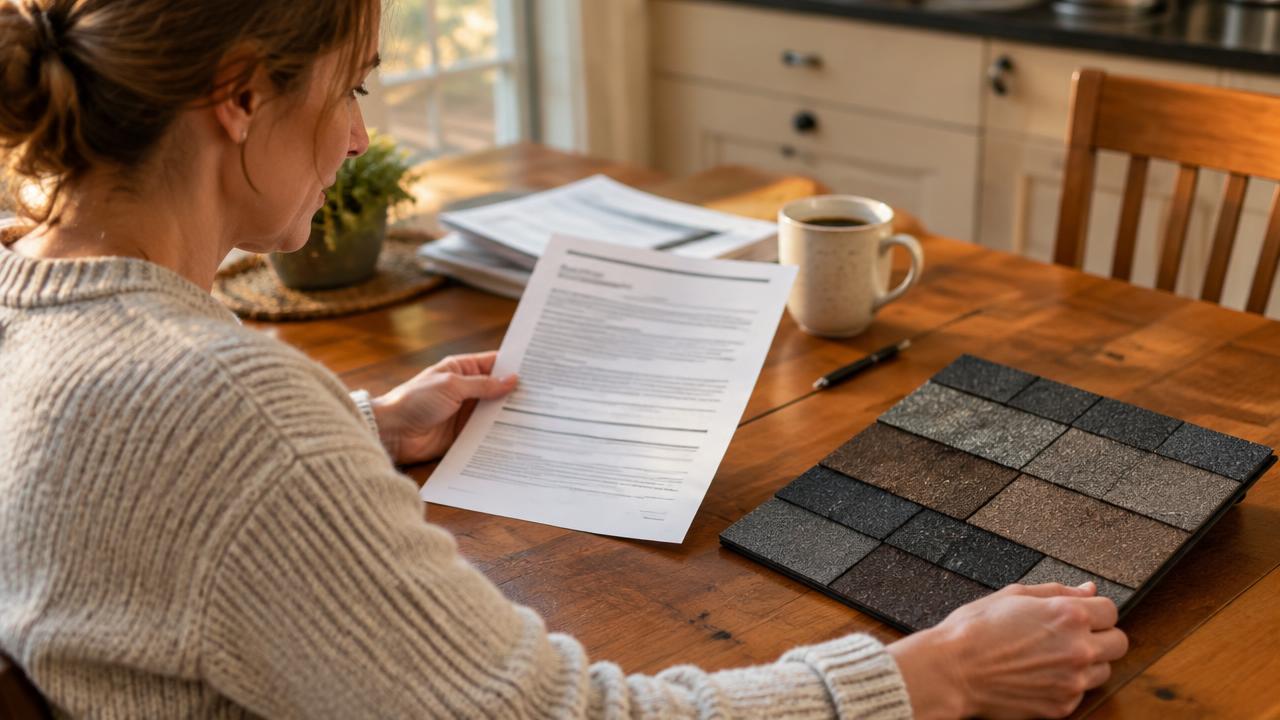
Ask to see real samples in daylight. Look at a house nearby with the same color if you can. Ask for the product data sheet for the exact line. Ratings come from tests with limits, and no shingle is hail proof.
Work quality vs. product coverage
Product coverage deals with problems in the materials. Work quality coverage deals with how the roof was put on. These may come from different places. The maker may cover products. The contractor may cover their own work. Some GAF warranties also cover certain install mistakes.
Ask both questions. What does GAF cover? What does the contractor cover, for how long, and in writing? A strong product warranty does not help much if the install is poor and not covered.
Red flags with brand claims
Be careful if you see any of these.
- A crew says they are GAF or work for GAF.
- A credential claim that does not show up in GAF's verify tool.
- A promise of a lifetime warranty with no written document.
- A bid that names GAF but does not list the parts.
- Pressure to sign today to get a special warranty.
- No clear answer about who registers the warranty.
Before you sign
Collect these papers and keep them together.
- The bid, with each GAF part named.
- A sample of the written warranty you will get.
- A printout or screenshot of the contractor's status from GAF's verify tool, if they claim a credential.
- The contractor's own written work terms.
- After the job: the final warranty certificate and proof of registration.
Attic airflow and the warranty
In a vented attic, poor airflow can make the space too hot in summer and damp in winter. Some maker warranties talk about proper attic ventilation. Some homes have an unvented attic, sealed at the roof line on purpose. Those are built differently, and vents should not just be added.
Ask the crew if your attic is vented or unvented. If vented, ask how intake and exhaust will work. If unvented, ask how the plan keeps that design and what the warranty says about it. Our attic page explains both.
If you sell the house
A new roof can help when you sell. Buyers may ask about the warranty. Some warranties can move to a new owner. Some need a form or fee within a set time. Some do not move at all.
Read what yours says about transfer. Keep the papers ready to hand to the buyer. Ask the maker if any steps are needed.
If the roofer closes
Roofing businesses open and close. If your roofer closes, their own promise on their work may end. The maker's warranty may still cover what it says it covers. Keep the maker's paper and the roofer's paper apart, so you know who stands behind what.
Comparing two GAF bids
Say you get two bids that both use GAF shingles. One is higher. Before you pick the lower one, line them up side by side.
Do they use the same shingle line? The same under-layer and leak barrier? The same vents? Is the old roof being torn off on both? Is bad deck wood priced the same way? Is the same warranty offered? Often the gap in price comes from these details.
Wind and the starter row
Wind tends to lift shingles at the edges first. Many makers sell a special starter strip with a glue line for the bottom row and the rakes. Some wind coverage may depend on using the right starter and the right number of nails.
Ask what the warranty says about wind. Ask which starter and nailing the crew will use. Get it on the bid.
Ask for photos during the job
Most of a roof is hidden once the job is done. Photos taken during the work show what went on. Ask for pictures of the bare deck, any wood that was swapped, the under-layer, leak barrier at edges and valleys, flashing, vents and the ridge.
Keep the photos with your warranty papers. They can help with a future claim or sale.
Why a brand name alone is not enough
A brand name tells you who made the shingles. It does not tell you which shingles, which other parts, who put them on, or what coverage you get. Two roofs with the same brand can be very different.
That is why this page focuses on what to check. The brand is one piece. The system, the crew and the written terms matter just as much.
How to use the verify tool
GAF's site has a page to check a roofer's status. You enter the business name or location. It shows what status the maker lists for that business right now.
Do this before you sign. Take a screenshot with the date. Compare the business name on the screen with the name on your bid. If the names do not match, ask why.
Reading the warranty, step by step
Ask for the warranty in writing. Then read it with these questions in mind.
- What parts does it cover?
- Does it cover the cost of labor, or only the materials?
- Does coverage go down after a set number of years?
- Does it cover wind? Up to what speed, and with what parts?
- What does it say about install mistakes?
- Can it move to a new owner if you sell?
- What must you do to keep it, like registration?
Parts list, in plain words
Here is what most shingle roofs include. Your bid should name each one.
- Underlayment: the sheet under the shingles.
- Leak barrier: a sticky sheet at edges, valleys and other weak spots.
- Starter strip: the first row at the bottom edge.
- Shingles: the main layer you see.
- Hip and ridge caps: the pieces along the peaks.
- Vents, if the attic is vented: parts that let air move through it.
- Flashing: metal at walls, chimneys and valleys.
Claims: what to keep
If something goes wrong, you will need papers. Keep the signed bid, the final invoice, the warranty certificate, proof of registration, and photos of the job. Keep them in one folder or one online folder.
Read the warranty for who to call first. Some claims go to the maker. Some go to the roofer. Some go to both.
Keep it safe and simple
Stay on the ground during the job. Ask the crew to take photos of each layer from the roof.
After the job, ask for photos of each layer as it went on: deck, underlayment, starter, flashing and ridge. These help with any future claim.
Common questions
Are you a GAF certified contractor?
This site does not claim any GAF certification, affiliation or badge. If any crew says they hold a GAF credential, check it with GAF's contractor verify tool.
Does every GAF roof come with a lifetime warranty?
No. GAF offers several warranties with different terms. What you get depends on the products used, who installs them and whether the warranty is registered. Read the actual written warranty.
Is my roofer a GAF employee?
Roofing contractors are independent businesses. Even if they hold a GAF credential, they are not GAF employees or agents. GAF explains this on its site.
Do I need to use all GAF parts?
Some GAF warranties need certain GAF parts as a system. Check the warranty you are offered to see what it needs.
Who handles a warranty claim?
It depends on the warranty and what is claimed. Some cover materials only. Some also cover work. Read the warranty for who to contact.
Related help
Sources we checked
Official and standards pages we used to check facts on this page. Rules can change, so confirm with the source.