Quick answer
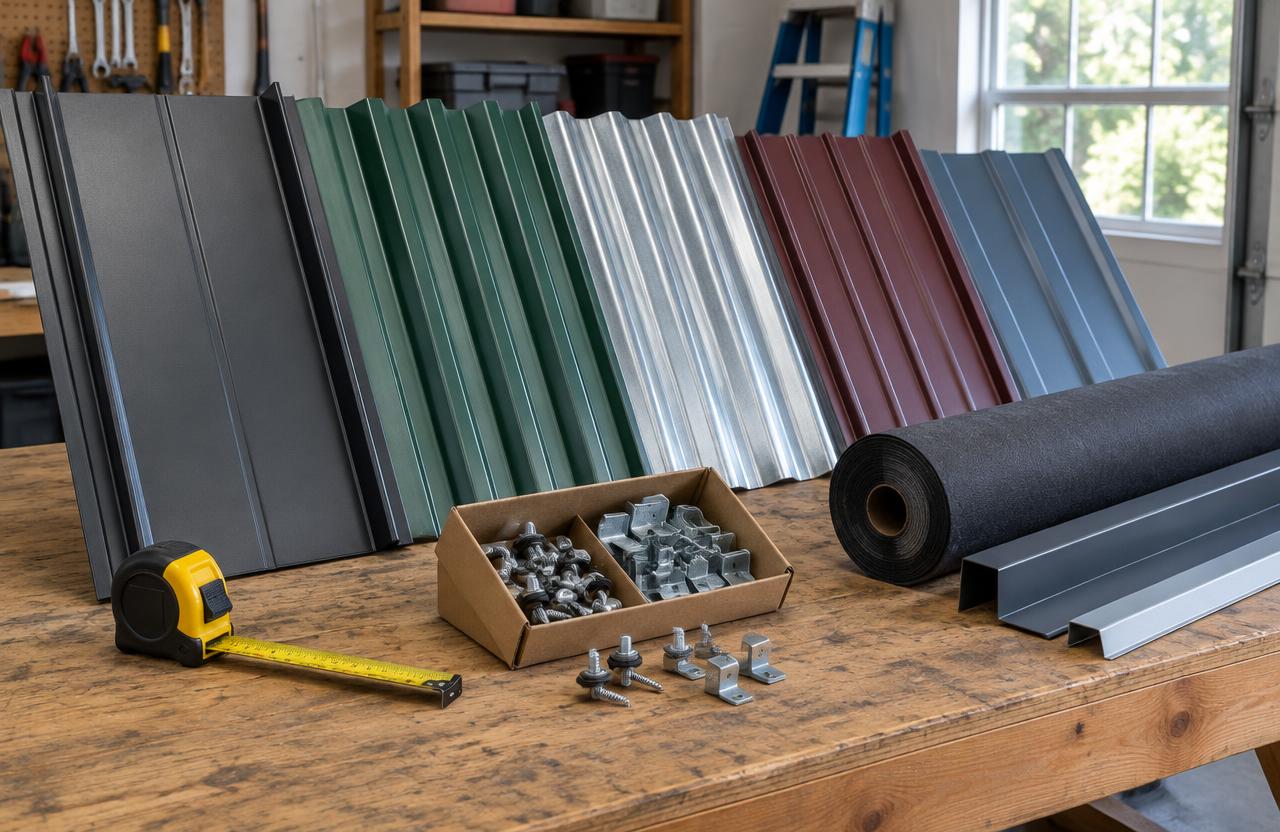
A metal roof's cost depends on the whole system, not the panel alone. The metal, its thickness, the panel shape, how it is held down, the paint finish, trim, underlayment, what it sits on, tear-off, deck repairs, access, roof openings and any engineering all change the price. Compare quotes only when they describe the same system. We don't list Omaha dollar ranges, payback times or insurance savings, because we have no verified local data for them.
Panel price is not installed price
You may see a price per panel or per square foot of metal online. That is the cost of the panels only. It is not the cost of a finished roof.
A finished roof also needs clips or screws, trim, flashing, underlayment, sealants, labor, safety gear and cleanup. It may need tear-off and deck repairs. Those can add up to more than the panels themselves. So compare installed quotes, not panel prices.
Start with the same system
Two metal roof quotes can be for very different roofs. One might be a standing seam roof with hidden clips. Another might be ribbed panels with exposed screws. They look different, work differently and cost differently.
Before you compare prices, ask each bidder to name the full system. Use the table on this page as a checklist. Once the systems match, the price gap means more.
Which metal
Most home metal roofs are steel with a protective metal coating and paint. Some are aluminum. A few are copper or zinc. Each one has its own cost and its own strengths.
The ASC Building Products buyer's guide explains that steel panels have a metal coating under the paint to fight rust. Ask which metal and which coating each quote uses. Don't assume two steel quotes are the same.
| Item | Quote should name | Why it changes the price |
|---|---|---|
| Metal | Steel, aluminum or other | Each metal costs and behaves differently |
| Thickness | Gauge or thickness for panels and trim | Thicker metal costs more, but is only one part of quality |
| Panel shape | Standing seam, ribbed or other profile | Shapes differ in parts, labor and attachment |
| Attachment | Hidden clips or exposed screws, spacing | Changes labor, wind design and upkeep |
| Finish | Paint system or bare coating | Finish type affects color life and its warranty |
| Trim and flashing | Edges, ridges, valleys, walls, openings | Trim is often a big share of the job |
| Underlayment | Exact product and where it goes | Affects how the roof handles water under the panels |
| What it sits on | Deck, battens or old roof | Repairs or new framing add cost |
| Removal | Tear-off and haul-away, or not | Layers and disposal add labor |
| Engineering | Wind design or framing checks, if needed | Some jobs need an engineer's input |
Thickness is only one part
Metal thickness is often given as a gauge. A lower gauge number means thicker metal. Thicker metal can resist dents better and may cost more.
But gauge alone does not tell you how a roof will perform. The panel shape, the clips, the finish and the install all matter. A thick panel put on badly can still leak. Ask about thickness, but don't stop there.
Panel shape and profile
Standing seam panels have raised seams that join panels together. Ribbed and corrugated panels have repeating ridges and often overlap at the edges.
Each shape uses different parts and labor. Some need special tools to seam on site. The shape also affects how the roof looks and how it handles water. Ask which profile is quoted and why it fits your roof.
How the panels are held down
Some systems use hidden clips under the seams. Others use screws through the face of the panel. Hidden clips can allow some panels to move as the metal heats and cools, but that depends on the exact system and clip.
Exposed screws have rubber washers that can wear out over time. That means checks and possible screw changes later. The Metal Construction Association's guide explains these attachment choices. Ask which method is quoted and what upkeep it needs.
Paint and finish
The finish protects the metal and gives it color. Some paint systems hold color and resist chalking better than others. They often cost more.
Ask which finish each quote uses. Ask for its warranty and what it covers. Fading and chalking are often covered only up to certain limits. Read those limits instead of trusting a single number of years.
Trim and flashing add up
Metal roofs need trim at every edge, ridge, valley, wall and opening. Each piece is shaped to fit. On a roof with many angles, trim can be a large share of the cost.
Ask each bidder to list the trim. A low quote that skimps on trim may leak at the edges. A higher quote may simply include more pieces done the right way.
Underlayment under the panels
Underlayment is the layer between the deck and the metal. It helps manage water that gets under the panels. Some metal roofs need a high-heat product because metal can get hot.
Ask which underlayment each quote uses and where it goes. Some quotes use special products only at eaves and valleys. Others cover the whole roof. The panel maker's guide may set rules for this.
What the panels sit on
Metal panels need a solid base. On many homes that is a wood deck. Some systems use wood strips called battens. Some go over an old roof, if the maker and local rules allow it.
Rotted or weak deck boards need fixing first. A good quote explains how they will be found and priced. Going over an old roof may cost less up front, but it hides the deck and may not be allowed for your system.
Tear-off and disposal
Removing the old roof takes labor and dump fees. More layers mean more work. Some old roofs also have heavy materials.
Ask if tear-off is included and how many layers they expect. Ask what happens if they find more layers than expected. Get haul-away and nail cleanup in writing.
Access, steepness and openings
Steep, tall or tight roofs need more safety gear and time. Chimneys, skylights, vents and dormers each need custom flashing in metal.
A simple roof with few openings costs less to cover than a complex one of the same size. That's why price per square foot can mislead. Ask how your roof's shape and openings affect the quote.
Engineering and wind
Some metal roofs need wind design checks. That depends on the building, the system and the rules that apply. A new framing system or a retrofit may need an engineer.
Ask if any engineering is needed and who pays for it. Wind ratings belong to tested systems put on in a set way. A rating on one panel doesn't cover a different install.
Three different warranties
Metal roofs can come with a finish warranty, a material warranty and a workmanship promise. They are not the same.
The finish warranty covers the paint for certain issues. The material warranty covers the metal itself. The workmanship promise comes from the installer and covers their work. Ask for each in writing. Ask who you would call for each kind of problem.
What we don't claim
We don't list a local price range, because we don't have verified Omaha pricing. We don't claim a payback time. We don't claim insurance savings or energy savings for your home.
If those matter to you, ask your insurer and energy provider directly. Ask each bidder to show any claims they make in writing.
Avoid pressure and paying all up front
The FTC's advice on home improvement scams warns against pressure to sign fast and against paying the whole cost up front. It suggests getting more than one written estimate.
Ask about the payment schedule. Pay by a method that leaves a record. Don't sign a contract with blanks in it.
Questions to ask each bidder
Which metal, thickness, profile and finish are you quoting? How are the panels held down? What trim and underlayment are included? Is tear-off included, and how will deck repairs be priced?
Is any engineering needed? What does each warranty cover, and who backs it? How long does the price hold? Get every answer in writing.
Snow, ice and metal roofs
Snow can slide off a metal roof all at once. That can hurt people or break things below, like gutters, decks or shrubs. Some roofs use snow guards to hold snow in place.
Ask if your quote includes snow guards and where they go. The panel maker may say which kind fits its panels. Snow guards add cost, but they may be worth it over doors and walks.
Noise and what is under the panels
People often ask if metal roofs are loud in the rain. The answer depends a lot on what sits under the panels. A solid deck, underlayment and attic insulation all change the sound.
We don't promise how quiet a roof will be. If sound matters to you, ask the bidder what is under the panels in their quote. Ask if they can show you a home with the same system.
Gutters and edges
Metal roofs shed water fast. Gutters may need to be larger or set in a new spot. Snow sliding off can also bend gutters.
Ask if the quote includes gutter work. If not, plan for it. The edge trim and gutters should be planned together so water goes where it should.
How we serve homeowners pricing metal roofs
We are serving homeowners across the Omaha area who are weighing a metal roof. Use the form on this page to ask for a roof check and a written quote.
We will name the full system in writing, so you can compare it fairly with other bids.
Common questions
How much does a metal roof cost in Omaha?
We can't honestly give a number. We don't have a verified local price data set, and metal systems vary a lot. Get written quotes that name the full system so you can compare them.
Is a thicker panel always better?
Not by itself. Thickness is one factor. The metal, finish, panel shape, attachment and install quality all matter too. Compare the whole system, not just the gauge.
Will a metal roof pay for itself?
We don't make payback claims. Energy use, insurance and resale depend on many things we can't verify for your home. Ask your insurer and energy provider directly if those matter to you.
Why is one quote so much lower?
Often it is a different system. It may use thinner metal, exposed screws, less trim, cheaper underlayment, or leave out tear-off or deck repairs. Line the quotes up item by item to see.
Is the paint warranty the same as the roof warranty?
No. A finish warranty covers the paint for certain issues. A material warranty covers the metal. A workmanship promise covers the install. Each has its own terms.
Related help
Sources we checked
Official and standards pages we used to check facts on this page. Rules can change, so confirm with the source.