Quick answer
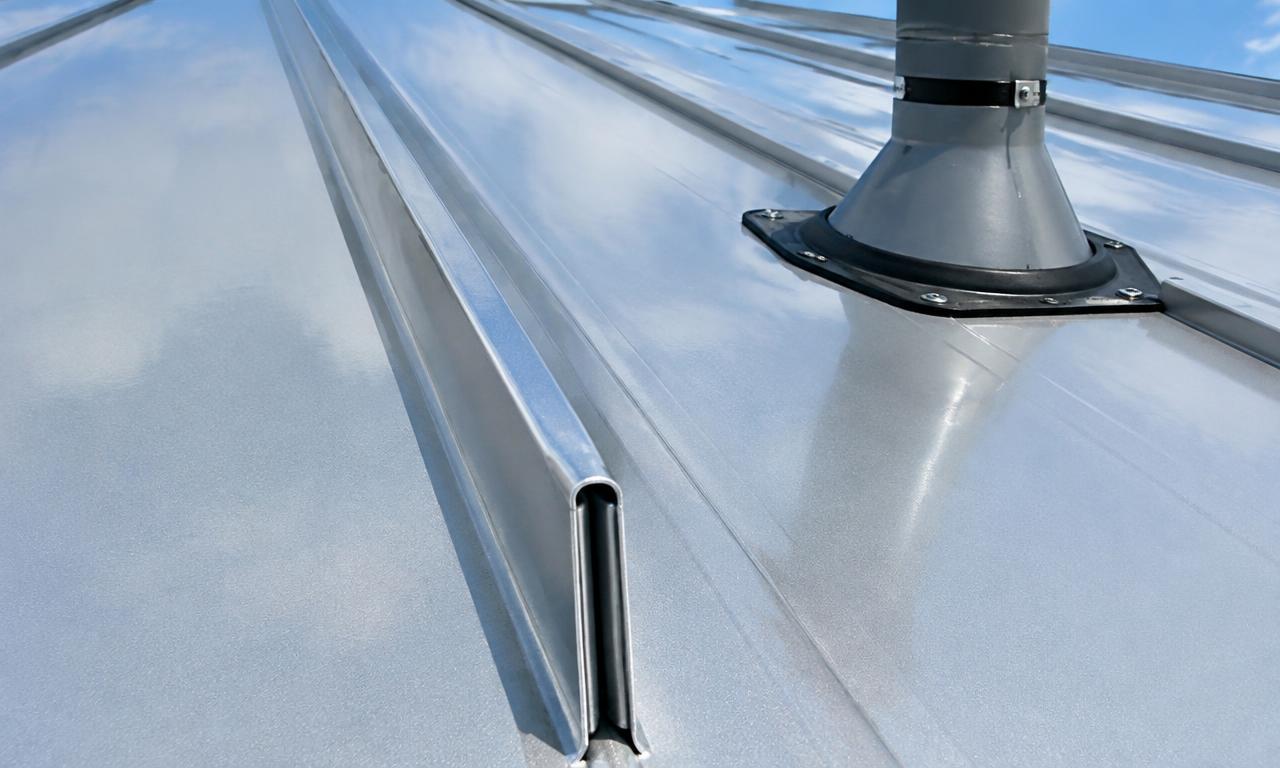
Standing seam is a metal roof with raised seams that join long panels side by side. Most of its fasteners are hidden in the seams. How well it works depends on the panel system, the clips, the trim and the details around pipes and walls. Ask the crew which system they install and how they handle each opening.
How standing seam panels work
Each panel is a long piece of metal that usually runs from the eave up toward the ridge. Its two long edges are bent up. Where two panels meet, those edges lock together into a raised seam.
Because the seams sit above the flat part of the panel, water runs down between them. There are few or no screws through the flat part. That is the main difference from exposed-fastener metal, where screws go right through the panel face.
Snap-lock and machine-folded seams
Snap-lock panels click together by hand. They are quicker to put on and are common on homes.
Machine-folded seams, also called mechanically seamed, are bent shut with a special tool. The Metal Construction Association notes that many systems call for hand seaming at the clips, then a machine for the full length. Folded seams are often used on lower slopes or where more wind strength is needed.
Which one fits your home depends on roof slope, wind exposure and the maker's rules. Ask the crew which type they plan and why.
The clips under the seams
Most standing seam panels are held down by clips hidden inside the seams. The clip is screwed to the deck or framing, and the panel edge locks over it.
The Metal Construction Association describes two common types. A one-piece clip is fixed to the roof. A two-piece sliding clip lets the top part move with the panel while the bottom part stays put. Sliding clips are common on longer panels. Some fixed clips still let a snap-fit panel slide a little, while folded seams over fixed clips allow very little movement.
The association also says clip spacing should come from an engineering design that covers the main field, the edges and the corners. Clips are specific to each panel system. So ask what clip your system uses and who set the spacing.
| Detail | Ask this | Why it matters |
|---|---|---|
| Seam type | Is it snap-lock or machine-folded, and what height? | Affects how the panels lock and how the system handles wind |
| Clips | Fixed or sliding clips, and what spacing does the maker call for? | Clips hold panels down and control how they move with heat |
| Panel length | How long are the panels, and where is the fixed point? | Long panels move more and need a plan for that movement |
| Penetrations | How are pipes, vents and skylights sealed? | Each opening breaks a smooth panel and needs care |
| Trim and flashing | Is trim made for this panel system? | Most leaks start at edges, walls and openings |
Why metal movement matters
Metal grows when it warms and shrinks when it cools. A long panel can move a fair amount over a sunny day after a cold night.
If a system is not set up for that movement, the association warns of panel buckling, clip damage, fastener strain and noise. Each panel also needs one fixed point so it does not slowly creep down the roof. A good install plan names that point.
Openings: pipes, vents and skylights
Every pipe or vent through a metal panel needs a seal that can handle the panel moving. Many crews use a flexible boot clamped to the panel. Where possible, they place openings in the flat part of a panel, not through a seam.
Big openings like skylights or chimneys need custom flashing that ties into the seams above and sends water around. Ask for photos or drawings of how they handle each opening on your roof.
Trim, edges and walls
Most leaks on a metal roof start at the details, not in the middle of a panel. Ask how these will be done.
- Eave trim at the gutter edge.
- Rake trim along the sloped ends of the roof.
- Ridge cap and how it lets air out if the attic is vented.
- Wall flashing where the roof meets siding or brick.
- Valley pans where two slopes meet.
- Closures that block wind, bugs and snow at panel ends.
What goes under the panels
Most home standing seam roofs go over a solid deck with an underlayment. The maker will list what underlayment works with its panels, especially in hot sun under dark metal.
Ask what deck and underlayment are planned. If the old deck has soft spots, those should be fixed first. Our roof decking page explains how to handle that in a bid.
Paint, metal and color
Most panels are steel with a metal coating under the paint. Some are aluminum. Paint systems differ in how well they hold color and resist chalking.
Light colors and special cool roof paints reflect more sunlight. The Energy Department's cool roof guide explains how reflective roofs can lower roof heat. How much that helps a home depends on insulation and climate, so treat savings numbers as estimates.
Snow sliding off
Snow can slide off metal in a large sheet. That can hurt people, bend gutters and crush plants below.
Snow guards hold snow on the roof so it melts slowly. Ask whether the maker approves the guards and how they attach without holes through the panel face.
Safety on a metal roof
Metal roofs can be slick, even when dry. OSHA's fall protection rule covers roofing work. Crews on steep or high roofs need a fall protection plan suited to the job.
Homeowners should not climb onto any roof. Look from the ground with binoculars and let the crew handle roof access.
Care and checks over time
Standing seam needs less screw upkeep than exposed-fastener metal, but it still needs checks. Look at trim, sealants, boots and snow guards after big storms.
Keep gutters clear and branches cut back. Scratches in the paint should be touched up with the paint the maker recommends.
Warranties
Metal roofs can come with a paint warranty, a panel warranty and a workmanship warranty. Each covers different things. The FTC says you have a right to read a warranty before you buy. Ask for each one in writing.
Also ask what voids them, like walking on panels, using the wrong sealant or mounting things without approval.
Low slopes and seam choice
Standing seam can work on lower slopes than many other roofs. But not every panel can. Each system has its own lowest slope.
Folded seams are often used on the flattest parts. Snap-lock panels may need more slope. Ask the crew for the maker's slope limit for the exact panel. Do not let anyone guess.
Panel width and oil canning
Wide, flat panels can show a wavy look called oil canning. It is usually a looks issue, not a leak. Heat, the deck surface and how tight the panels were set all play a part.
Some panels have small ribs or lines pressed into the flat part. These can make waves less noticeable. Ask the crew about it if a smooth look matters to you. Ask to see a finished roof in person.
Gutters under a metal roof
Water and snow come off metal faster than off many other roofs. Gutters need to be sized and hung to handle that. Snow sliding off can also tear gutters down.
Ask how the gutters will be attached and whether snow guards are part of the plan. If you are keeping old gutters, ask if they will work with the new roof edge.
Ventilation and what is under the roof
If your attic is vented, the ridge on a metal roof can let air out. The ridge vent must be made for that panel system. If your attic is sealed on purpose, the ridge should not vent.
Ask what kind of attic you have and how the ridge will be built. The answer changes the trim and the closures at the top of the roof.
Inspection after a big storm
After high wind or hail, look from the ground with binoculars. Check for bent trim, loose ridge caps, lifted panel ends and dents. Look at boots around pipes.
Do not climb up. If you see a problem, ask a crew to check it. Dents may be cosmetic or may affect the panel. Only your insurer can say how they treat it.
- Trim pulled away at the edges or the ridge.
- Panels that look lifted at the eave.
- Missing or bent snow guards.
- Boots that look torn or loose.
- Dents in the panel face or seams.
Exposed fasteners vs. standing seam
This page is about standing seam. Some metal roofs instead use screws right through the flat part of the panel. Those screws have rubber washers that wear with time.
Both can work. Standing seam has fewer holes in the panel. Our metal roofing page compares the two and explains when each one makes sense.
Getting a clear bid
A standing seam bid should name the maker, the panel line, the seam type, the metal and thickness, and the paint. It should list the clips, trim, underlayment and any snow guards.
Ask whether the crew forms panels on site or buys them made. Ask how they will handle each pipe and vent. If two bids look far apart in price, these details often explain why.
Planning roof add-ons ahead
Think about what you may mount on the roof later. Solar panels, satellite dishes, new vents and snow guards all need a plan on metal. Each one can mean a hole or a clamp on a panel or seam.
Tell the crew about these plans before the roof goes on. They can place vents and pipes to leave room, and they can tell you which clamps the maker allows. A little planning now can save holes and leaks later.
How our request form works
We serve homes and businesses across the Omaha area. This website is a preview right now. The online form checks your answers, but it does not save or send them yet, so no roofer gets your request from it.
When online requests are turned on, this note will change. Until then, the form is a way to see what we will ask: your town or ZIP, what you see and what kind of help you need. We do not sell your details.
Common questions
Are all standing seam roofs the same?
No. Panels differ in seam type, height, width, metal and paint. Clips and trim differ too. Each maker has its own install rules. Ask which system and which install guide your crew follows.
Can I walk on a standing seam roof?
Do not walk on any roof yourself. Metal can be slick, and some panels dent if stepped on in the wrong spot. Leave roof access to a trained crew with fall protection.
Does standing seam stop hail damage?
No roof is hail-proof. Metal may dent from hail even if it does not leak. Some panels have impact ratings. Ask your insurer how they treat dents before you choose.
Is standing seam loud in the rain?
Sound depends on what is under the panels, like solid decking, underlayment and attic insulation. Over a solid deck and an insulated attic, many owners find it close to other roofs. We cannot promise how it will sound on your home.
Can solar panels go on standing seam?
Often, using clamps that grip the seams. Ask the solar installer and the roof maker which clamps are approved so the roof warranty is not affected.
Related help
Sources we checked
Official and standards pages we used to check facts on this page. Rules can change, so confirm with the source.