Quick answer
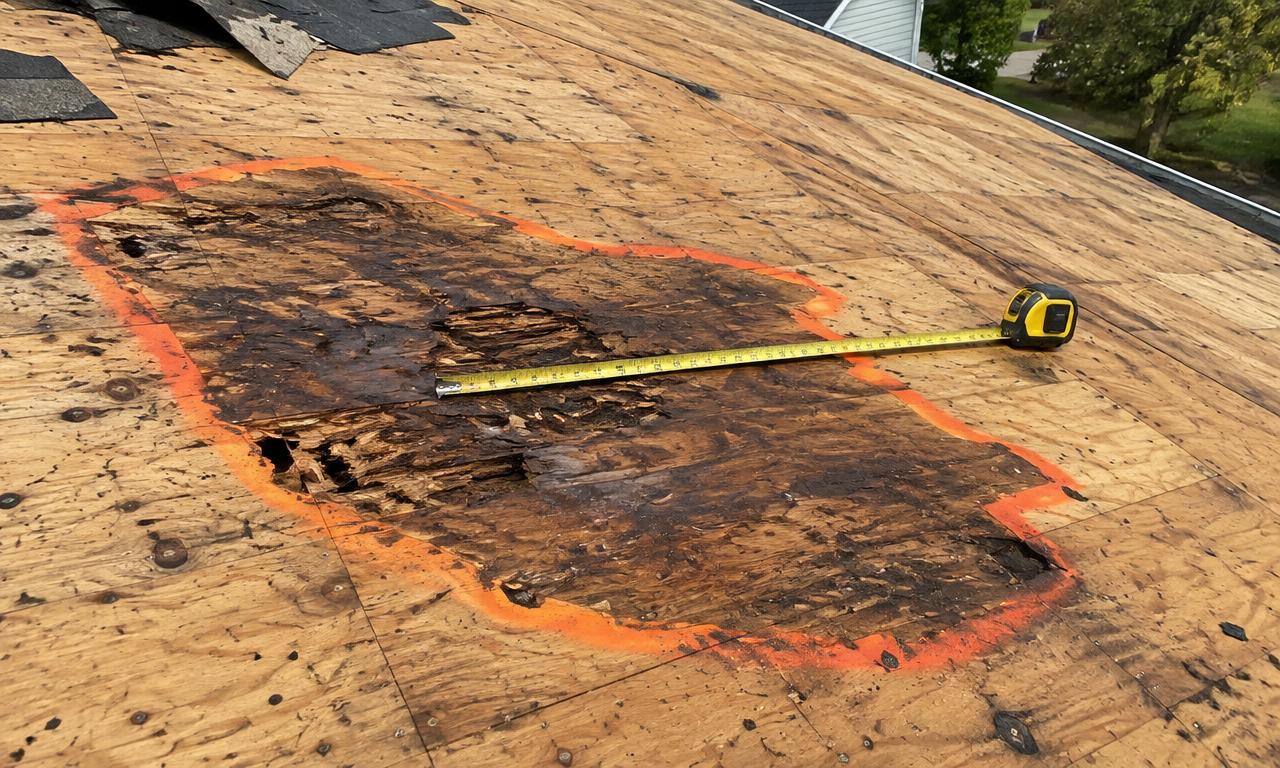
Roof decking is the wood under your shingles. Bad spots are often hidden until the old roof comes off. A fair bid explains up front how decking will be checked, priced and recorded if damage turns up. Ask for a set price per sheet, photos before new wood goes on, and your okay in writing before any extra work.
What decking is and why it matters
The deck is the flat layer nailed to the rafters or trusses. It gives the shingles and underlayment something solid to hold onto. Most homes use plywood or OSB panels. Some older homes have wide boards.
Shingles are only as good as the deck under them. Nails need firm wood to grip. A soft deck can let shingles loosen, lift in wind or show dips. New shingles on bad wood can wear out early.
Clues before tear-off
These signs suggest some decking may need work. They do not tell you how much.
- Waves or dips between rafters seen from the ground.
- Dark stains, black spots or soft-looking wood seen from the attic hatch.
- Nails poking through with rust around them.
- Daylight showing through the deck from inside.
- A long history of leaks in one area.
- Roofing that feels spongy to a crew walking it with proper fall protection.
| Question | A clear answer looks like | A vague answer looks like |
|---|---|---|
| How is bad decking found? | The crew checks each area after tear-off and marks soft, rotted or broken wood | We will see |
| How is it priced? | A written price per sheet or per board foot, with what it includes | Extra if needed |
| How many sheets are in the base price? | A stated number, or none, in writing | Not mentioned |
| How will you show me? | Photos and a count before new wood goes on | Trust us |
| When do I approve extras? | Before work goes past a set limit, in writing or by text | On the final bill |
Common causes of bad decking
Slow leaks are the top cause. Water gets in at worn flashing, a cracked pipe boot or missing shingles and soaks the wood over months or years.
Moist air from the house can also wet the deck from below. In winter, warm, damp air that leaks into a cold attic can form frost on the deck and nails. When it melts, it wets the wood again. Our attic condensation page explains this.
Ice dams can push water under shingles at the eaves. Old or thin panels may also break down with age. A crew should note the likely cause, so the new roof does not suffer the same harm.
What should be in the bid
The FTC advises getting a written contract that spells out the work, the price and the payment plan. For decking, that means the bid should say how damage will be found, what counts as bad and what each fix costs.
Look for a unit price, like a price per sheet of new panel installed. Ask whether that price covers removal, the new panel, nails and disposal. Ask whether any sheets are already included in the base price, or none.
Also ask about edges. Some roofs need new boards at the eaves or around chimneys even when the main panels are fine. Ask how those are priced.
How a fair change order works
A change order should never show up for the first time on the final bill. Here is a clear process to ask for.
- The crew removes the old roof and checks the deck.
- They mark bad areas, often with spray paint, and count sheets or boards.
- They take photos that show each marked area before replacing it.
- They tell you the count and the cost using the unit price in your contract.
- You approve it in writing, by text or by email before they go past an agreed limit.
- They replace the wood and note it on the final invoice with the photos.
Setting a limit in advance
Tear-off days move fast, and the roof is open to weather. Waiting hours for an answer is not ideal. Many owners agree ahead of time on a dollar or sheet limit the crew can go up to without a new call.
Anything past that limit needs a fresh okay. Put the limit in writing. Make sure you can be reached on tear-off day, or name someone who can approve for you.
Board decks with gaps
Older homes sometimes have boards laid with spaces between them. Many shingle makers require a solid deck under their shingles. The crew may lay new panels over the boards or replace them.
This is a bigger change than swapping a few sheets. If your attic shows spaced boards, ask about it before you sign. It should be priced as its own line, not hidden in the decking unit price.
Panel type and thickness
The new wood should match what the shingle maker and local code require. That includes the panel type, thickness and how it is nailed. Ask the crew to name the panel and confirm it fits the shingle install guide.
Ask how they handle spots where new and old panels meet. A clean, flat surface helps the new shingles lie right.
Weather on tear-off day
Bare decking can get wet if rain comes. A good crew watches the forecast and only opens what they can cover the same day. Ask how they protect the house if a storm pops up.
Wet wood should dry before it is covered. Ask what they do if panels get soaked before underlayment goes on. The EPA notes that wet building materials can grow mold if they do not dry.
Permits and inspections
Roof replacement in Omaha may need a permit. The City of Omaha's permits page lists common questions and how to find out what applies. Ask your contractor whether a permit is needed for your job and who pulls it.
If an inspection is part of the permit, ask when it happens and whether the inspector looks at the deck.
Red flags with decking charges
Be careful with a bid that says only decking extra if needed, with no price. Be careful if no photos are offered. Be careful with a large decking charge that shows up after the job with no warning.
After storms, the FTC warns about crews who pressure you to sign fast or ask for full payment up front. Take your time, read the decking terms and ask questions.
Reading the final invoice
When the job is done, check the decking line on the invoice. It should list how many sheets or boards were replaced and the unit price from your contract. The total should match that math.
Ask for the photos the crew took before new wood went on. Keep them with your contract and warranty papers. If the count looks high, ask to see where each sheet went. A good crew will be glad to show you.
Repair jobs, not just new roofs
Decking questions come up on small repairs too. When a roofer lifts shingles to fix a leak, they may find soft wood under the spot. That can turn a small job into a slightly bigger one.
Ask before the repair how they will handle that. Will they call you first? What does a new sheet cost on a repair job? Small jobs may have a minimum charge, so ask about that too.
- Ask how big an area they can patch before calling you.
- Ask if they will photo the soft area before and after.
- Ask what caused the rot, so it does not come back.
- Ask if the repair affects any roof warranty you already have.
How to tell if the crew checked the deck
Some crews walk the bare deck and press on each area. Others tap it, look for dark stains and check around every opening. Both ways can work. What matters is that they actually look before covering it.
Ask the crew lead how they check. Ask them to send a photo of the bare deck before underlayment goes on. That simple step gives you proof the check happened.
Rot near edges and openings
Bad wood tends to show up in the same places. Eaves are common, where ice dams and overflowing gutters soak the edge. So are spots around chimneys, skylights, pipes and in valleys.
If your house had leaks in these areas, expect the crew to look closely there. Fixing the decking without fixing the flashing or the gutter will only bring the rot back. Ask what they will change so the new wood stays dry.
Who owns the decision
You are the owner, so the final call on extra work is yours. A crew can advise you, show you proof and give you the price. They should not decide for you without your okay.
If you are away on tear-off day, name a family member or friend who can approve changes. Put that name in the contract or an email. That keeps the job moving without cutting you out.
How our request form works
We serve homes and businesses across the Omaha area. This website is a preview right now. The online form checks your answers, but it does not save or send them yet, so no roofer gets your request from it.
When online requests are turned on, this note will change. Until then, the form is a way to see what we will ask: your town or ZIP, what you see and what kind of help you need. We do not sell your details.
Common questions
Can a roofer tell how much decking is bad before tear-off?
Only partly. Soft spots you can feel, sags and stains seen from the attic give clues. But a lot of damage hides under shingles until they come off. That is why the bid should explain how surprises will be handled.
What is a change order?
A change order is a written change to the job after the contract is signed. It says what extra work is needed, why and what it costs. You should agree to it before the work is done.
Is plywood better than OSB?
Both are common roof deck panels. The right one depends on the shingle maker's rules, local code and the crew's plan. Ask what they will use and why, and make sure it matches the shingle install instructions.
Why does my old roof have boards with gaps?
Some older homes have boards laid with spaces, often from a time when wood shingles were used. Many shingle makers need a solid deck. A crew may cover the boards with panels. Ask what the shingle maker requires.
Does insurance pay for decking?
It depends on your policy and the cause of the damage. Only your insurer can decide that. Keep the crew's photos and notes, since they help explain what was found.
Related help
Sources we checked
Official and standards pages we used to check facts on this page. Rules can change, so confirm with the source.