Quick answer
Water in your attic is not always a roof leak. In cold weather, warm, damp air from the house can sneak into the attic, freeze on nails and wood, then drip when it melts. A new roof will not stop that. A crew should look at where the water shows up, when it happens and how the attic is built before anyone sells you shingles.
How condensation forms
Warm air holds more water than cold air. When warm, damp air touches something cold, some of that water turns into drops or frost. You see this on a cold glass of water in summer.
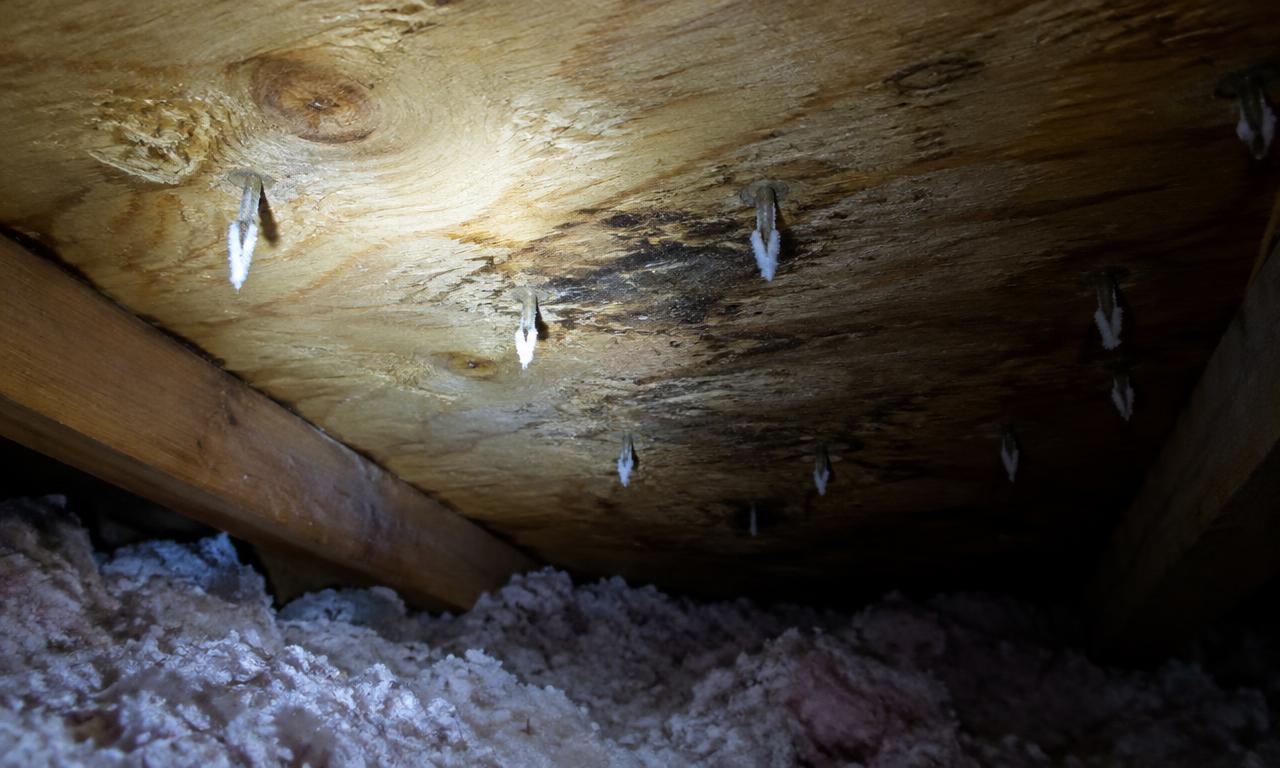
In winter, the roof deck and the nails through it get very cold. If warm house air leaks into the attic, its water can collect on them. When the weather warms up, that frost melts all at once. It can soak insulation and drip on the ceiling below.
Where the damp air comes from
Houses make a lot of moisture every day. These are common paths into the attic.
- Bath fans that end in the attic instead of outside.
- Kitchen or dryer vents with loose or broken ducts.
- Gaps around ceiling lights, pipes and wires.
- Attic hatches with no seal or weatherstrip.
- Gaps where walls meet the attic floor.
- A very humid house from showers, cooking, plants or a humidifier set high.
Why the timing tells a story
Write down when you see water. A roof leak usually shows up during a rain or while snow is melting on the roof. Condensation often shows up during a deep cold spell, or on the first sunny or mild day after one.
Also note where. Condensation tends to spread over a wide area. A roof leak usually starts at one spot, often under a pipe, vent, chimney, skylight or valley. That record helps a crew find the real cause faster.
| Clue | Points toward condensation | Points toward a roof leak |
|---|---|---|
| When it happens | Cold snaps, or a thaw right after one | During or right after rain or snow melt |
| Where it shows up | Spread out: many nails, wide damp areas, often on the colder north side | One spot or a line under a roof part like a vent or valley |
| What you see | Frost on nail tips, drips from many nails, damp on the whole underside | A drip trail or stain that starts at one spot |
| Bath and kitchen fans | Fans end in the attic, or ducts are loose | Fans vent outside properly |
| How it changes | Worse when the house is humid | Worse with wind-driven rain |
What you can check from the hatch
Open the hatch and shine a flashlight across the underside of the roof. Look for frost on nails in winter, dark wood, white or black spots, rusty nails and damp or matted insulation.
Look at where the bath fan duct goes. It should run to a cap on the roof or wall, not stop in the attic. Take photos from the hatch. Do not crawl in unless there is a safe floor to stand on.
Vented attics
Many homes have a vented attic. The attic floor has the insulation, and outside air moves through vents at the eaves and near the ridge. The goal is to keep the attic close to outside temperature and carry moisture out.
In a vented attic, the first fix is usually to seal air leaks from the house and make sure fans vent outside. ENERGY STAR lists air sealing and insulation as key steps. A crew may also check that eave vents are not blocked by insulation, and add baffles if needed.
Unvented, sealed attics
Some homes are built with an unvented, conditioned attic. The insulation is at the roof line instead of the attic floor. The Energy Department describes this as a proven design when done right. These attics are meant to be sealed. They are not supposed to have outside vents.
In this kind of attic, adding vents can cause problems. Moisture issues here need someone who knows how the roof was insulated and what the design calls for. Ask the crew what type of attic you have before they suggest changes.
Things that do not fix the cause
New shingles do not stop house air from leaking up. A powered attic fan can pull even more house air into the attic if the ceiling is not sealed. More vents in a sealed attic can bring in damp outside air.
None of these choices are always wrong. But each one should follow a clear finding, not a guess.
What a good attic check covers
A useful visit looks at the whole system, not just the roof.
- Where the moisture is and how widespread it is.
- Whether bath, kitchen and dryer vents reach the outside.
- Big air leaks into the attic from the house below.
- Insulation depth and whether it is wet or packed down.
- Whether the attic is vented or sealed, and whether vents are clear.
- Any roof leak sources like pipe boots, flashing or valleys, to rule them in or out.
- Damage to the deck, framing or ceiling that needs repair.
Indoor humidity
The EPA's moisture guide suggests keeping indoor humidity low, ideally under 60 percent, and using exhaust fans in baths and kitchens. A small humidity meter is cheap and easy to read.
If your home stays very humid in winter, condensation in the attic is more likely. Running bath fans long enough after showers and venting dryers outside can help.
Fixing damage after the cause is fixed
Wet insulation may need to dry or be replaced. Stained wood that is still firm may only need to dry. Soft or rotted deck panels may need to be replaced, which is roof work.
If you see a lot of mold, the EPA suggests getting help for large areas. Fix the moisture first, or the mold can come back.
Who to call
This problem can involve more than one trade. An insulation and air sealing crew handles leaks into the attic. A roofer checks roof parts and the deck. A heating or ventilation pro may fix fan ducts and humidity. A mold pro handles large mold growth.
We serve homes across the Omaha area and can match you with the right kind of help. Tell us what you saw and when.
A simple moisture log
A log turns a guess into proof. Keep it on your phone or on paper. It only takes a minute each time you see water.
- Write the date and the outside weather that day and the day before.
- Note if it was raining, snowing, melting or just very cold.
- Mark where the water showed up, room by room.
- Take a photo from the attic hatch if you can do it safely.
- Write down the indoor humidity if you have a meter.
- Note any changes, like a new bath fan or a humidifier.
Bath fans that end in the attic
This is one of the most common causes of attic moisture. A bath fan pulls warm, wet air out of the bathroom. If its duct ends in the attic, or falls off along the way, all that moist air goes right where you do not want it.
From the hatch, follow the fan duct with your flashlight. It should run to a cap on the roof or an outside wall. If you see a loose end lying in the insulation, that is a big clue. A heating or ventilation pro can reconnect it and seal it.
Frost that melts on a sunny day
Many owners first notice this problem on a bright day after a cold week. The sun warms the roof deck. Frost that built up for days melts all at once. Water drips from many nails and soaks the insulation.
It can look like the whole roof is leaking. In truth, the roof may be fine. The water came from inside the house and froze there. That is why timing matters so much when you call for help.
Low-slope roofs and cathedral ceilings
Condensation is not only an attic problem. Rooms with sloped ceilings that follow the roof have little or no attic space. Low-slope roofs over additions are similar. Moist air can get into the roof layers through light fixtures or gaps.
These roofs are harder to check because there is no hatch to look through. Stains on a sloped ceiling in winter, with no rain, are worth a call. A crew may need to cut a small opening or use a moisture meter to see what is going on inside.
New homes and new roofs
A new house can be damp for its first year or two. Wood, concrete and drywall dry out over time and give off moisture. That can add to attic condensation in the first winters.
A new roof can change things too. If the old roof had gaps that let damp air out by accident, a tight new roof may hold more moisture in. That does not mean the new roof is bad. It may mean the attic now needs better air sealing below. Ask the crew to check airflow and air leaks as part of the job.
What not to do
Do not seal the eave vents in a vented attic to keep cold out. That can trap moisture. Do not stuff insulation tight against the roof deck at the eaves. Do not cover the attic floor with plastic unless a pro tells you to, since it can trap water in the wrong place.
Do not spray bleach on attic wood and call it fixed. The EPA says to fix the moisture problem first. Cleaning without stopping the water only buys a little time.
How our request form works
We serve homes and businesses across the Omaha area. This website is a preview right now. The online form checks your answers, but it does not save or send them yet, so no roofer gets your request from it.
When online requests are turned on, this note will change. Until then, the form is a way to see what we will ask: your town or ZIP, what you see and what kind of help you need. We do not sell your details.
Common questions
Why are there drips from every nail in my attic?
Those nails stick through the deck into the cold attic. Warm, damp house air can freeze on them as frost. When the sun or a thaw warms the roof, the frost melts and drips. It often looks like many small leaks at once.
Will more roof vents fix condensation?
Not by themselves. The main cause is often house air leaking into the attic. Sealing those leaks usually comes first. In a vented attic, airflow can help too. Some attics are built sealed on purpose and should not get extra vents.
Should I replace my roof because of attic moisture?
Not if the roof is not the cause. New shingles will not stop moist air from below. Find the source first. If the deck is badly damaged, that may need work, but fix the cause too.
Can condensation cause mold?
Yes. The EPA says mold needs moisture to grow, and controlling moisture is the key. Dark spots on attic wood are worth a check. Large mold areas may need a mold pro.
Is it safe to go up and look?
Look from the hatch with a flashlight. Do not walk across an attic with no floor. You could step through the ceiling. Leave the walk-through to a crew with boards, lights and masks.
Related help
Sources we checked
Official and standards pages we used to check facts on this page. Rules can change, so confirm with the source.