Quick answer
We are serving Bellevue, Nebraska homes and businesses with roof replacement. Bellevue's published code says a roof recover, which means new shingles over old ones, is not allowed, so plan on a full tear-off. Reroofing over 100 square feet needs a permit, and the whole roof gets checked against current code. Get a written scope with a price for new deck wood. It should also cover yard care and vents. Confirm your address and permit with the city first.
The short answer for Bellevue roof replacement
A roof replacement in Bellevue usually means taking every old layer off. Then the crew puts a new roof on bare, sound wood. The city's published code points that way. For homes, it says a roof recover is not allowed, and reroofing over 100 square feet needs a permit.
A good replacement is about more than shingles. It includes the wood deck, the layer under the shingles, the metal at the edges, the flashing and the vents. It also includes how the crew treats your yard and how the job is closed out.
We are serving Bellevue. On this preview, the request form does not save or send anything yet. This page helps you read a roofer's scope, using our roofing bid checklist, and plan the week of work. If only one spot leaks, our Bellevue roof repair guide may fit better.
What Bellevue's code says about reroofing
We checked Bellevue's online code on October 21, 2026. It showed supplement S-12. Sections 8-18.6 cover roofs. Here is what they say, in plain words.
These lines are the city's changes to the home building code. First, a roof recover is not permitted. A recover means putting a new layer of shingles over the old layer. So on a Bellevue home, plan for a full tear-off. Commercial roofs can follow other rules.
Second, repairs that add up to one roofing square or less skip the permit, but only on a roof with one existing layer. A roofing square is 100 square feet. The code does not say over what span of time. A separate line says reroofing over 100 square feet needs a permit. Ask the city how your job fits.
Third, when a reroof needs a permit, the whole roof must meet current code. That means the new roof is checked as a full system, not just the new shingles.
The code site warns that its online text may lag the newest laws. So use this as a starting point. Ask the building official to confirm what applies to your address and your job.
Confirm who handles your address
Bellevue's building FAQ says the city covers its city limits and a two-mile area around them. A Bellevue mailing address does not prove which office handles your home. Give the city your exact address and ask.
Bellevue's Permits & Inspections page links to the city's GovWell portal. That is where permit requests are made online. Many roofers apply for the homeowner. Your contract should say who will apply and whose name is on the permit. The permit office on Wall Street is a city office, not ours.
| Stage | What should happen | What you should get |
|---|---|---|
| Before you sign. | The roofer counts layers, checks the deck from the attic, and notes vents. | A written scope with a deck price per sheet. |
| Permit. | Someone confirms jurisdiction and applies in GovWell. | The permit number and who holds it. |
| Week before. | You plan parking, staging and how the yard will be protected. | A start date and a rain plan. |
| Tear-off. | All old layers come off down to the deck. | Photos of the bare deck and any wood swapped. |
| New roof. | New underlayment, edges, flashing, vents and shingles go on. | Product names that match the bid. |
| Wrap-up. | Cleanup, magnet sweep and any city inspection. | Final bill, warranty papers and inspection record. |
Write the scope line by line
A clear written scope lets you compare bids fairly. The Federal Trade Commission tells people to get written estimates and sign a written contract before work starts. For a Bellevue reroof, ask each roofer to cover these lines.
- How many layers will be torn off.
- A plan for checking and fixing the deck, with a price per sheet.
- The brand and product line for shingles and underlayment.
- Where code needs ice barrier on your home, and what product and layout they will use there.
- New drip edge, which is the metal strip at the roof edge.
- New or reused flashing at walls, chimneys and skylights.
- New pipe boots and vent parts.
- Whether the attic is vented or a designed unvented roof, and the vent or insulation plan for it.
- Who gets the permit and who schedules any inspection.
- Cleanup, a magnet sweep for nails, and how debris leaves.
- The workmanship warranty from the roofer, in writing.
Deck boards: agree on the plan before tear-off
The deck is the layer of wood boards under the shingles. Nobody can see all of it until the old roof comes off. Some boards may be soft, cracked or rotten from old leaks.
A fair bid plans for this. It lists a price for each sheet of new wood. It also says how the roofer will tell you. A good practice is to send photos and get your okay before more than a set number of sheets are swapped.
You can do a little homework too. Some attics have a finished floor or a built walkway. If yours does, stand there and look for dark stains or daylight in the boards. If the attic has no safe floor, do not go in. Leave that check to the roofer. Our roof decking problems page explains what bad boards look like.
Ask about the whole roof system
A Bellevue reroof with a permit is checked as a whole roof. So think of it as one system. Each part has a job. Ask the roofer to explain each part in plain words.
Underlayment is the sheet that goes on the deck under the shingles. It is a second line of defense against water. GAF notes that codes and makers want solid, sound deck under shingles. Ice barrier is a sticky kind of underlayment used where ice and water can back up, like the eaves.
Flashing is the metal that seals joints, like where the roof meets a wall. Reusing old flashing can be fine in some spots, but ask why.
Most homes have a vented attic. In a vented attic, air often comes in low, at the soffits, and goes out high, near the ridge. Poor airflow can trap heat and moisture. Some roofs are built unvented on purpose, with insulation set up to keep damp air out. Those follow other rules. Ask which kind you have and how the plan fits it. Our attic insulation and ventilation page has more.
Plan the tear-off week
A little planning makes the work go smoothly. Talk with the roofer about these points a week or so before the start date.
- Where the dumpster or trailer will sit, and whether it can block the street or sidewalk. Ask the roofer to check with the city if it might.
- Where trucks and shingle bundles will be parked.
- Moving cars out of the garage and driveway on tear-off days.
- Covering things stored in the attic, since dust and nails can fall.
- Taking down wall art on top-floor walls, since hammering shakes them.
- Keeping kids and pets inside or away from the work side.
- A plan for rain, such as tarping the open deck each night.
- Telling neighbors when work will start.
Protecting your yard and siding
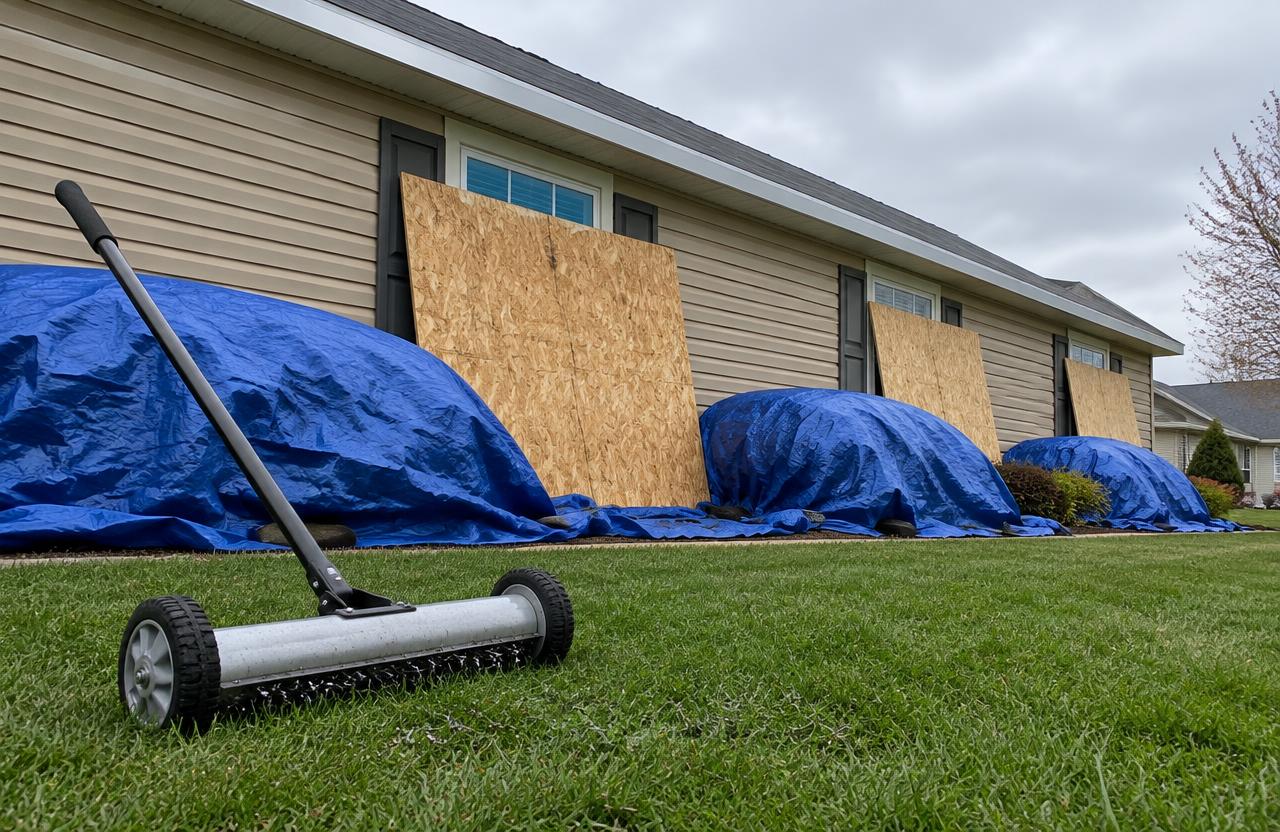
Old shingles and nails come down fast during tear-off. Ask the roofer how they protect the house and yard. Many crews cover beds and bushes with tarps. Some lean plywood over windows or use catch systems near walls.
Ask them to name any part of the yard they cannot protect, like a fragile patio or garden. Then you can move pots, toys and furniture ahead of time.
Nails are the big worry after a reroof. Ask the crew to run a magnet sweeper over the lawn, beds and driveway at the end of each day. Then do your own walk after they finish.
Inspections, final records and the walk-through
If a permit was issued, ask what inspection is needed and who will schedule it. Do not treat a scheduling message as proof that the inspection passed. Ask for the result in writing.
Before you make the final payment, walk the job with the roofer. Look from the ground, not from a ladder.
- The product names on the bundles or bill match the bid.
- Edges, gutters and siding look clean and undamaged.
- Vents and pipe boots look new where the bid said they would be.
- The yard and driveway have been swept for nails.
- You have photos of the bare deck and any wood swapped.
- You have the final bill, the permit and inspection result, and warranty papers.
Compare two or three bids the fair way
Bids can look very different, even for the same roof. One may seem cheap because it leaves things out. Another may seem high because it lists every part. Lay them side by side before you choose.
Use the same list for each bid. Check that each one tears off every layer, since Bellevue's code does not allow a recover. Check the deck price per sheet, the underlayment, the flashing and the vents. Check who pulls the permit. Then check the workmanship warranty and how long it lasts.
If one bid skips a line, ask that roofer to add it in writing. Do not guess. A small gap at the start can turn into a big extra charge later. Our roofing bid checklist has more help with this step.
Storms, insurance and timing
If a storm led to the replacement, call your insurance company early. Ask how they want the damage shown and whether they want to inspect before tear-off. Your roofer does not decide a claim.
Do not sign a contract that hands your claim to someone else unless you understand it fully. Read every page. Ask questions until the answers are clear.
How we serve Bellevue for roof replacement
We are serving Bellevue for new roofs. This preview's form is off, so it will not save or send a request.
For now, gather what you know. When you talk with a roofer, share the roof age and the number of layers. Say if it has leaked before. If you have old bills or warranty papers, keep them handy for the roofer.
Common questions
Can I put new shingles over my old ones in Bellevue?
The published code says a roof recover is not allowed. Plan on a tear-off. The online code can lag new laws, so ask the building official to confirm.
Does a full roof replacement need a permit in Bellevue?
The published code says reroofing over 100 square feet needs a permit. Ask the city which application fits and who will apply.
What does a whole-roof code review mean for me?
When a reroof needs a permit, the code says the whole roof must meet current code. Ask the roofer how their scope meets that, and ask the city what they will check.
Why does the bid list a price per sheet of wood?
Nobody can see all the deck boards until the old roof is off. A price per sheet lets you know the cost of bad wood before work starts.
Will my home be safe to live in during the work?
Most people stay home. Expect noise and some dust in the attic. Keep kids and pets away from the work zone, and move cars out of the drop zone.
Is the city's Wall Street office your office?
No. That is the city permit office. It is not our office and its phone is not our line.
Related help
Sources we checked
Official and standards pages we used to check facts on this page. Rules can change, so confirm with the source.
- Bellevue, NE Municipal Code, sections 8-18.6 (published online text; may lag newer laws)
- City of Bellevue, NE: Permits & Inspections (government office, not our contact)
- City of Bellevue, NE: GovWell permit portal
- City of Bellevue, NE: building FAQ (city limits and two-mile area)
- GAF (shingle maker): what is roof decking
- Federal Trade Commission: home repair scams (written estimates and contracts)
- Nebraska Department of Insurance: file an insurance complaint