Quick answer
EPDM is a rubber roof sheet, most often black, used on low-slope roofs for decades. Its seams are joined with special tape or glue, not heat. The weak spots are usually seams, edges and the seals around pipes and units. Ask a roofer to check those details, look for trapped water and explain whether a patch, a coating or a new roof fits your building.
What EPDM roofing is
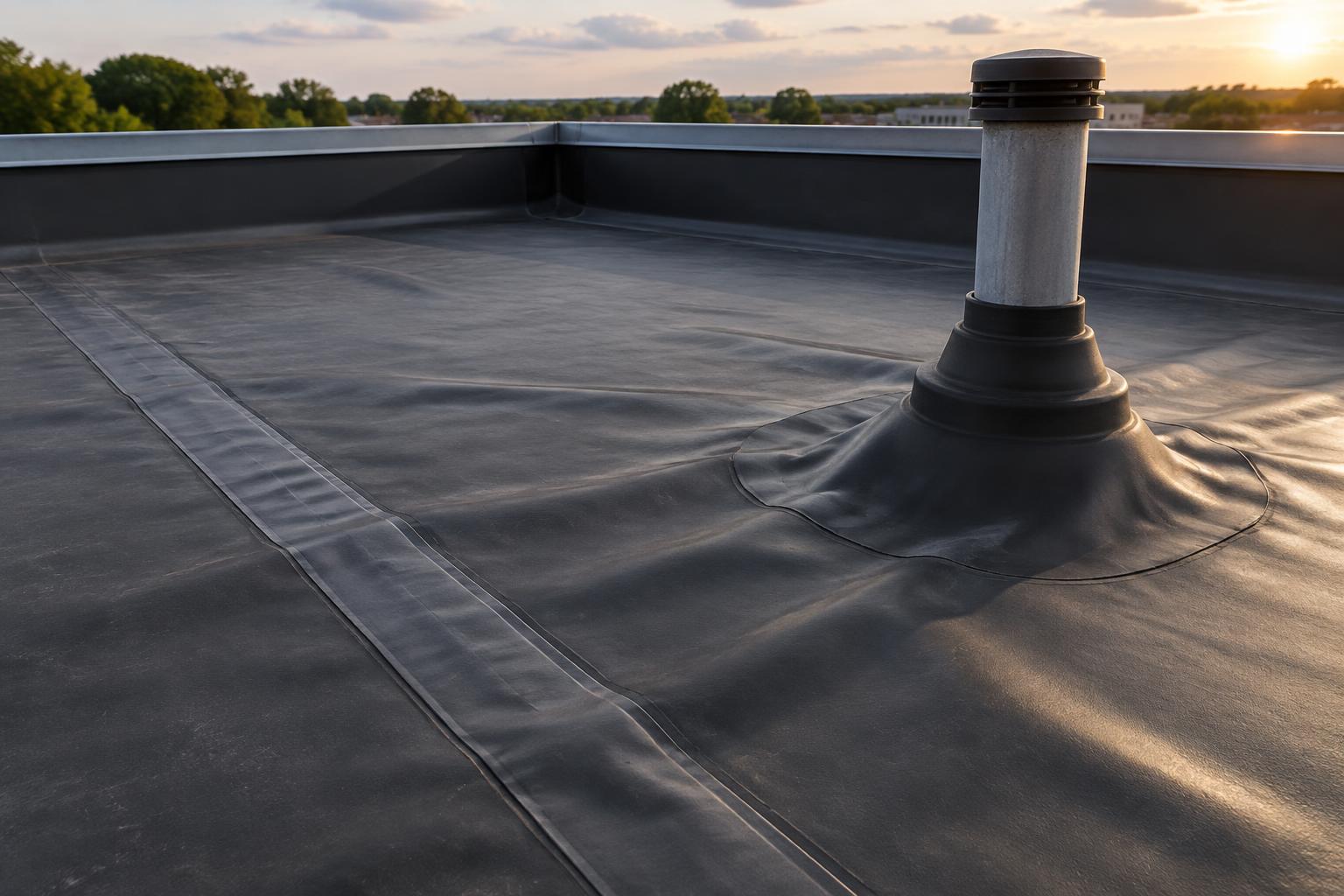
EPDM is a man-made rubber sheet. It comes in large rolls, often in black. Crews unroll it over the roof, then join the edges with seam tape or glue. The sheet stretches and moves with heat and cold.
There is a standard for EPDM roof sheet called ASTM D4637. It sets the tests the sheet must pass so it holds up as a roof exposed to weather. If a bid names the product, you can ask whether it meets that standard.
We serve building owners across the Omaha area and help them sort out EPDM repair and replacement choices.
Where you find EPDM
EPDM has been used on low-slope roofs for a long time. You see it on older strip malls, churches, schools, apartment buildings and small offices. You also see it on some homes, over porches and flat additions.
Because many EPDM roofs are older, owners often face the same question: is it time to patch, coat or replace? The answer depends on the seams, the edges and what is under the rubber.
Seams: tape and glue
EPDM seams are not welded. Crews clean and prime the edges, then press them together with seam tape or a bonding glue. Done well, the seam holds for many years.
Over time, older seams can let go. You may see an edge lift or a gap open up. Dirt and water get in, and the seam fails a little more with each season.
A roofer can often clean and re-seal a loose seam. Older rubber may need more prep before tape will stick. Ask how they will prepare it.
| What you or the roofer sees | Often points to | Ask the roofer |
|---|---|---|
| Seam edge lifting | Old seam tape or glue letting go | Can this seam be cleaned and re-taped? |
| Rubber pulled tight at walls | Shrinkage over time | Is the edge flashing being stressed? |
| Small hole or cut | Foot traffic, tools or debris | Is a patch enough, and is the board below dry? |
| Cracked seal at a pipe | Old pipe boot or flashing | Can you replace the boot? |
| Bubbles under the sheet | Glue letting go or trapped moisture | Do we need a moisture check? |
| Many patches already | Wear across the roof | Is it time to plan a new roof? |
Edges, walls and shrinkage
Rubber can shrink a little over many years. When it shrinks, it tugs at edges and the spots where it turns up a wall. You may see the sheet pulled tight like a drum, or a gap where it meets the metal.
That pull stresses the flashing at walls and curbs. A roofer can add new flashing or relieve the stress in some cases. When shrinkage is wide, it can be a sign that the roof is near its end.
Pipes, units and other openings
Each pipe, vent and unit that goes through the roof has a rubber boot or flashing around it. These can dry out and crack. They are a top source of leaks on EPDM roofs.
Air unit service adds foot traffic. Dropped screws and tools can cut rubber. Walk pads along service paths can help protect the roof.
How EPDM is held down
Like other flat roof sheets, EPDM can be fastened with plates, fully glued to the board below or held down with stone ballast. Ballast roofs are covered with river rock or pavers.
Ballast makes leaks harder to find, since the stone hides the rubber. Ask how the roofer will find a leak on a ballast roof and how they will put the stone back.
Black, white and energy use
A black roof absorbs more sun than a white one. In summer that means a hotter roof surface. The U.S. Department of Energy notes white roofs stay coolest and cool roofs are often cost-effective on low-slope commercial buildings.
Omaha has hot summers and cold winters, so the full-year trade-off depends on the building, insulation and use. Ask the roofer to explain the choice for your roof instead of picking a color by habit.
Repair, coat or replace an EPDM roof
A repair fits small, clear problems: a cut, a loose seam or a cracked pipe boot, on a roof that is otherwise sound and dry.
A coating approved for rubber can extend the life of a roof that is still in fair shape. It does not fix trapped water or weak boards.
A new roof makes sense when seams fail in many places, the rubber has shrunk badly, there are many old patches or trapped water is wide. A moisture check and a written plan help you choose.
Safe things you can watch for
Stay off the roof. These checks are safe and help the roofer.
- New ceiling stains after rain, with the date
- Drips near units, skylights or the roof hatch
- Puddles that last for days, seen from a safe window
- Loose edge metal you can see from the ground
- A recent storm with hail or strong wind
Safety and the crew
Federal safety rules require fall protection for roofing work on low-slope roofs with edges six feet or more above a lower level. Ask the crew how they will guard the edges, skylights and hatch on your roof.
EPDM glue and primers can have strong smells. Ask how the crew will keep fumes away from air intakes and people inside.
Questions to ask an EPDM contractor
Compare the answers across bids.
- Can my seams be re-sealed, or are they too far gone?
- Is the rubber shrinking at the edges?
- Will you check for trapped water under the sheet?
- If we replace, will you suggest EPDM again, or another system, and why?
- How will you protect the roof around units?
- What does the warranty cover, and who backs it?
Finding a leak on a rubber roof
Leaks on flat roofs are tricky. Water can enter at one spot, run under the rubber and drip somewhere else. A stain inside may be far from the hole.
Crews start by looking at the usual suspects: seams, edges, pipe boots and the flashing around units. They may use a water test on one area at a time, or tools that look for wet spots under the rubber.
On a stone-covered roof, the crew may need to move rock to see the rubber. Ask how they will mark and replace the stone so drains stay clear.
Hail, wind and EPDM
Rubber can take a lot of bending, but large hail can still cause punctures or harm the boards below. Wind can lift loose edges and seams, then peel the rubber back.
After a big storm, ask for a close check of seams, edges and flashing, with photos tied to a roof plan. Keep the storm date. Only your insurer decides what a claim covers.
What changes when you replace EPDM
When an old rubber roof comes off, the crew sees the boards below. Wet boards should be removed. This is also the best time to add tapered boards for better drainage.
You do not have to put EPDM back. Some owners switch to TPO or another system. Others stay with rubber because it fits their building well. Ask each roofer to explain their pick.
Also ask about the edges and walls. New metal and new flashing at every wall and curb help the new roof start strong.
Upkeep for an EPDM roof
Keep drains clear and check the roof in spring and fall. Look closely at seams, edges and pipe boots. Clean off branches and trash that hold water against the rubber.
Small seam repairs done early cost less than big leaks later. Keep records of each visit, with photos. Many warranties ask for that proof.
Signs an old rubber roof is near its end
No single sign settles it. But when several of these show up together, it is time to talk about planning a new roof.
- Seams letting go in many places, not just one
- Rubber pulled tight and tearing at walls or edges
- Many old patches, with new leaks near them
- Large areas of trapped water under the sheet
- Cracks or crazing on the surface of the rubber
- Leaks that keep coming back after repairs
What a good patch looks like
A good EPDM patch starts with a clean surface. The crew scrubs off dirt and old film, then uses a primer made for rubber. They press on a patch with rounded corners, since square corners tend to lift.
The patch should lie flat with no wrinkles or bubbles. The edges should be sealed all the way around. On seams, the repair should cover the open part with room to spare on each side.
Ask for photos of the finished patch. If you see a smear of tar or caulk over rubber, ask why. Those quick fixes often do not bond well to EPDM.
Records that help later
Keep a folder for the roof. Put in the original install papers if you have them, each repair bill and any photos. Note the date and spot of every leak.
These records help a roofer see patterns. They also help with warranty questions and give a buyer confidence if you sell the building.
Planning a rubber roof job
EPDM work often uses glue and primer, which can have a strong smell while it dries. Ask the roofer how they will keep fumes away from fresh air intakes and what hours they will work.
Ask where they will store rolls and stone, how they will reach the roof and how they will keep people below safe. A clear plan helps your staff, tenants and customers know what to expect.
Last, ask how the roof will be sealed at the end of each day, so a surprise storm does not cause a leak mid-job.
How our request form works
We serve homes and businesses across the Omaha area. This website is a preview right now. The online form checks your answers, but it does not save or send them yet, so no roofer gets your request from it.
When online requests are turned on, this note will change. Until then, the form is a way to see what we will ask: your town or ZIP, what you see and what kind of help you need. We do not sell your details.
Common questions
What does EPDM stand for?
Ethylene propylene diene monomer. It is a kind of synthetic rubber. Many people just call it a rubber roof.
Why are most EPDM roofs black?
Black is the classic color. White versions exist too. A black roof soaks up more sun, so the surface gets hotter in summer. Ask how the color fits your building.
Can I patch EPDM myself?
We do not suggest it. Going on a roof is risky, and a patch on dirty or wet rubber will not hold. A qualified roofer can clean, prime and seal the spot the right way.
How is EPDM different from TPO?
EPDM is rubber with taped or glued seams. TPO is plastic with heat-welded seams. Both can do well. The right pick depends on your roof, budget and the crew's skill with each.
Can EPDM be coated?
Some coatings are made for EPDM. The roof must be clean, sound and dry first, with any wet areas replaced. The coating must be approved for rubber roofs.
Related help
Sources we checked
Official and standards pages we used to check facts on this page. Rules can change, so confirm with the source.