Quick answer
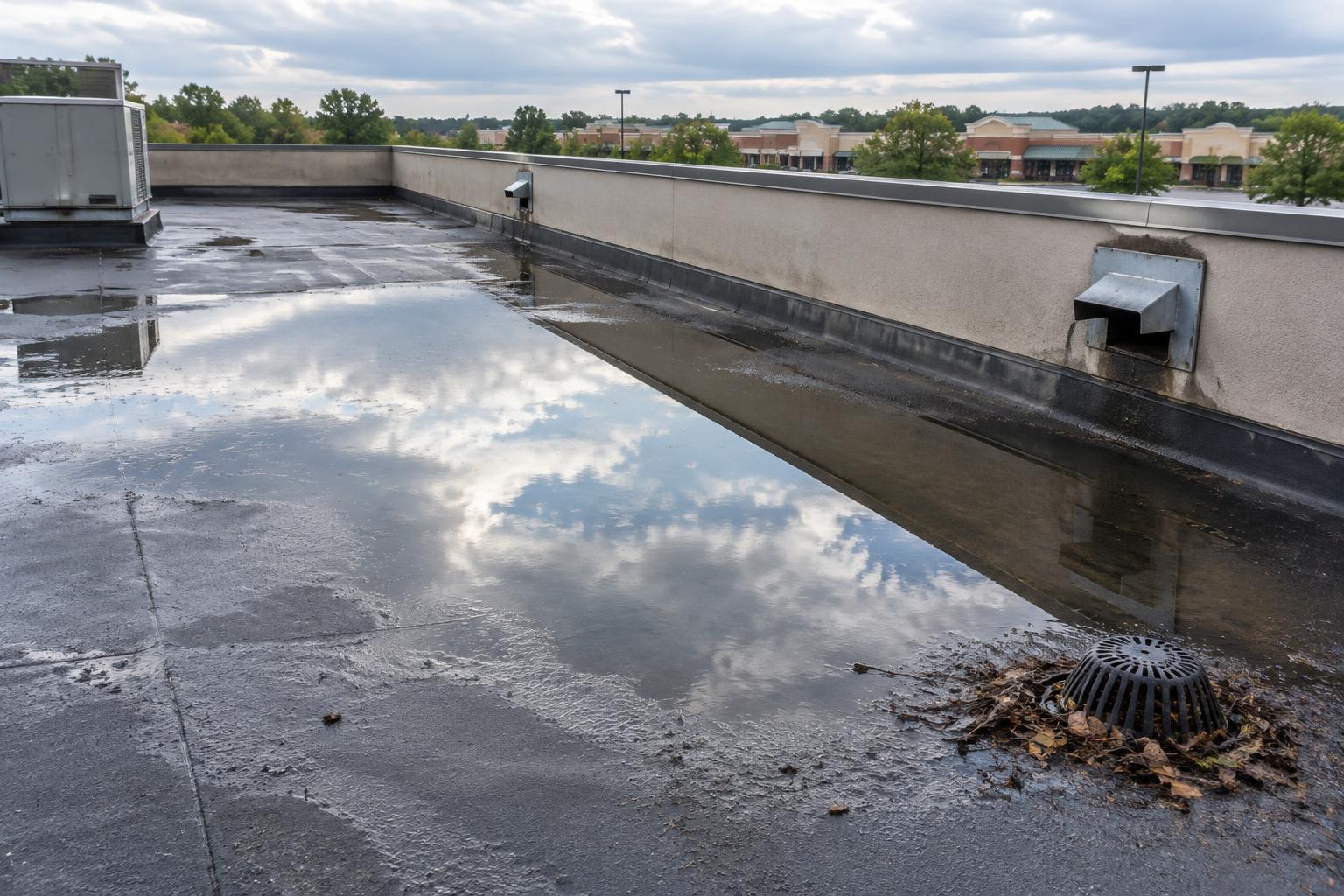
A flat roof is really a low-slope roof built to move water to drains, scuppers or gutters. Most flat roof trouble comes back to water that does not leave: clogged drains, low spots and worn seams. Before you choose a repair, a coating or a new roof, find out how water moves on your roof today and whether any water is trapped inside.
Flat roofs are not truly flat
A good flat roof has a gentle tilt. The tilt is small enough to walk on, but steep enough to move rain toward drains. When that tilt is lost, water sits.
The tilt can come from the frame of the building or from tapered insulation boards laid under the roof sheet. Over time, a deck can sag a little, or new units can add weight. Then low spots form.
We serve owners of shops, offices, churches, apartments and warehouses across the Omaha area. Many of these buildings have flat roofs, and we help owners sort out what is going on and what to ask for.
Why standing water matters
Water that sits on a roof for days adds weight. Each puddle pushes down on the deck, which can deepen the low spot. Over time it can get worse.
Standing water also works at seams and patches. Dirt and plant growth can build up where puddles dry. In cold months, freeze and thaw can stress the roof skin.
If you see a puddle from a window or a camera that is still there two days after rain, note the date and spot. Do not walk out to check. Give that note to the roofer.
Drains, scuppers and gutters
Every flat roof needs a way out for water. Inside drains sit in the roof and carry water down through pipes. Scuppers are openings in a short wall that spill water over the side. Some roofs use gutters along the edge.
The most common flat roof problem is simple: a drain clogged with leaves, trash or loose gravel. Water backs up and finds a weak seam. A roofer can clear it, check the drain cover and look at the seal around it.
Ask the roofer if your roof has enough drains for its size and if there is a backup path when one clogs. Some roofs have overflow drains or scuppers for that reason. Do not add or change drains without a qualified pro, since it can affect the whole building.
| System | What it is | Things to ask about |
|---|---|---|
| TPO | A light-colored plastic sheet with heat-welded seams | Seam welds, thickness, how it is held down |
| EPDM | A rubber sheet, often black, with taped or glued seams | Seam tape, flashing, shrinkage at edges |
| PVC | A plastic sheet with heat-welded seams | Grease or chemical exposure, seam welds |
| Modified bitumen | Rolls of asphalt sheet in layers | Laps, edges, how it was applied |
| Built-up roof | Many layers of tar and felt, often with gravel | Blisters, gravel cover, drain areas |
| Coating | A liquid layer over an existing roof | Is the roof dry and sound enough first? |
Seams and edges
Flat roof sheets come in rolls, so there are seams wherever two rolls meet. Seams are made by heat welding, glue or special tape, depending on the system. A good seam acts like one piece. A bad seam lets water slip under.
Edges matter just as much. The roof sheet turns up the side of short walls and is held by metal. Wind can pull at edges. Sun and cold can make the sheet shrink and tug. A roofer checks for gaps, loose metal and open laps.
Things that poke through the roof
Pipes, vents, hatches, skylights and air units all need holes in the roof. Each hole needs a seal, called flashing. Over years, flashing can crack, pull away or lose its glue.
Air units are a big one. Crews walk to them for service, and foot traffic can wear the roof. Ask about walk pads, which are tough strips that protect paths to units.
Choosing a system for a new flat roof
When a flat roof needs to be replaced, you will pick a system. The chart on this page shows common ones. Each has strengths. Your roofer should explain the choice in terms of your building, not just the price.
Light-colored roofs reflect more sun. The U.S. Department of Energy says cool roofs are often cost-effective on low-slope commercial roofs and that white roofs stay coolest. In a place with real winters, like Omaha, the energy trade-off depends on the building, so ask the roofer to explain it for your use.
Think about how the roof gets used. A roof with lots of foot traffic, grease from kitchen fans or many units may need a tougher setup in those areas.
Repair, coat or replace
A repair fixes a spot: a seam, a flashing, a tear or a drain seal. It makes sense when the rest of the roof is sound and dry.
A coating adds a new liquid layer over the whole roof. It can extend the life of a roof that is still in fair shape. It does not fix wet insulation or a weak deck, and it must match the roof type.
A new roof makes sense when problems are spread out, trapped water is wide, or the roof has had many repairs that keep failing. A moisture check helps you choose between these three.
Permits and bigger work
Some flat roof jobs change more than the skin. Adding tapered insulation can raise the roof edge. Moving a unit or fixing a sagging deck can touch the frame. In Omaha, the city counts changes to roof framing as structural repairs, which need full plan review.
Ask the roofer whether your job needs a permit and who will get it. For buildings in Bellevue, Papillion, La Vista or across the river in Council Bluffs, the local office for that address sets the rules.
Safe checks you can do from the ground or inside
You do not need to go on the roof to help. These checks are safe and useful.
- After rain, look for water stains on ceiling tiles and the top of walls.
- Watch where water comes out of downspouts and scuppers. A dry spout during heavy rain may mean a clog.
- From a safe window, note puddles that stay for days.
- Listen for drips during storms, and mark the spot.
- Keep a simple log with dates, spots and photos.
Questions to ask a flat roof contractor
Use these to compare bids.
- How does water move on my roof now, and where does it stall?
- Did you check for water trapped under the sheet?
- Which system do you suggest, and why for this building?
- Will you add slope where water ponds?
- How will you protect the roof around units and paths?
- What does the warranty cover, and what upkeep does it require?
Winter on a flat roof
Cold months bring their own trouble. Snow can pile up, and drifts can form next to taller walls and units. Ice can block drains, so melt water has nowhere to go.
If a lot of snow builds up, do not send staff on the roof to clear it. Clearing snow from a roof is risky work, and shovels can cut the roof sheet. Call a qualified crew, and ask them to keep drains open and work with care around seams.
After a hard winter, plan a check in the spring. Freeze and thaw can open small gaps that let water in once the rain starts.
Rooftop equipment and foot traffic
Every time a service tech walks to an air unit, the roof takes a little wear. Dropped screws, sharp tools and heavy parts can cut or dent the surface.
Walk pads mark a safe path and protect the roof below. Ask your roofer if your roof has them and if more are needed. It also helps to ask other trades to tell you when they go on the roof, so you can check for damage after.
New equipment is a big moment. A new unit, sign or antenna means new holes and new flashing. Ask your roofer to review the plan before the other trade cuts into the roof, so the warranty stays safe and the seals are done right.
Keep a roof log
A roof log is a simple record. Write the date, what you saw and where. Add photos taken from inside or from the ground. Note every repair, who did it and what it cost.
This log turns guesses into facts. When a roofer asks how long a leak has gone on, you will know. When you plan a new roof, you can show how often the old one needed help.
Flat roofs on homes and apartments
Flat roofs are not only for big stores. Many houses have one over a porch, a garage or a back addition. Apartment buildings and condos often have them too.
The same rules apply at a smaller size. Water must reach a drain, scupper or gutter. Seams and edges must stay closed. The spot where a flat roof meets a sloped roof or a wall needs careful flashing, since water collects there.
Some roofers who work mostly on shingles do not do much flat roof work. Ask any roofer how often they install or repair low-slope roofs, and ask for photos of past jobs.
What to expect when a crew comes out
A good visit starts with questions. Where did you see water? When? Was it during heavy rain or after snow melt? Your roof log makes this part fast.
Then the crew goes up through the hatch or with a ladder they set up safely. They walk the roof, check the drains and details, and take photos. Some crews mark findings on a sketch while they are up there.
Before they leave, ask them to show you the photos and explain what they found. Ask for a written plan that ranks the work. If they found water trapped under the sheet, ask how much and where.
How our request form works
We serve homes and businesses across the Omaha area. This website is a preview right now. The online form checks your answers, but it does not save or send them yet, so no roofer gets your request from it.
When online requests are turned on, this note will change. Until then, the form is a way to see what we will ask: your town or ZIP, what you see and what kind of help you need. We do not sell your details.
Common questions
Is some standing water normal on a flat roof?
A thin film right after rain is common. Water that stays for days after the rain stops is a warning sign. Roof makers often set limits in their warranty, so check yours and ask the roofer to look.
Can a flat roof be made steeper?
Often a roofer can add tapered insulation under the new sheet. It slopes toward the drains. It is usually done when the roof is replaced, not as a small repair.
Which system is best?
There is no single best. The right pick depends on your building use, drains, roof traffic, the deck below and your budget. Ask each roofer to explain why their pick fits your roof.
Can I put a coating on my flat roof?
Maybe. A coating needs a roof that is dry and sound, with any wet areas replaced first, and it must work with the roof type. A moisture check first is wise. Coatings do not fix wet insulation or a weak deck.
Do houses have flat roofs too?
Some do, often over a porch, garage or addition. The same ideas about drains and seams apply. Ask for a roofer who works on low-slope roofs.
Related help
Sources we checked
Official and standards pages we used to check facts on this page. Rules can change, so confirm with the source.