Quick answer
A commercial roof inspection is a written check of a low-slope roof, its drains, seams, edges and rooftop units. The useful part is the report: a roof map, dated photos, a list of problems ranked by urgency and honest notes on what the inspector could not see. Ask for that report before you agree to any repair or new roof.
What a commercial roof inspection is
Most offices, shops, schools, churches and warehouses have a low-slope roof. People often call it a flat roof, but it has a small tilt so water can find the drains. The top layer is usually a sheet of rubber or plastic called a membrane, or layers of tar and felt.
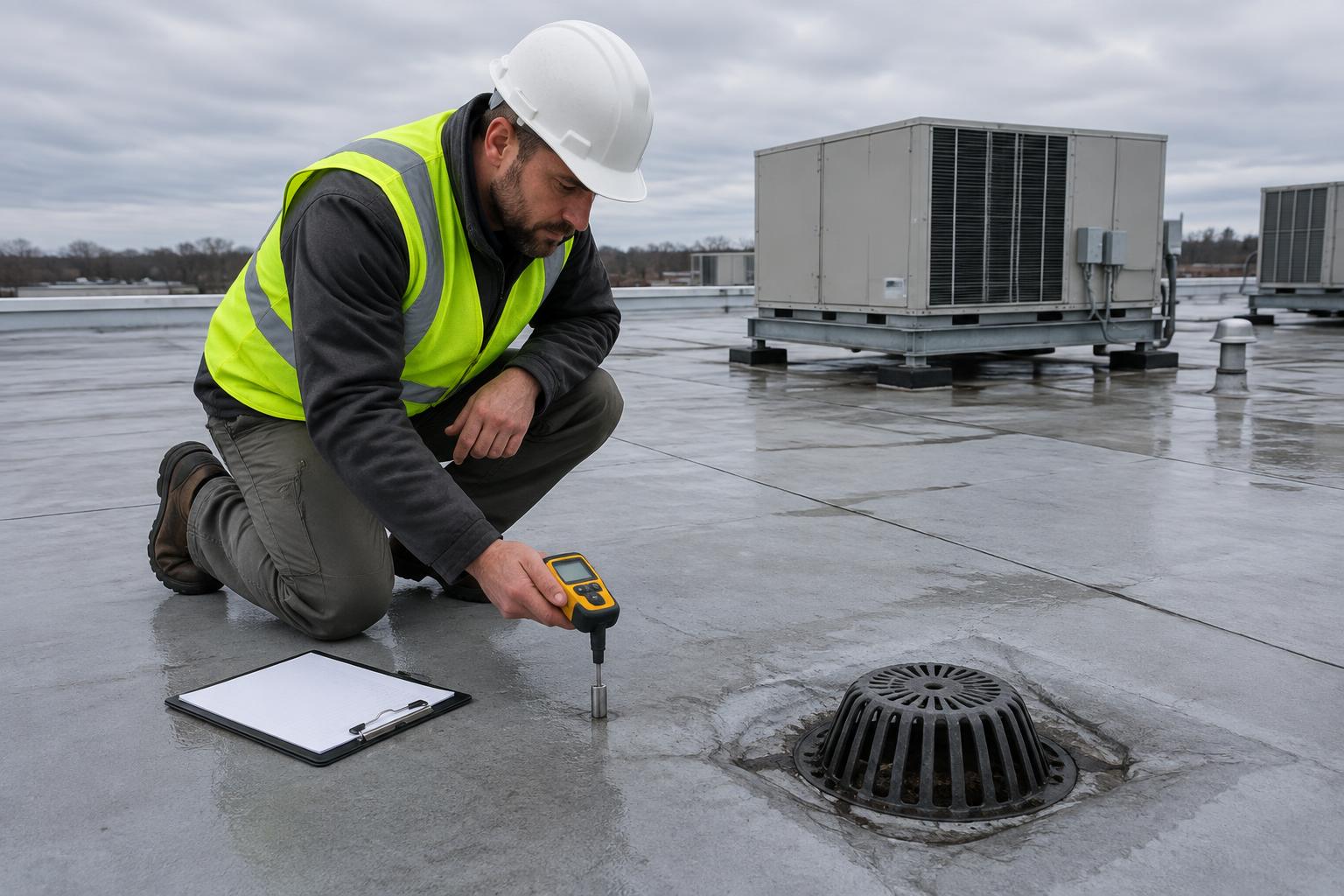
An inspection is a planned walk of that roof by a trained crew. They look at the roof skin, the seams where sheets join, the edges, the drains and everything that sticks up through the roof. Then they write it all down.
We serve building owners and managers across the Omaha area. We help you set up an inspection and know what a strong report looks like, so you can make a calm choice.
When to ask for one
Some times are better than others to get a full check. These are the common ones.
- You see a stain, drip or wet ceiling tile inside.
- A hail or wind storm just passed through.
- You are buying, selling or leasing the building.
- The roof is getting older and you need to plan your budget.
- A new rooftop unit, sign or solar setup is coming.
- Your warranty asks for regular checks.
- You have not had a check in a year or more.
What the crew looks at on the roof
The crew starts with the big picture. They walk the whole roof and note how water moves. They look for low spots where water sits for days after rain. That standing water is called ponding.
Next they go close. They check seams for gaps or lifted edges. They look at the metal edge and the cap on top of short walls, called parapets. They look for cracks, bubbles, tears and spots where the sheet has shrunk or pulled.
Then they check every opening. Pipes, vents, skylights and the curbs under air units all cut a hole in the roof. Each one has a seal called flashing. Flashing is one of the most common places for a leak to start.
Last, they check drains, gutters and scuppers. A scupper is an opening in the wall that lets water spill off the edge. Leaves, trash and gravel can block all three.
| Report part | What it shows | Why it matters to you |
|---|---|---|
| Roof plan or sketch | Each roof area, drain, unit and hatch, with labels | You can match every photo and note to a real spot |
| Dated photos | Close and wide shots tied to the plan | You have proof of the roof's state on that day |
| Problem list by urgency | Fix now, fix soon, watch | You can plan money over time |
| Moisture findings | Where wet areas were found and how they were checked | Wet areas change the repair choice |
| Limits | Areas not reached, and why | You know what is still unknown |
| Next steps | Repair, more testing or planning for a new roof | You get a plan, not just a list |
What the crew looks at inside
The inside tells the other half of the story. With your OK, the crew may look at ceiling tiles, the top of walls and the roof deck from below where it shows. They mark stains on the roof plan so they can match them to spots up top.
Water can travel a long way under a roof before it drips. A stain over the front desk may start near a unit thirty feet away. That is why a good crew links inside clues to the roof map instead of guessing.
Checking for trapped water
Under the membrane there is usually a layer of insulation board. If water gets past the skin, it can sit in that layer and stay hidden. How much harm it does depends on the type of board and how long it stays wet.
There are a few ways to look for it. An infrared camera, used at the right time of day, can show spots that hold heat in a different way. A moisture meter reads the roof at set points. A small test cut lets the crew see and feel the layers, and then they patch it.
No single tool is perfect. Ask the crew which method they will use, why it fits your roof and how they will confirm what they find. Trapped water matters because it can change the best plan from a patch to a bigger fix.
Safety on the roof is the crew's job
You should not go on the roof yourself. Leave it to the crew. Edges, skylights and roof openings are real fall risks, even on a roof that looks flat and wide.
Federal safety rules require fall protection for roofing work on low-slope roofs with edges six feet or more above a lower level. A warning line alone is not enough. The rule allows it only when it is paired with something else, like a guardrail, a safety net, a harness system or a trained safety monitor.
Ask the crew how they will get up, how they will guard the edges and skylights for this roof and who on the crew is in charge of safety. A clear answer is a good sign.
How to read the report
Start with the problem list. A useful report groups items by how soon they need care. Fix-now items might be an open seam over an office or a blocked drain. Watch items might be small surface wear.
Then match the photos to the plan. Each photo should have a label you can find on the map. If a photo has no place, ask where it was taken.
Look for a section on limits. Maybe a part of the roof was not safe to reach, or snow covered a corner. Honest reports say so. Missing areas are not the same as good areas.
Finally, look at the next steps. They should line up with the problems found. If the report shows a few small items but the advice is a full new roof, ask the crew to explain the jump.
Repairs that may need a permit
Small repairs to the roof skin often do not change the building's frame. Bigger work can. In Omaha, the city says any change to the framing of a roof counts as a structural repair, and structural repairs need full plan review.
If the report finds a sagging deck, rotted wood or a need to move a large rooftop unit, ask the roofer if a permit is needed and who will get it. Rules differ in nearby towns and in Council Bluffs, Iowa, so check with the local office for that address.
Getting ready for the visit
A little prep makes the visit faster and the report better.
- Find the roof hatch key or ladder access.
- Gather old roof records, warranties and past repair bills.
- List each leak spot inside with the date you saw it.
- Tell tenants and staff that a crew will be on the roof.
- Note any rooftop units that run hot or loud, so the crew can work around them.
- Ask your property manager if there are rules for contractors on site.
Questions to ask before you book
Write the answers down. Use them to compare crews.
- What will the written report include, and when will I get it?
- Will you check for trapped water, and how?
- What is your fall safety plan for this roof?
- Are you registered to work in this state?
- Will you separate must-do repairs from nice-to-have items?
- Can I share the report with other roofers for bids?
Checking the crew's paperwork
In Nebraska, contractors working on other people's buildings must register with the state Department of Labor. The state also says registration does not prove good work. So treat it as a basic step, not a seal of quality.
Ask for proof of insurance and for a sample report from a past job with names removed. A sample shows you what you will get before you pay.
Inspections for a sale, lease or loan
When a building changes hands, a roof report helps both sides. A buyer wants to know what is coming. A seller wants to avoid surprises late in the deal. A lender or insurer may ask for one too.
For these reports, ask the crew to note the roof system, its rough age if known, the main problems and anything that needs work soon. Ask them to keep opinion and fact apart. A photo of an open seam is a fact. A guess about years left is an opinion.
If you lease space, read your lease. Some leases make the owner handle the roof. Others split it. Knowing who is in charge helps you act faster when a leak shows up.
Turning the report into a plan
A report is only useful if it leads to action. Start with the fix-now items and get prices for them. Then set a date to look at the fix-soon list.
Keep each report in one folder with past bills and warranty papers. Over the years, that folder shows how the roof is aging. It also helps the next roofer, and it shows a buyer or insurer that you took care of the roof.
Many owners set a simple rhythm: a check in spring and fall, clean drains often in leaf season and a look after any big storm.
How our request form works
We serve homes and businesses across the Omaha area. This website is a preview right now. The online form checks your answers, but it does not save or send them yet, so no roofer gets your request from it.
When online requests are turned on, this note will change. Until then, the form is a way to see what we will ask: your town or ZIP, what you see and what kind of help you need. We do not sell your details.
Common questions
How often should a commercial roof be checked?
Many owners plan a check each spring and fall, plus a look after a big storm. Your roof maker's warranty may set its own rules, so read it. A roof with known problems may need checks more often.
Can I get an inspection without being pushed into a new roof?
Yes. Ask for the report first and the sales talk later. A good report ranks problems and says plainly when a repair is enough. You can take that report to more than one roofer.
Do I need to be there?
It helps to meet the crew at the start. Show them the roof hatch, any leak spots inside and your past records. You do not need to go on the roof.
What is a moisture survey?
It is a test that looks for water trapped under the roof skin. Crews may use an infrared camera, a meter or small test cuts. Each tool has limits, so ask which one they will use and how they confirm what it shows.
Will the report tell me how many years the roof has left?
It may give a rough idea, but no one can know for sure. Weather, upkeep and hidden water all change the answer. Treat any number as a guess and ask what it is based on.
Related help
Sources we checked
Official and standards pages we used to check facts on this page. Rules can change, so confirm with the source.