Quick answer
Commercial roof replacement removes or covers the old roof system and installs a new one. It is the right step when leaks are widespread, the membrane is worn out or much of the insulation is wet. A good plan covers the roof system, insulation, drainage, the building's work schedule and the warranty.
The short answer
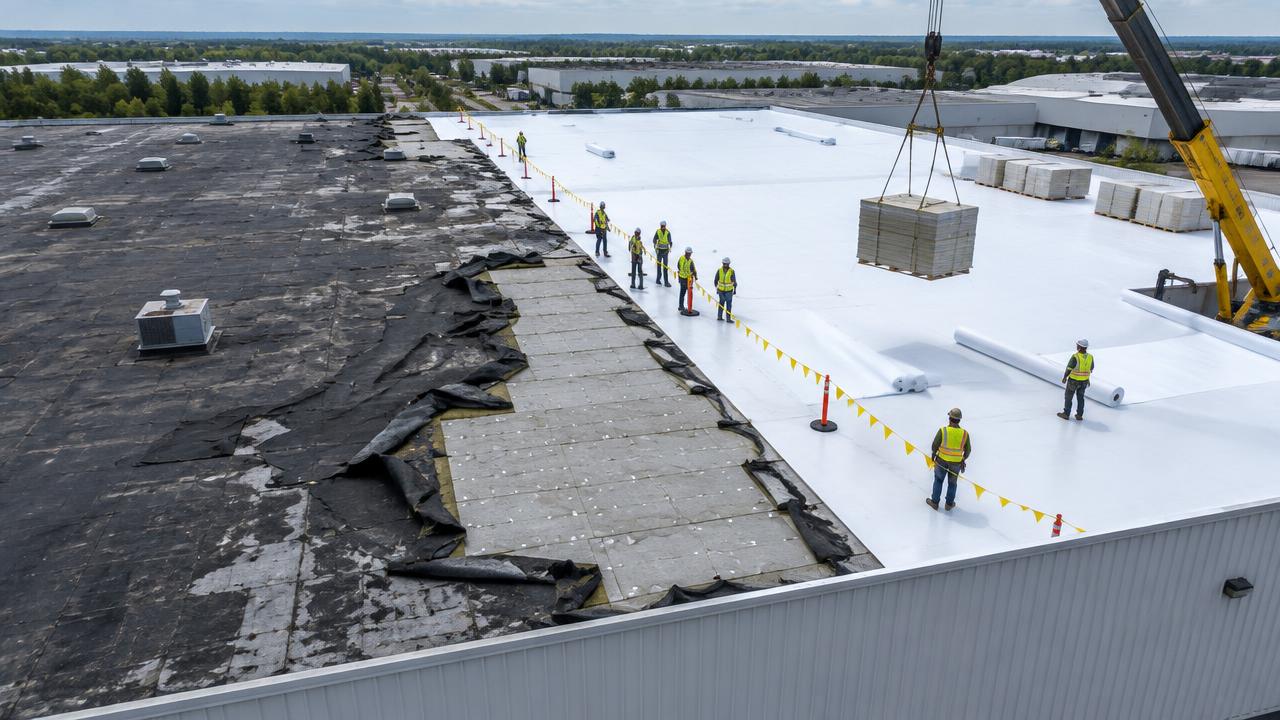
A commercial roof replacement puts a whole new roof system on a building. Most of the time the old roof comes off first. Sometimes a new roof can go over the old one, which is called a recover.
It is a big project for any business. The right choice depends on what is under the membrane, how water drains and how your building runs every day. This page walks you through each part.
Signs a replacement may be needed
- Leaks in many places, not just one
- Repairs that keep failing
- Membrane that is brittle, cracked or shrinking
- Large areas of wet insulation
- Seams opening across the roof
- Rusted or sagging deck sections
- A roof near the end of its expected life
Start with a full assessment
Before you get replacement bids, get the facts. A full assessment looks at the whole roof, the drains, the edges and every curb and pipe.
It should include a moisture check. That tells you how much insulation is wet. It also tells you if a recover is possible.
Ask for a core cut. That is a small sample through the roof layers. It shows how many roofs are on the building now and what they are made of.
| Question | Points to tear-off | Points to recover |
|---|---|---|
| How much insulation is wet? | A lot | Little or none |
| How many roofs are on now? | Already two | Only one |
| Is the deck sound? | Rust, rot or sagging | Solid |
| Do drains need to change? | Yes, major changes | Minor or none |
| Does code allow another layer? | No | Yes |
Tear-off or recover
A tear-off removes everything down to the deck. It lets the crew see and fix the deck. It costs more and makes more noise and waste.
A recover adds a new roof over the old one. It can cost less and take less time. But it only works if the old roof is dry and sound, and if code allows another layer.
Many codes limit roofs to two layers. If you already have two, a tear-off is likely required.
Choosing a roof system
Each system has strong points. Ask each roofer why they chose theirs for your building.
- TPO: light colored, heat-welded seams, reflects sun.
- EPDM: black rubber, bends well in the cold, taped seams.
- PVC: holds up to grease and some chemicals, heat-welded seams.
- Modified bitumen: layered asphalt, tough and easy to repair.
- Metal: long-lasting on the right slope; can be retrofit with a new membrane over it.
- Built-up: many layers, heavy, often with gravel.
Insulation and energy codes
When a roof is replaced, energy codes may require more insulation. That can raise the roof height at the edges, drains and doors.
Ask how the new insulation will meet code. Ask how it changes the edge metal, curbs and parapet flashing.
Tapered insulation can also add slope to move water to drains. That is a good time to fix ponding.
Fix drainage while you can
A replacement is the best time to fix drainage. Look at where water sat on the old roof.
The new design may add crickets, which are small raised slopes behind curbs. It may move or add drains or scuppers.
Ask to see the drainage plan on a simple roof drawing.
Keeping the business running
Replacement can take days or weeks. Plan it like any big project.
- A phasing plan that keeps parts of the building open
- Crane days scheduled around deliveries and customers
- Safe paths and signs for staff and the public
- Air intake protection from smells
- Daily cleanup of the work area
- A weather plan to keep open roof areas dry overnight
- One daily contact for your team
Safety on a big roof job
Ask the roofer for their safety plan. It should cover fall protection, crane lifts, fire safety for any hot work and how they keep the public away.
Ask where materials will be stored on the roof. Heavy pallets need to sit in safe spots on the structure.
What changes the cost
We do not list prices. Each roof is different. Ask each bid to show these.
- Roof size and shape
- Tear-off or recover
- Amount of wet insulation and deck repair
- New insulation needed to meet code
- Number of curbs, pipes, drains and skylights
- Edge metal and parapet work
- Crane and access needs
- Work-hour limits
- Warranty type and length
Warranties
The maker warranty covers the products. Some cover materials only. Some, called NDL or no dollar limit, can cover materials and labor if rules are met.
The roofer's workmanship warranty covers how it was installed. Get both in writing.
Ask what upkeep each warranty needs, like yearly checks and drain clearing.
Comparing bids
Put each bid in a column and each item in a row. Look for the system, thickness, insulation, drainage changes, edge details, warranty and schedule.
A low bid that leaves out wet insulation or edge work may cost more later. A high bid should explain what extra you get.
Planning for many buildings
If you manage several roofs, rank them by condition and risk. Replace the worst first and plan the rest over a few years.
Use the same report format for each building so you can compare and budget.
A typical project, step by step
Every job is different, but most follow a similar path. Knowing it helps you plan.
- Assessment: full roof walk, moisture check and core cuts.
- Design: system choice, insulation, drainage and edge details.
- Bids: compare scopes, schedules and warranties.
- Permits: the roofer or owner files with the city.
- Staging: cranes, dumpsters and material deliveries.
- Work in sections: remove, repair deck, insulate, install membrane, flash details.
- Punch list: final walk to fix small items.
- Closeout: warranty papers, photos and drawings.
The deck under the roof
The deck is the base the roof sits on. On many business buildings it is steel. On others it is wood or concrete.
During a tear-off, the crew can see the deck. Steel may have rust. Wood may have rot. These spots need repair before new insulation goes down.
Good bids list a price for each unit of deck repair, like per square foot. Ask for photos before any deck is replaced.
Edges, walls and details
Most leaks on new roofs start at details, not in the middle of the sheet. That means edges, parapet walls, curbs, drains and pipes.
Ask how each detail will be done. Will edge metal be new? How high will wall flashing go? Will curbs be raised if new insulation makes the roof thicker?
A drawing of the details is a good sign that the roofer has thought it through.
Coating instead of replacing
Some roofs that look old can be coated instead of replaced. A coating is a liquid layer that forms a new waterproof skin.
This only works if the roof is mostly dry and sound. Wet insulation must be cut out first. Coatings must match the roof type.
Our coating or replacement guide compares both paths in more detail.
After the new roof is on
Get the closeout package. It should hold warranty papers, product data, photos and a simple roof drawing.
Put the roof on a check schedule, often twice a year and after big storms. Keep drains clear. Ask other trades to use walk pads.
Write every visit and repair in a log. Many warranties need this to stay valid.
Questions to ask before you sign
- Tear-off or recover, and why?
- How much wet insulation did you find, and how is it priced?
- What system and thickness are you bidding?
- How will you improve drainage?
- What is the phasing plan for our business?
- What warranties come with the roof, and what do they need from us?
Permits and inspections
Most commercial roof replacements need a permit from the city. The roofer often files it, but ask to be sure.
The city may inspect parts of the work, like insulation or fire safety. Some maker warranties also need their own inspection at the end.
Keep copies of the permit and any inspection reports with your roof records.
Rooftop equipment
Air units, fans and other gear may need to be lifted or disconnected during the work. That often needs your HVAC company.
Plan this early so the building stays heated or cooled when it matters. Ask the roofer to schedule around it.
This is a good time to raise low curbs and fix old supports so the new roof can be flashed well.
Weather and the schedule
Roof work stops for rain, high wind and some cold days. Some materials need warm, dry weather to seal.
A good crew only opens as much roof as they can close the same day. Ask how they will keep the building dry overnight.
Ask for a schedule with a rain plan and a daily update from the crew lead.
Budget for the unknown
Even with a good assessment, some surprises show up during tear-off. More wet insulation or deck damage than expected is common.
Good bids set unit prices for these items in advance. Set aside some extra money in your budget for them.
Ask for photos and approval before extra work starts.
Noise, smells and neighbors
Tear-off is loud. Crews use power tools, scrapers and dumpsters. Some glues and primers have strong smells.
Tell tenants and neighbors before work starts. Share the schedule and a contact name.
Ask the roofer which products they will use and how they will keep fumes out of air intakes. Some low-odor options exist for sensitive spaces like schools, clinics and food areas.
Roof color and heat
Light roofs, like white TPO or PVC, reflect more sun. That can keep the top floor cooler in summer. Dark roofs, like black EPDM, soak up more heat.
Which is better depends on the building, the climate and how it is heated and cooled. Some energy codes ask for reflective roofs on certain buildings.
Ask the roofer how color fits your energy goals. Ask for product data, not just a claim of savings.
How our request form works
We serve homes and businesses across the Omaha area. This website is a preview right now. The online form checks your answers, but it does not save or send them yet, so no roofer gets your request from it.
When online requests are turned on, this note will change. Until then, the form is a way to see what we will ask: your town or ZIP, what you see and what kind of help you need. We do not sell your details.
Common questions
Can we stay open during a roof replacement?
Often, yes. It takes planning around noise, smells, cranes and safe paths. Ask each roofer for a phasing plan.
What is a recover?
A recover puts a new roof over the old one without tearing it off. It is only allowed in some cases. The old roof must be dry and sound, and code must allow another layer.
Which membrane is best?
It depends on the building. TPO, EPDM, PVC, modified bitumen and metal each fit different needs. Ask why a roofer suggests one over another.
What is an NDL warranty?
NDL means no dollar limit. It is a maker warranty that can cover materials and labor. It has rules, like inspections and approved installers.
Do you serve buildings across the metro?
Yes. We serve business buildings in all eight of our towns, from Elkhorn to Council Bluffs.
Related help
Sources we checked
Official and standards pages we used to check facts on this page. Rules can change, so confirm with the source.