Quick answer
Roof work on a store, strip center or shopping plaza is as much about people as it is about the roof. Plan around tenants, shoppers, entrances, deliveries, hoisting, debris and rooftop units. Employee exit routes must stay clear. OSHA's exit rules are not a full customer access code, so check other rules that apply. Leases and owner approvals vary. No honest crew can promise zero disruption or guaranteed overnight work.
Why retail roofs need extra planning
A retail roof often covers many businesses at once. One roof might sit over a grocery, a salon, a phone store and a dentist. Each one has its own hours, goods and customers.
Roof work brings noise, smells, hoists, debris and trucks. The aim is not to pretend these won't happen. The aim is to plan them so stores can keep working as much as the job allows.
Start with a site map
Get a plan of the building and the lot. Mark each tenant, each front door and each back door. Mark the loading areas, dumpsters, fire lanes and the busiest parking rows.
Then mark the roof. Show the rooftop units, skylights, drains and roof hatches. Lay the two plans together. Now you can see which roof areas sit over which tenants and doors.
Share the same map with every bidder. That way the bids are based on one plan, and you can compare them fairly.
Tenants and the lease
Leases often say who handles the roof, who pays and how much notice tenants get. Some leases give tenants rights about access to their space. These rules differ from lease to lease.
Read the leases before you set a schedule. Tell tenants what to expect: dates, hours, noise and who to call. Ask each tenant about their busy times and their most fragile goods. A jeweler, a pharmacy and a bakery will each have different needs.
| Group | What they worry about | What to settle before work |
|---|---|---|
| Tenants | Open hours, noise, leaks over stock | Notice, schedule and a contact for problems |
| Shoppers | Safe paths, open doors, parking | Covered or rerouted walkways, clear signs |
| Employees | Ways out, back doors, break areas | Exit routes stay clear and marked |
| Delivery drivers | Dock and alley access | Delivery windows versus crane and hoist times |
| Mechanical vendors | Rooftop units and refrigeration | Who disconnects, moves or protects each unit |
| Owner and lender | Lease rules, approvals, insurance | Written sign-off on scope and phases |
Shoppers and walkways
Shoppers need a safe way from their car to the door. Roof work near the front of a store can put people under the work zone.
Plan covered walkways, barriers or reroutes where needed. Use clear signs. Keep the routes easy to follow for people using wheelchairs, walkers or strollers. OSHA's exit route rule focuses on employees, not the public. Building, fire and accessibility rules may also apply, so check with the right local office.
Employee exits stay open
OSHA's rule on exit routes says routes must stay free and unblocked while employees are inside. Exits must stay marked. That doesn't change because a roof is being worked on.
Back doors often open onto the same alley a crew wants for a hoist or debris bin. Check that no bin, pallet, fence or crane zone blocks a back door or the path from it. If a route must change, the business plans and marks the new route first. The roof crew follows it.
Deliveries, hoists and debris
Stores get deliveries, often early in the day. Roof crews also want early hours, before the heat. The two can clash.
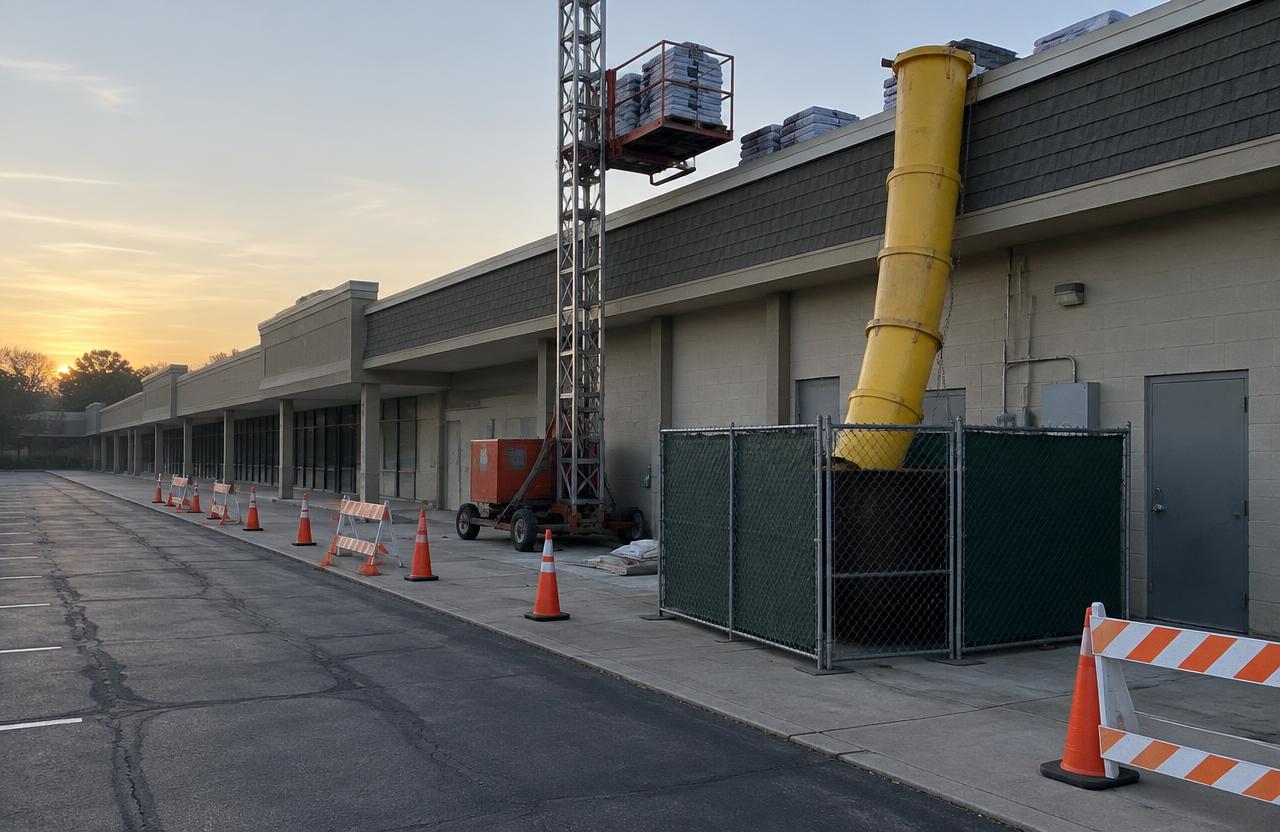
Agree on delivery windows and hoist times. Decide where the hoist goes, where the debris chute and bin go, and how the area is fenced. Plan for wind, which can blow loose debris off a roof. Keep loads from passing over people. A spotter may help during lifts.
Rooftop units and store equipment
Retail roofs are often crowded with HVAC units, exhaust fans, signs and wiring. Some tenants have walk-in coolers or freezers with gear on the roof.
Each unit may need to be shut down, raised, moved or protected. That is a job for the HVAC or refrigeration vendor, not a guess by a roofer. Plan when each unit goes down and how long. Think about what that means for food, medicine or comfort inside.
Gear on the roof also means holes in the roof. Each curb and pipe needs flashing that fits the roof system. Our page on penetration leaks explains more.
Dust, smells and air inside
Some roof products give off smells while they are put on or cure. Rooftop air intakes can pull those smells inside.
The EPA's guide for building owners stresses planning for air quality during building work. Work with the HVAC vendor to decide whether intakes near the work need to be closed for a time, or whether filters should change. Choose products with the facility team in mind. Tell tenants who may be sensitive, like clinics or salons.
Phasing the work
Most retail roofs can be split into sections. Doing one section at a time limits how many tenants are affected at once. It also limits how much roof is open if weather turns.
Each phase should have a start, an end and a plan to close up the roof each day. Agree on what happens if rain comes during the work. Who checks inside for leaks? Who talks to tenants?
Night and off-hours work
Off-hours work can help some stores. But it is not always possible or safe. It needs lighting and may face noise limits. Some products need certain air and surface temperatures to work well.
Ask the bidder if off-hours work fits this roof and this product. Get any limits in writing. Don't plan around a promise of overnight work unless you know it can be done.
Keep up with care after the job
A new roof still needs looking after. GAF's maintenance guide for commercial roofs calls for checks on a set schedule and after big storms. It also calls for keeping records.
Retail roofs get a lot of foot traffic from vendors working on units and signs. Each visit can damage the roof. Ask vendors to use walkways and to report damage. Keep a log of who goes up and why.
Questions to ask a bidder
How will you split the job into phases? Where will the hoist, chute and bin go? How will you keep front walkways and back exits clear?
Who will handle the rooftop units? How will you deal with smells near air intakes? What happens if rain comes mid-job? Who is my contact on site each day? What do you need from me for tenant notices?
Signs, awnings and storefronts
Store signs often mount on the roof edge or parapet. Awnings and canopies tie into the wall near the roof. Each one adds holes and joints that can leak.
Plan who removes, protects or reinstalls signs during the job. Tenants may own their signs, so they need to agree. Check that the new edge and flashing fit around each sign mount. Mark awnings that can't hold any weight, so no one leans ladders or gear on them.
Leaks over open stores
If a roof leaks over a store that is open, people and goods come first. Move shoppers away from the drip and any wet floor. Mark wet floors. Keep people away from wet ceiling tiles and lights.
Then call the person on the leak plan. Write down the spot, the time and the weather. Ask the tenant for photos. When a roofer comes, ask them to note the cause they found. A good record helps when the same spot leaks again.
Insurance and certificates
Owners and tenants often need proof that the roof crew has insurance. Leases may say what kind and how much. Some owners ask to be named on the crew's policy.
Ask each bidder for their insurance papers before work starts. Check the dates. Check that the names match the company you are hiring. This is between you, your leases and your insurance adviser. We don't set these rules.
Many owners, one roof
Some retail buildings have more than one owner. A row of shops might split the roof by lot line. A pad site might share a wall with a bigger store. Who owns which part of the roof matters.
Before you plan work, find out where each owner's part starts and ends. Seams between two roofs need a plan so neither side leaks. Get written approval from each owner whose roof or wall the work will touch.
Weather and holiday seasons
Retail has busy seasons. Many stores do not want roof work during the holiday rush. But weather limits also matter. Some products need warm, dry days.
Talk through the calendar early. Find the windows that work for both the tenants and the product. Leave room for rain days. A rushed job in poor weather can cost more later.
Keep tenants in the loop during the job
A short daily or weekly update goes a long way. Tell tenants which area is next, what hours the noise will run and when hoists will move. Post a phone number for problems.
Ask tenants to report any leaks, smells or debris right away. Quick reports let the crew fix small issues before they grow. Keep notes of each report and what was done.
How we serve retail property owners
We are serving owners and managers of stores, strip centers and plazas across the Omaha area. Use the form on this page to ask for a roof check or bid. Tell us about the tenants, hours and any rooftop gear.
We will treat your leases, approvals and tenant needs as part of the plan, not an afterthought.
Common questions
Can stores stay open during roof work?
Often some or all can, but it depends on the building, the work and the plan. A phase plan can limit how many tenants are affected at once. No one should promise zero disruption.
Can the work be done at night?
Sometimes. Night work can help with shoppers, but it brings lighting, noise, safety and local-rule questions. Some products also need certain temperatures. Ask what is possible for your job instead of assuming.
Who tells the tenants?
Usually the owner or property manager, based on the lease. The roof crew can supply the schedule and a contact. Check your leases for any notice or access rules.
Does OSHA cover customer safety?
OSHA's exit route rules protect employees. They are not a full code for customer access or public safety. Other rules may apply, such as building, fire and accessibility rules. Ask the right local office.
What about rooftop units over stores?
Each unit may need to be shut down, lifted or protected. That needs the tenant's or owner's HVAC vendor and a plan for comfort, food storage or goods inside.
Related help
Sources we checked
Official and standards pages we used to check facts on this page. Rules can change, so confirm with the source.