Quick answer
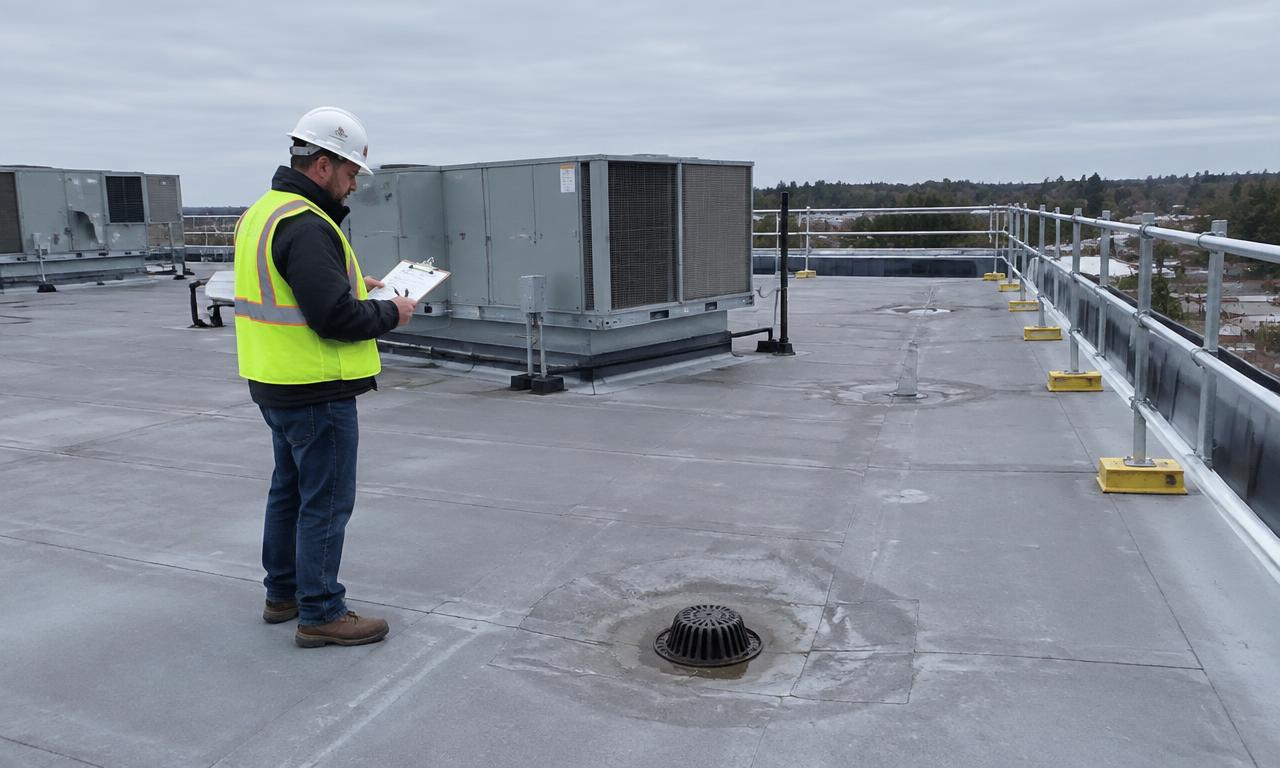
Commercial roof upkeep is a plan, not a single visit. It means planned checks, quick small repairs and a written record of what was found and fixed. The goal is to catch open seams, clogged drains and worn flashing early. Good upkeep ends with a clear handoff: photos, a ranked list of work and an updated roof log for the owner.
What roof upkeep covers
A commercial roof has a lot of parts that wear at different speeds. The field of the roof may look fine for years while a seam near an air unit opens up. Drains can clog in one fall. Sealants dry out in the sun. Upkeep is a way to look at all of these on a schedule.
A good upkeep visit does three things. It checks the roof. It fixes small items that are safe and simple to fix right then. And it writes down what was seen and done, with photos. That record is what makes upkeep worth paying for.
We serve businesses and building owners across the Omaha area. Upkeep is its own service, separate from a one-time inspection or a big repair.
Small fixes often done during a visit
These are common small jobs. Bigger work should be quoted first.
- Clearing leaves, trash and silt from drains, scuppers and gutters.
- Removing loose debris, old fasteners and scraps left by other trades.
- Sealing small gaps at pitch pans, pipe collars and edge metal with the right product.
- Patching small cuts or punctures with a patch made for that roof type.
- Resetting loose edge metal or counterflashing where it is safe to do so.
- Marking spots that need a bigger repair and taking photos.
The roof log: your most useful tool
A roof log is a simple record kept for the life of the roof. It holds the install date, the roof system, the warranty, and every check, repair and leak. It can be a binder, a shared folder or a spreadsheet. What matters is that it stays in one place and stays current.
When a leak shows up, the log helps a crew see what was done before. When you plan a new roof, it shows how often the old one needed help. When you sell or refinance, it shows you took care of the building.
- Roof plan sketch with drains, units and openings marked.
- Install date, system name, maker and warranty papers.
- Each visit: date, who came, what they saw, photos and what they fixed.
- Each leak: date, weather, room, what was found and the fix.
- Notes on work by other trades, like new units, vents or signs.
| When | What gets checked | What you should get back |
|---|---|---|
| Spring | Winter damage, drains, seams, flashing, edges and rooftop units | Photos, a ranked repair list and log entry |
| Fall | Leaves in drains and gutters, seams, sealants and openings before snow | Photos, drain status and fixes made |
| After big storms | Hail marks, lifted edges, loose metal and debris | Storm notes with dated photos |
| After rooftop work | Areas where other trades walked, cut or mounted gear | Notes on any new damage and who caused it |
| Each year | Warranty upkeep rules and the full roof log | A summary of the roof's condition and a plan for next year |
What a clear upkeep report looks like
After each visit, you should get something you can act on. A short report with photos beats a long one with vague words. Ask the crew to sort findings into groups.
Fix now: things letting water in or likely to soon, like an open seam or a blocked drain. Fix soon: wear that will get worse, like dried sealant. Watch: small things to check next time. Done today: what they fixed on this visit.
Each item should have a photo and a spot on the roof plan. That way the next crew can find it fast.
Drains, scuppers and gutters
Water must leave a flat roof quickly. When drains clog, water backs up and adds weight. FEMA's snow guidance warns that blocked drains can let melt water build up in low spots on flat roofs. That is a load the roof may not be built to carry for long.
Drains should have strainers in place. Scuppers and gutters should be clear. After leaf season and before snow, drains deserve a careful look. Note any water that stays after rain, since it can point to a drain or slope problem.
Seams, laps and the roof field
Most flat roofs are made of sheets joined at seams. Each system joins them a different way. Heat-welded seams, taped seams and asphalt laps all wear in their own ways.
During upkeep, a crew walks the field and looks for open seams, lifted laps, blisters, cracks and soft spots. Some probe seams with a tool to check for gaps. Spots near air units and walkways often show the most wear.
Flashing, edges and walls
Many leaks start where the roof meets something else. That includes parapet walls, roof edges, curbs under air units, skylights and pipes. The flashing at these spots works hard as the building moves with heat and cold.
Upkeep should look at base flashing on walls, the metal cap on top of parapets, edge metal and the seal around each opening. Loose or rusted metal and cracked sealant are common finds.
Rooftop units and other trades
Air units, exhaust fans, solar racks and signs all sit on or pass through the roof. Each one is a place water can get in. The people who service them also walk on the roof, drop screws and sometimes cut the membrane.
Ask other trades to tell you before they go up. After they leave, have your roof crew check their work area. Walk pads to and around units help protect the roof from foot traffic. Note any new damage in the log, with the date and who was up there.
Safety on the roof
Flat roofs feel safe, but edges, skylights and openings are real fall hazards. OSHA's fall protection rule covers construction work near unprotected edges. A crew needs a fall protection plan that fits the job and the roof, not just a warning line.
Skylights can break under a person's weight. Ask how the crew guards them. Staff who are not trained for roof work should stay off the roof.
Checks after storms
After hail or high wind, look from safe spots like a window or the ground. Then have a crew check the roof. Hail can bruise or puncture some membranes and dent metal. Wind can lift edges and peel back flashing.
Ask for dated photos of any damage. Keep them in the log. If you file an insurance claim, your insurer decides what is covered. The photos help them see what happened.
When upkeep finds bigger problems
Sometimes a visit finds more than small fixes can solve. Wide areas of open seams, wet insulation or many leaks may point to bigger repairs, a coating or a new roof.
If moisture is suspected, a survey can help. ASTM C1153 describes using infrared imaging to locate wet insulation. That practice says it does not find the cause of the moisture or where it got in. So a survey should be paired with a close look at likely entry points.
Warranty rules
Many commercial roof warranties have upkeep rules. They may require regular checks, prompt reporting of leaks and using approved repair methods. Some ask for notice before anyone else works on the roof.
The FTC says a warranty should be available to read. Get a copy of your full warranty and keep it in the log. Share it with your upkeep crew so they follow the maker's repair rules.
Setting up an upkeep plan
A plan works best when both sides agree on the details up front. Ask for these in writing.
- How many visits a year, and when.
- What is checked on each visit.
- Which small fixes are included and which are quoted first.
- How quickly they respond to a reported leak, if they offer that.
- What the report looks like and how it is delivered.
- Who keeps the roof plan and log up to date.
Handing off to a new manager or owner
Buildings change hands, and managers change jobs. A good handoff keeps the roof's history from being lost. Pass along the roof log, the warranty, the roof plan, the last few reports and the upkeep contract.
Write a short note with the open items: what needs fixing now, what is being watched and when the next visit is due. That one page can save the next person from paying to rediscover the same problems.
Picking an upkeep crew
Ask how often they work on your roof type and whether the maker lets them do warranty repairs. Ask for a sample report. Ask how they keep their people safe on the roof.
Be careful with a crew that finds a big problem every visit without photos. Be careful with a plan that has no written scope. A clear plan and clear reports are signs of a crew that does good work.
What a first visit should set up
The first upkeep visit takes longer than the rest. It builds the base that later visits use. Ask the crew to do these things on day one.
- Draw or update a roof plan with every drain, unit, pipe and hatch.
- Take baseline photos of each roof area and detail.
- Note the roof system, its age if known and any warranty.
- List current problems and rank them.
- Agree on how leaks will be reported and who to call.
Budget planning
A good upkeep report helps you plan money, not just repairs. Ask the crew to give rough guidance on what may come up in the next few years, like a coating, flashing work or a new roof.
These are planning notes, not promises. Prices change, and roofs can surprise anyone. But a short look ahead is much better than learning about a big job the week it is needed.
How our request form works
We serve homes and businesses across the Omaha area. This website is a preview right now. The online form checks your answers, but it does not save or send them yet, so no roofer gets your request from it.
When online requests are turned on, this note will change. Until then, the form is a way to see what we will ask: your town or ZIP, what you see and what kind of help you need. We do not sell your details.
Common questions
How often should a flat roof be checked?
Many owners plan checks in spring and fall and after big storms. Your warranty may set its own rules, so read it. Busy roofs with lots of gear or foot traffic may need more visits.
Does upkeep keep my warranty valid?
Many roof warranties ask owners to keep up the roof and keep records. The exact rules differ. Read the written warranty and keep every upkeep report in one place.
Can my own staff clean the drains?
Only if they are trained and protected for roof work. OSHA has fall protection rules for work near roof edges. Many owners leave roof access to a trained crew with a safety plan.
What is the difference between an inspection and maintenance?
An inspection finds and reports problems. Maintenance also fixes small items on the spot, like clearing drains or sealing a small gap, and records what was done.
Will upkeep make my roof last a set number of years?
No one can promise that. Upkeep helps catch small problems before they spread. How long a roof lasts also depends on its system, install, weather and use.
Related help
Sources we checked
Official and standards pages we used to check facts on this page. Rules can change, so confirm with the source.