Quick answer
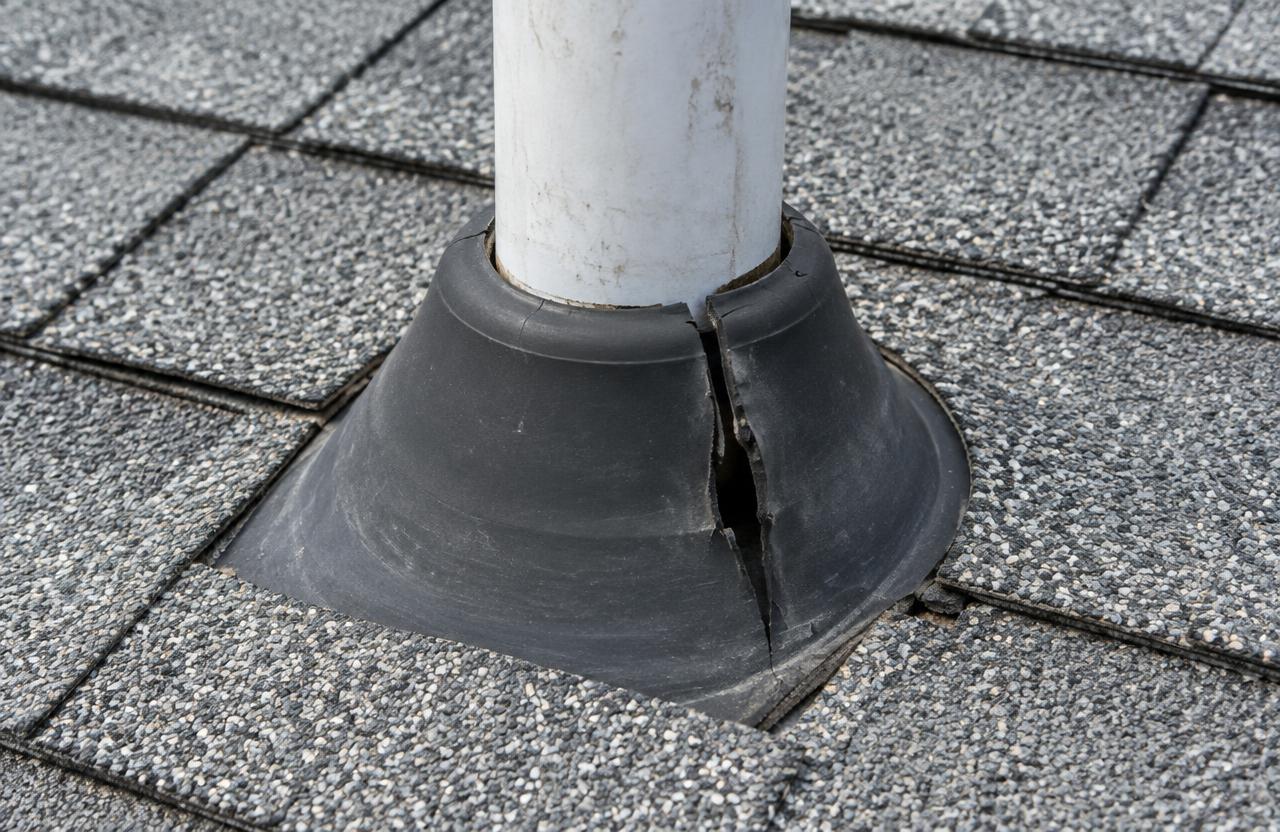
A leak below a plumbing vent pipe often starts at the rubber boot that seals the pipe to the roof. Sun and cold crack the rubber over time. But the same spot can also get wet from a plumbing leak, a loose pipe joint in the attic or condensation inside the pipe. Check when it gets wet. Rain-only drips point to the roof.
What a pipe boot does
Your home's drains need air to flow well. Plumbing vent pipes run up through the roof to let that air in. Each pipe makes a round hole in the roof.
A pipe boot, also called a pipe flashing, seals that hole. It has a flat base that slides under the shingles above it and sits on top of the shingles below it. A rubber collar hugs the pipe. Water runs down the roof, over the base and on past the pipe.
When the rubber collar cracks, rain can run down the outside of the pipe and into the house.
Why boots fail before the roof does
Rubber does not like years of sun. It dries out, shrinks and splits. Heat and cold make it worse. Often the boot is the first part of a roof to fail.
Other causes include nails that backed out of the base, a base set on top of the shingles above it instead of under them, and animals chewing the rubber. Hail can also split a boot.
First, decide if it is rain or plumbing
If water is coming in now, catch it, protect your things and call for help now. Do not wait to keep notes first. The EPA says to dry wet materials quickly to help prevent mold. While you set up a visit, jot down when the spot gets wet. Those notes help the crew.
- Write the date and the weather each time you see water.
- Note if anyone had just showered, washed dishes or run laundry.
- Note the outside temperature, especially on cold mornings.
- Put a dry paper towel on the spot and check it later.
- Take a photo each time so you can see if the stain grows.
| What you notice | Points toward | Next step |
|---|---|---|
| Drips only during or right after rain | Pipe boot or flashing on the roof | Roof check of the boot and nearby shingles |
| Wet spot when someone showers or runs water | Drain or vent pipe joint inside the wall or attic | Call a plumber |
| Frost or drips on cold mornings, dry otherwise | Condensation on or in the pipe | Check attic air leaks and pipe insulation |
| Stain grows slowly with no clear pattern | Could be any of the above | Roof and plumbing check together |
| Water around a metal exhaust vent, not a pipe | Vent flashing or cap | Roof check of that vent |
When it is the plumbing
Drain pipes and vent pipes join inside walls and attics. A joint can loosen or crack. When water runs down the drain, some can escape at that joint and soak the ceiling.
This kind of leak shows up when water is used, not when it rains. A plumber is the right person for it. A new roof boot will not help.
When it is condensation
In cold weather, a vent pipe in a cold attic can be much colder than the house air. Warm, damp air that leaks into the attic can form drops on the pipe. Air inside the pipe can also condense.
These drops may run down the pipe and wet the ceiling. It happens mostly on cold days and may stop when it warms up. Air sealing where the pipe passes through the ceiling helps. ENERGY STAR lists plumbing holes as a common air leak to seal. Some crews also wrap the pipe in the attic.
What to check from the ground and the attic
From the yard, use binoculars to look at each pipe on the roof. A cracked collar may look gray, split or loose around the pipe. Look for shingles that are lifted or missing near the base.
From the attic hatch, shine a light toward where the pipe comes through. Look for dark wood, wet or matted insulation or water marks on the pipe. Stay at the hatch unless there is a safe floor to stand on.
How a roofer fixes a leaking boot
The fix depends on the boot and the shingles around it.
- Replace the boot: lift the shingles above, remove the old boot, slide in a new one and nail and seal it.
- Add a slip-over collar: some products fit over a cracked boot and seal the pipe again. This can work if the base is still sound.
- Fix the shingles: replace any cracked or missing shingles near the boot.
- Check the deck: soft wood near the pipe should be repaired before a new boot goes on.
Other vents on the roof
Not every vent is a plumbing pipe. Bathroom fans, kitchen fans and dryers may have metal caps on the roof. Box vents and ridge vents let attic air out in a vented attic. Furnace and water heater flues may come through the roof too.
Each has its own flashing. A leak near a bath fan cap may be the cap's flashing, or it may be steam from a duct that came loose. Telling the crew which room is below helps them figure out which vent to check.
Metal flues need extra care
A metal flue for a furnace or water heater gets hot. It needs a special collar and proper space from wood. If a leak is near a flue, a roofer can fix the roof flashing, but a heating pro should check the flue itself.
Do not seal around a hot flue with ordinary roof cement or foam. Those products are not made for heat.
Damage to look for after a long leak
A boot that has leaked for months can wet the insulation and the wood around it. Wet insulation does not keep heat well, and wet wood can rot.
The EPA says to dry wet materials quickly and fix the water source to prevent mold. Ask the crew to tell you what they found when they lifted the shingles, and to replace any soft deck.
How to compare bids
Ask each crew what type of boot they will use and why. Ask whether they will check other boots on the roof while they are up there, since boots on the same roof often age together.
Ask about their workmanship warranty, and get photos before and after. The FTC suggests getting the full price and scope in writing.
Getting started
Bring your leak log and photos. Tell us which room is under the wet spot and whether it lines up with rain. We help homeowners across the Omaha area sort out pipe boot leaks from plumbing leaks and get the right fix.
Boots on a new roof
If your roof is due for replacement soon, a single cracked boot may still be worth fixing now. A leak can do a lot of harm in a few months. Ask the crew whether the new boot can be reused or must be swapped again when the roof is done, so you are not surprised later.
Questions to ask the roofer
Use these to compare crews and keep the job clear.
- Which boot type and size will you use for each pipe?
- Will you replace the shingles around the boot if they are cracked?
- Did you check the other boots and vents while you were up there?
- Is the pipe tall and solid enough for a good seal?
- Will you send before and after photos?
Keeping an eye on it
After a boot is replaced, check the ceiling below after the next few rains. If the spot stays dry, the fix worked. If it gets wet again, look at your log. Water during showers, not rain, means it is time to call a plumber.
Matching the boot to the pipe
Vent pipes come in a few common sizes. A boot must fit snugly around its pipe. A boot that is too big leaves a gap. One that is stretched over a bigger pipe can split early.
The base must also match the roof slope and sit flat. On steep roofs or metal roofs, crews use boots made for that kind of roof. Ask what size and type they will use.
Pipes that are too short or loose
Some vent pipes stick up only an inch or two above the roof. Snow can bury them, and water can splash over the top of the boot. A plumber or roofer may extend the pipe so the boot can seal it well.
A pipe that wobbles in its hole can stretch and tear the boot. That can mean a loose pipe joint in the attic. A plumber can secure it.
Animals and pests
Squirrels and other animals sometimes chew rubber boots. You may see bits of rubber in the gutter or small tooth marks. Some boots have metal parts or covers that resist chewing.
If animals are getting into the attic around pipes, a wildlife pro may be needed too. Ask the roofer to note any chewed parts they find.
Older lead and metal boots
Some older homes have soft lead boots that fold over the top of the pipe. They can last a long time but can get holes from animals or hail. Copper boots are also used on some roofs.
If you have metal boots, ask the crew whether they can be kept or should be replaced. Handling old lead should be done with care, so leave it to the crew.
When several pipes leak
If one boot cracked, the others on the same roof may be close behind. They went on at the same time and saw the same sun. Many owners have all boots replaced at once to save another trip later.
Ask the crew to photograph each boot and tell you its condition. Then you can decide which ones to replace now.
How our request form works
We serve homes and businesses across the Omaha area. This website is a preview right now. The online form checks your answers, but it does not save or send them yet, so no roofer gets your request from it.
When online requests are turned on, this note will change. Until then, the form is a way to see what we will ask: your town or ZIP, what you see and what kind of help you need. We do not sell your details.
Common questions
How long does a rubber pipe boot last?
It varies with sun, heat and the type of rubber. Boots often crack before the shingles around them wear out. That is why they are a common repair on otherwise good roofs.
Can I just put caulk around the pipe?
Caulk on a cracked boot may stop drips for a short time. It is not a lasting fix, and it can make the next repair messier. A new boot or a boot made to slip over the old one is the usual fix.
What are boot covers or collars?
Some boots have a metal base with a rubber collar. Others are all metal, like lead or copper, that fold over the pipe top. Ask the roofer which type fits your pipe and roof.
Why is there water in my attic but no stain in the room?
Small leaks may soak into insulation or run along a pipe before showing on a ceiling. Look from the hatch with a flashlight. Wet or matted insulation near a pipe is a clue.
Should boots be replaced with a new roof?
Yes, most new roofs include new pipe boots. Ask the bid to list them, so old cracked boots are not reused under new shingles.
Related help
Sources we checked
Official and standards pages we used to check facts on this page. Rules can change, so confirm with the source.