Quick answer
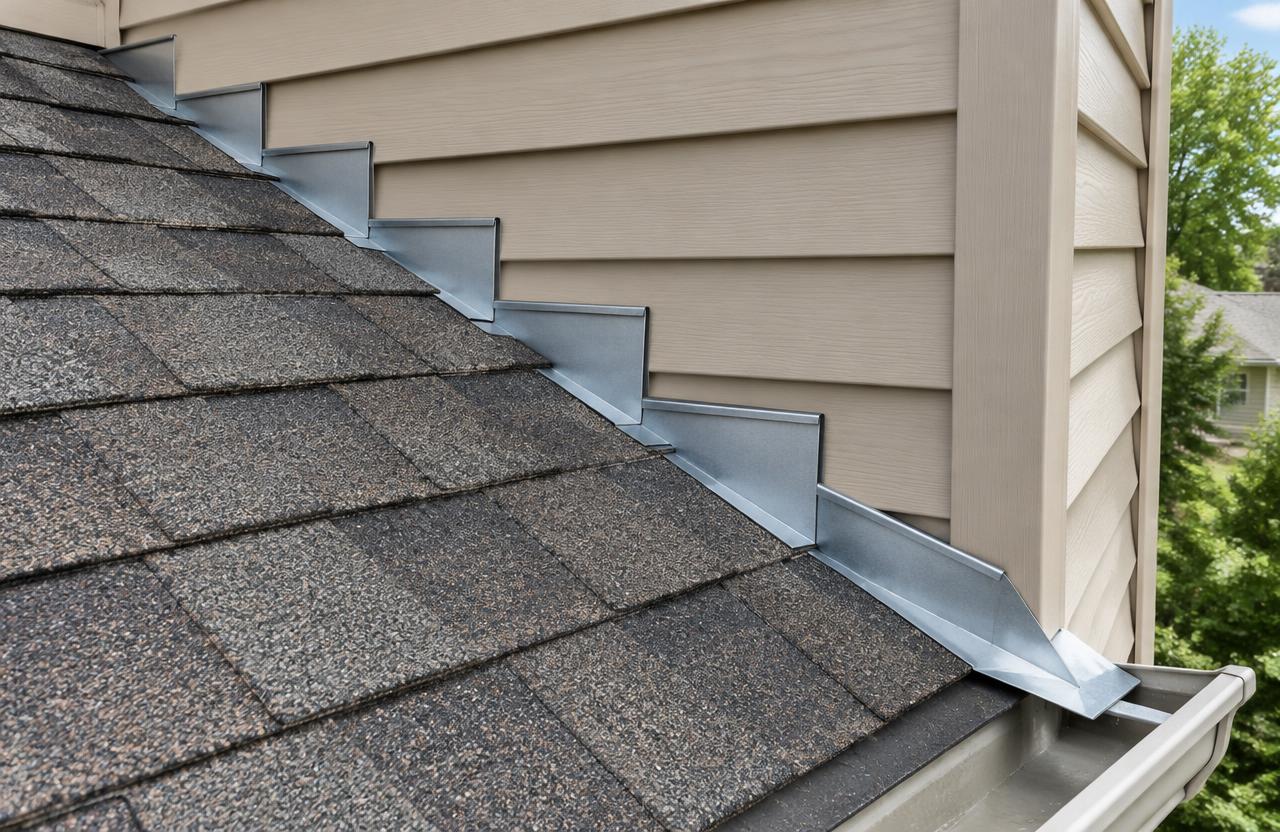
Roof-to-wall flashing seals the line where a sloped roof runs into a wall, like at a dormer, a second story or a garage. It uses small step pieces under each shingle row, counterflashing or siding over them, and a kickout at the bottom that sends water into the gutter. When any part is missing or wrong, water can soak into the wall below.
Where roofs meet walls
Many homes have spots where a roof slope runs into a wall. A dormer is a small roof that juts out of a bigger one. A one-story garage or porch may sit against a two-story wall. A split-level home has roofs at different heights.
Each of those lines is a seam water wants to get into. Flashing is the metal that keeps it out. This page covers roof-to-wall flashing. Chimneys, skylights and vent pipes have their own pages, because their flashing works a little differently.
Two kinds of roof-to-wall lines
A sidewall runs along the slope, like the side of a dormer. Water flows past it. Step flashing is the right tool here.
A headwall runs across the slope, where water flows right into it. This needs one long piece of flashing that goes up the wall and down over the shingles. Treating a headwall like a sidewall, or the other way around, is a common cause of leaks.
How step flashing works
Each step piece is a small metal L. One side lies on the roof, under a shingle. The other side runs up the wall. The next shingle row and the next piece lap over the one below.
Water that gets under a shingle hits the metal and walks back out on top of the shingle below. It never touches the wall.
Behind the vertical side, the wall's own water barrier or house wrap should lap over the metal. Then the siding covers it all, with a small gap above the roof so the siding is not sitting in water.
| Part | Its job | Common problem |
|---|---|---|
| Step flashing | Laps with each shingle row to walk water down the slope | One long piece used instead, or pieces missing |
| Counterflashing or siding lap | Covers the top of the step pieces | Siding set too tight to the roof, or no cover at all |
| Kickout flashing | Sends water out into the gutter at the bottom of the wall | Missing, so water runs into the wall |
| Headwall flashing | Seals where a wall sits across the top of a roof slope | Too short or covered only with tar |
| Sealant | A backup at some joints | Used in place of metal, then cracks |
The kickout: small piece, big job
At the bottom of a sidewall, the roof ends and the wall keeps going. Water flowing down the step flashing has to go somewhere. Without a kickout, it runs right down the face of the wall.
Over years, that water soaks behind siding and rots the sheathing and framing. The damage is often hidden until it is bad. A kickout is a cheap part that helps prevent a costly wall repair.
Signs of a roof-to-wall problem
Look from the ground and inside for these clues.
- Stains on an inside wall or ceiling under a dormer or upper wall.
- Streaks, swelling or soft siding below the bottom end of a roof-to-wall line.
- Peeling paint on trim at the corner where roof meets wall.
- Thick tar smeared along the line instead of neat metal.
- Siding that touches the shingles with no gap.
- No kickout where the roof edge meets the wall above a gutter.
Stay off the roof
These spots are often on upper roofs and near steep drops. Do not climb up to check. Use binoculars from the yard, look out upstairs windows if you can see the line, and take photos.
A crew will check up close with the right fall safety gear and may lift siding or shingles to see the metal.
Why it often needs siding work
Step flashing tucks behind siding. To replace it, the crew usually has to remove the bottom rows of siding along the line. With vinyl, that is often simple. With wood, fiber cement, stucco or brick, it can take more work and sometimes another trade.
Ask the roofer who will handle the siding, how they will match it and whether that part is in their price.
Damage behind the siding
When the siding comes off, the crew may find wet or rotted sheathing. The EPA says water damage should be dried and fixed fast to help prevent mold.
Ask for photos when the wall is open. Ask how they will price wood repair if they find it, so there are no surprises. A good bid names a rate for extra repair before work starts.
Repair choices
Depending on what is found, the fix may include these steps.
- Add a kickout at the bottom of the line.
- Replace missing or rusted step pieces.
- On shingle roofs, replace a long bent strip with step flashing. Metal and membrane roofs often use one continuous piece by design, as the Building America guide notes.
- Redo headwall flashing so it laps properly.
- Fix the wall's water barrier behind the flashing.
- Reset siding with a gap above the roof.
With a new roof
A roof replacement is the best time to redo roof-to-wall flashing. Ask the bid to say whether step flashing will be new or reused, and whether kickouts will be added.
Reusing old flashing may save a little now but can shorten the life of the new roof at those spots.
Choosing a crew
In Nebraska, contractors working on other people's property must register with the state Department of Labor. The state notes that registration is not a mark of quality.
Ask to see photos of flashing jobs they have done. Ask how they handle siding and wall repair. The FTC suggests getting written bids and not paying everything up front.
Getting started
Take photos of the roof-to-wall lines from the ground and any stains inside. We help homeowners across the Omaha area find flashing problems and get them fixed the right way.
Gaps between siding and shingles
Siding should stop a little above the roof surface. That gap lets water drain away and lets the siding dry. When siding sits right on the shingles, it soaks up water and can rot, and debris collects in the corner.
When a crew redoes the flashing, they should leave that gap. If siding must be cut back to make room, ask how they will finish the cut edge.
Headwalls up close
A headwall is where the top of a roof slope runs into a wall, like a lower roof meeting the wall of a second story above it. Rain hits that wall and runs down it. The flashing has to catch that water and send it out onto the roof below, so it does not slip behind the siding.
The flashing here is one long piece that goes up behind the siding and down over the top row of shingles. It should be long enough to cover the shingles well and be tucked under the wall's water barrier. Short pieces or pieces with only tar at the top are common causes of leaks.
Sealant is a backup, not the fix
Caulk and roof cement have their place at some joints. But they dry, crack and pull away in sun and cold. When flashing relies only on sealant, it often fails in a few years.
If you see thick tar along a roof-to-wall line, it may be hiding missing metal. Ask the crew to look under it before they add more.
Questions to ask the crew
Write down their answers to compare bids.
- Is this a sidewall, a headwall or both?
- Will you use new step flashing pieces, one per shingle row?
- Will you add kickouts at the bottom ends?
- Who will remove and reset the siding?
Common spots to check on your home
Walk around your home and list every place a roof meets a wall. Most homes have more than you think.
- Dormers on a main roof.
- A garage roof that runs into a two-story wall.
- A porch roof against the front of the house.
- A bay window roof below a window.
- Split-level homes where an upper roof meets a lower wall.
- Additions built onto the side of an older home.
Additions and remodels
When a room is added, the new roof often meets the old wall. That joint is one of the most common places for flashing mistakes. Sometimes the old siding was left in place, and the new flashing was tucked behind it in the wrong order.
If leaks started after an addition or a remodel, tell the crew. It helps them know where to look first.
Different walls, different methods
Vinyl siding: step flashing tucks behind the siding and a trim channel. Siding can often be lifted with a special tool.
Wood or fiber cement siding: boards may need to be removed and reset. Paint and caulk need care so water can still drain.
Brick or stone: the counterflashing is cut into the mortar joints, much like on a chimney.
Stucco: the wall has its own water barrier and drainage layer. Opening stucco is a bigger job and may need a stucco crew.
Leaks that show up far away
Water that gets behind a wall can run down inside it for a long way. A missing kickout at a second-story roof may show up as a stain on a first-floor wall or even near a window below.
That is why a crew looks above and around a stain, not just right at it. A moisture meter can help them follow the wet path.
Windows and doors near roof lines
Sometimes a window sits just above a lower roof. Water running off that window can hit the roof-to-wall line. If the window's own flashing is poor, water can get into the wall from there.
In those cases, both the window and the roof flashing may need work. Ask the crew to check the window above any roof-to-wall line that leaks.
How our request form works
We serve homes and businesses across the Omaha area. This website is a preview right now. The online form checks your answers, but it does not save or send them yet, so no roofer gets your request from it.
When online requests are turned on, this note will change. Until then, the form is a way to see what we will ask: your town or ZIP, what you see and what kind of help you need. We do not sell your details.
Common questions
What is a kickout flashing?
It is a small bent piece of metal at the bottom of a roof-to-wall line. It kicks water out into the gutter instead of letting it run down the face of the wall. Missing kickouts are a common cause of wall rot.
Can flashing be fixed without removing siding?
Sometimes a crew can slip new step pieces in by lifting shingles and the bottom of the siding. Often some siding must come off to do it right. Ask how they plan to reach it.
Does stucco or brick change the job?
Yes. Brick and stone need counterflashing cut into the mortar. Stucco needs care so the wall's own water barrier is lapped right. These may need a mason or siding crew too.
How do I know if the wall is wet inside?
Signs include stains on the inside wall, swollen trim, peeling paint or soft spots on outside siding below the roof line. A crew may use a moisture meter to check.
Is this covered by a roof warranty?
It depends on the warranty and who put the flashing in. Some roof warranties cover only shingles. Read yours and ask the roofer what their workmanship warranty covers.
Related help
Sources we checked
Official and standards pages we used to check facts on this page. Rules can change, so confirm with the source.