Quick answer
Synthetic roofing means roof coverings made from plastics, rubber or blends, shaped to look like slate or shake. It is not one material. Each product is made differently and tested differently. Fire, wind and impact ratings belong to a specific product put on in a specific way. So compare exact products and systems, not the word synthetic.
What synthetic roofing is
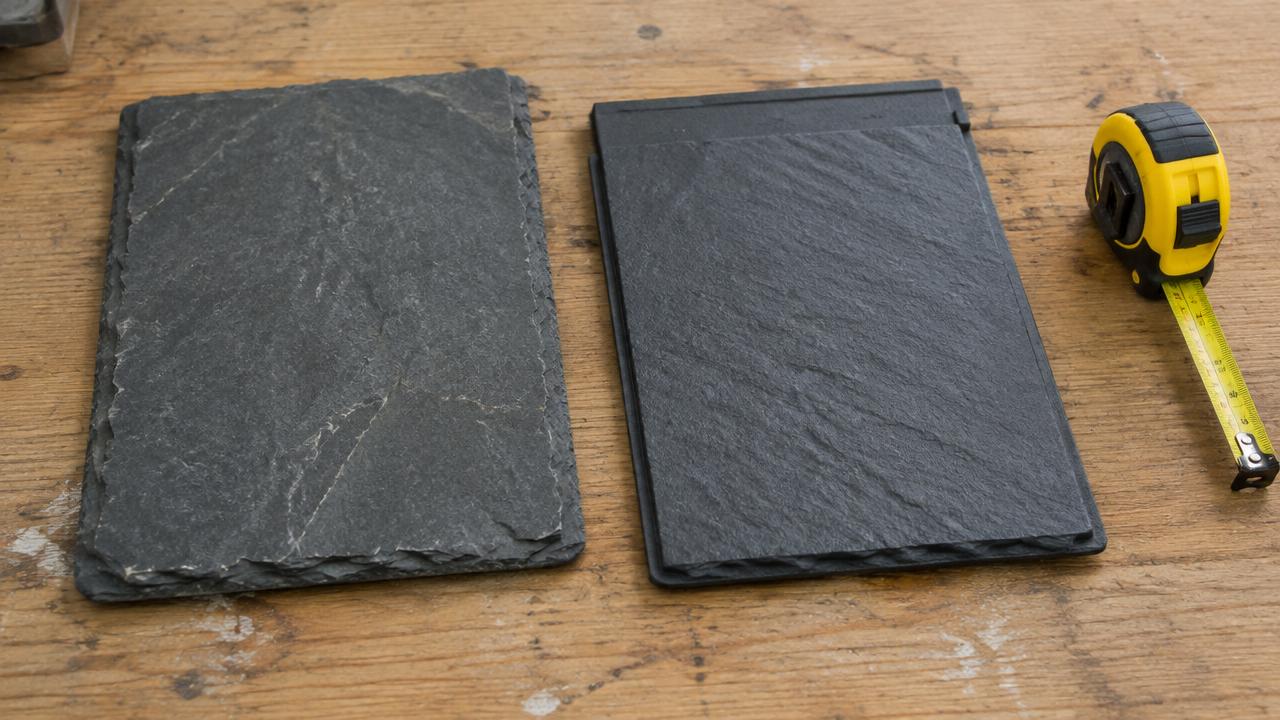
Synthetic roofing is a group of products made to look like slate, cedar shake or other natural roofs. They may be made from plastics, recycled rubber, or blends. Each maker uses its own recipe and molds.
That means synthetic is not one material. Two products can look alike. But they may be made from different things. They may weigh different amounts. Their ratings and warranties may differ too. The word synthetic tells you very little by itself.
We serve homeowners across the Omaha area. This page helps you compare synthetic products in a careful way.
Covering vs. underlayment
The word synthetic shows up in two places on many roofs. Synthetic underlayment is a sheet that goes under the roof covering. It is used under many kinds of roofs, including asphalt shingles. Synthetic slate or shake is the covering on top that you see from the street.
Bids sometimes just say synthetic. Ask which one they mean. A bid for asphalt shingles with synthetic underlayment is not a synthetic slate roof. Our bid checklist page can help you read bids line by line.
An example maker: what a guide covers
To show what to look for, we use public documents from one maker, EcoStar, as an example. This is not a recommendation. We are not a partner, dealer or installer for EcoStar, and other makers publish similar guides.
EcoStar's Majestic Slate install guide covers a lot. It says what the deck and under-layer need. It says how to fasten pieces and how steep the roof must be. It shows how to do the first row, valleys, hips and ridges. Its product overview lists product lines and some test results. A distributor page explains how the products are sold.
Any synthetic product you consider should have a guide like this. Ask your crew to show it to you, and to follow it.
| Compare | Why it matters | Where to look |
|---|---|---|
| Exact product name | Synthetic is a group, not one material | Maker's product data |
| Fire rating and the assembly tested | Ratings often depend on what is under the product | Maker's install guide and test listings |
| Wind and impact ratings | Results depend on the tested setup | Maker's data and test reports |
| Install guide | Fastening, underlayment and slope rules | Maker's install guide for that product |
| Written warranty | What is covered and for how long | The real warranty paper |
Ratings depend on the assembly
Fire, wind and impact ratings come from tests. Those tests check a product put on in a certain way, often over a certain underlayment or deck. A fire rating might only apply when a specific layer is placed under the product. A wind rating may depend on fastener type and count.
So ask: which rating, from which test, over which setup? Then make sure your bid includes that setup. A product installed differently from the tested setup may not perform the same.
Impact ratings are not hail proof
Some synthetic products have impact ratings. These come from lab tests that drop or shoot objects at samples. They help compare products. But real hail varies in size, speed and angle. Products also age.
No roof covering is hail proof. Be careful with anyone who says otherwise. Ask what the rating means, and what the warranty says about hail.
Weight and the frame
Many synthetic products weigh less than natural slate or tile. That can be one reason people choose them. But weights vary by product.
If you are switching from a light roof, like asphalt, to a heavier synthetic product, check the weight first. A design pro can tell you if the frame needs a closer look.
Look, color and aging
Synthetic products try to match the look of real slate or shake. Some do this with many mold shapes and color blends. Up close, they may look and feel different from natural stone or wood. Colors may change over time in the sun.
Ask to see real samples, not just photos. If you can, ask the maker or distributor where you can see an older installed roof. Ask what the maker says about color change.
Install skill matters
Synthetic products have their own install rules. Spacing, fasteners, how pieces lap and how they handle heat and cold all matter. A crew used to asphalt shingles may need training on a synthetic product.
Ask how many roofs of that exact product the crew has done. Ask if the maker requires any training to install it or to qualify for a warranty. Ask to see the maker's guide on site.
Warranties: read the real paper
Synthetic product warranties vary a lot. Some cover only the material. Some include extra coverage if installed by a trained crew. Many have terms that change over time, like full coverage early and reduced coverage later.
The FTC explains how to read warranties. Ask for the actual written warranty for your exact product, not a summary. Check what it says about install, weather and transfers.
Trim pieces and edges
A synthetic roof is more than the main pieces. Many makers sell matching starter pieces, hip and ridge caps, and trim for edges. Some guides say which ones to use for the warranty or the ratings.
Ask if the bid uses the maker's own trim pieces or something else. Ask how the edges, valleys and walls will be flashed. These spots are where many roofs leak first, no matter what the main pieces are made of.
Nails and fasteners
Guides set the type, length and number of nails or screws. Too few can let wind lift pieces. The wrong kind can rust or split the piece. Ask the crew to follow the guide and to note the fastener on the bid.
Who makes the product, and for how long?
Synthetic roofing is newer than slate or cedar. Some makers have been around for many years. Others are newer. A warranty is only as good as the company behind it.
Ask how long the maker has made this product. Ask where it is sold and if a local supplier keeps it in stock. Ask what happens to the warranty if the product line ends. These answers help you judge the risk.
Keep the papers
After the job, keep the product name, color, install date, warranty paper and job photos together. Add any repair notes. Store spare pieces with a label. This makes later repairs and claims much easier.
What to ask for in writing
Get these on paper before you sign.
- Product name, line and color.
- The under-layer the maker wants for your ratings.
- The number and type of nails or screws.
- How valleys, hips, ridges and walls will be done.
- Who will register the warranty, and when.
- How many spare pieces will be left.
Seeing it before you buy
Photos online can look better than the real thing. Ask for full-size samples. Hold them up next to your house in morning and evening light. Look from the street, not just up close.
If you can, drive by a house with the same product. Ask how old that roof is. Look at the color and how the pieces lie.
Sounds, walking and upkeep
Some people ask if synthetic roofs are loud in rain. That depends on the product, the deck and the attic. We do not promise a quiet roof.
Upkeep is often simple: keep gutters clear, trim trees, and have a crew check after big storms. Walking on any roof is risky. Leave that to a trained crew.
Why people look at synthetic
People look at synthetic roofs for many reasons. Some want the look of slate or shake but less weight. Some want fewer upkeep chores than wood. Some like that many products use recycled stuff. Each of these is worth checking for the exact product.
There are trade-offs too. Some products cost more than asphalt. Some look less real up close. Fewer crews may know how to install them. Weigh these against your goals.
Heat, cold and movement
Plastic and rubber grow a little in heat and shrink in cold. Omaha has both hot summers and cold winters. Install guides often say how far apart to space pieces so they can move. If pieces are packed too tight, they may buckle. If too loose, gaps can show.
Ask the crew how they handle spacing in hot and cold weather. Ask what the guide says about the lowest temperature for install.
Repairs later on
Over time, a piece may crack, or a limb may damage a spot. Repairs need the same product and color. Products change, and some lines stop being made.
Ask the crew to leave a few spare pieces. Store them in a dry, shaded place. Keep the product name and color in your house file. That makes later repairs simpler.
Synthetic vs. the real thing
Natural slate can last a long time when the stone is good, but it is heavy and needs skilled crews. Cedar has a warm wood look but needs care to stay dry. Synthetic products try to give a similar look with different trade-offs.
Our slate and cedar pages explain those materials. Compare them with the exact synthetic product you are looking at. Look at weight, upkeep, ratings, warranty, and how it looks to you.
HOA and local rules
Some HOAs have rules about roof look or materials. Some cities have rules for historic areas. Ask your HOA and city before you choose. Bring a sample and the product data to any review.
Questions to ask before choosing synthetic
Use these to compare products and bids.
- What is the exact product name and maker?
- Is this the roof covering or the underlayment?
- What fire, wind and impact ratings, over what setup?
- Does my bid include the setup needed for those ratings?
- What does the exact product weigh?
- Can I see the maker's install guide and written warranty?
Common questions
Is synthetic slate the same as synthetic underlayment?
No. Synthetic underlayment is a sheet that goes under the roof covering. Synthetic slate or shake is the covering you see on top. Bids should name both clearly.
Is synthetic roofing fire rated?
Some products have fire ratings. But often the rating only counts when a certain layer is put under them. Read the maker's install guide for what is needed to meet the rating.
Is synthetic roofing hail proof?
No roof covering is hail proof. Some products have impact ratings from tests. Those tests have limits and do not promise no damage in a real storm.
Are you a partner of the maker named on this page?
No. We use EcoStar's public documents only as an example of what a maker's guide covers. It is not a recommendation, and we are not a partner or dealer.
Is synthetic lighter than real slate?
Many synthetic products are lighter than natural slate. Ask for the exact product's weight from the maker.
Related help
Sources we checked
Official and standards pages we used to check facts on this page. Rules can change, so confirm with the source.