Quick answer
Water near a chimney does not always mean the flashing failed. It can come through the flashing, the brick and mortar, the crown, which is the concrete or mortar slab on top, the metal flue cap over the opening, or moisture inside the flue. Each cause has a different fix and sometimes a different trade. A crew should test and trace the water before anyone seals or tears off anything.
How a chimney is sealed to the roof
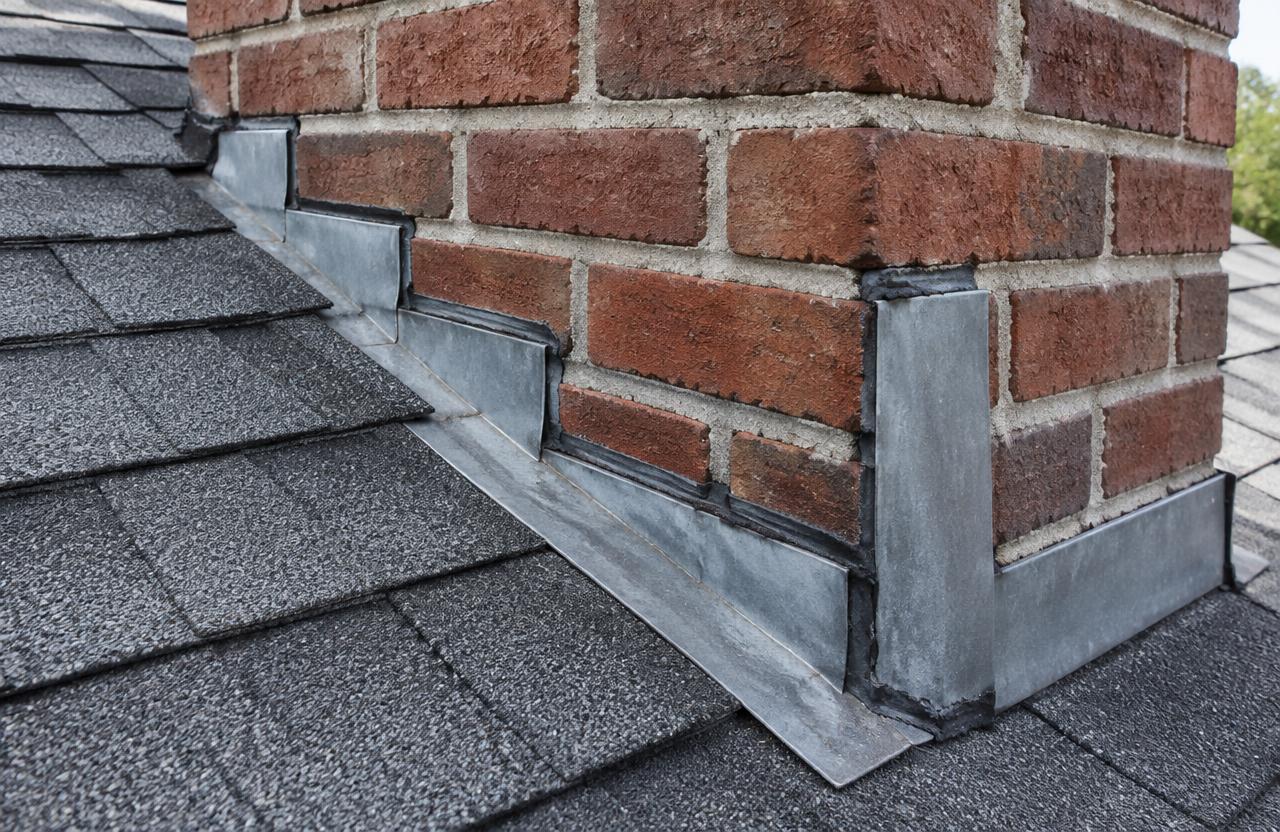
A chimney pokes through the roof, so there is a gap around it. Metal pieces called flashing close that gap. Two layers work together.
The first layer is step flashing. These are small bent pieces of metal tucked under each row of shingles along the sides. Each piece laps over the one below, like stairs, so water steps down and off.
The second layer is counterflashing. It is cut into the mortar joints of the brick and folds down over the step flashing. It keeps water from running behind the first layer.
There is also a front piece on the low side and often a small peaked shape on the high side called a cricket. The cricket splits water so it flows around the chimney instead of piling up behind it.
Why the flashing gets blamed first
Flashing is the most common chimney leak spot, so it gets looked at first. But that does not mean it is always the cause. Brick soaks up water like a hard sponge. A crown full of cracks lets water pour into the top. Moist air from a furnace can condense inside an old flue.
If the flashing is replaced but the real cause is the brick, the stain comes back. That is why tracing the water matters more than guessing.
What you can check safely from the ground and inside
Do not climb onto the roof. These checks are safe from the yard and inside the house.
- Use binoculars to look for metal that is lifted, rusted or covered in thick tar.
- Look at the brick for crumbly mortar, missing chunks or white powder.
- Check the ceiling and walls next to the chimney for stains or peeling paint.
- Look inside the fireplace after rain for damp spots or rust on the damper.
- Look from the attic hatch with a flashlight at the wood next to the chimney.
- Write down when it leaks: which storms, which wind and how long after.
| Source | Clues you may notice | Who usually fixes it |
|---|---|---|
| Flashing where roof meets brick | Stain on the ceiling or wall right beside the chimney, worse in wind-driven rain | Roofer |
| Brick and mortar | Crumbly joints, flaking brick faces, white powder on the brick | Mason |
| Crown slab or flue cap on top | Cracked crown, missing or damaged cap, water inside the firebox after rain | Mason or chimney pro |
| Condensation in the flue | Damp or stained walls even in dry weeks, often with a furnace or water heater venting there | Chimney pro or heating pro |
| More than one at once | Leaks that change with weather and wind | Roofer and mason working together |
Flashing problems a roofer looks for
Up close, a roofer checks if the counterflashing is still set tight into the mortar. Old mortar can crumble and let the metal pull out. They check for rust holes, bent pieces and gaps.
They also look for flashing that was never done right. Some chimneys have one long piece of metal bent along the side instead of separate step pieces. Some have only tar smeared over the gap. These may hold for a while but tend to fail.
On wide chimneys, a missing cricket is a common problem. Water and snow pile up behind the chimney and work their way in.
Masonry problems a mason looks for
Brick and mortar wear out on their own schedule. Freezing and thawing pops the faces off bricks and opens joints. Water then soaks through the brick and runs down inside, where it can show up as a stain that looks just like a flashing leak.
A mason may repoint the joints, which means grinding out bad mortar and packing in new. They may replace broken bricks. Some suggest a breathable water repellent made for masonry. Ask if the product lets the brick dry out, because trapping water can make things worse.
The crown and cap on top
The crown is the slab of concrete or mortar on top of the chimney. It should slope so water runs off and should stick out past the brick a little. Many crowns are thin and crack over the years.
A cap is a metal cover over the flue opening. It keeps rain, birds and leaves out. A chimney with no cap can take a lot of rain straight down the flue. A chimney pro or mason usually handles crowns and caps.
When the water comes from inside
Furnaces and water heaters make warm, wet exhaust. If they vent into an old brick chimney with no proper liner, that moisture can cool and turn to water inside the flue. It can stain walls and ceilings even in dry weather.
This is not a roof problem, and new flashing will not fix it. A heating pro or chimney pro can check the venting and the liner. If you notice stains in dry weeks, mention it first. It is a big clue.
Problems with heating vents can also be a safety issue. If you suspect anything is wrong with how exhaust leaves your home, have a heating pro look soon.
How crews trace the water
A careful crew may do a water test. One person runs a hose on one small area at a time while another watches inside. They start low and move up, so they can tell which part lets water in.
This takes time and should be done by the crew, not by you on a ladder. Ask whether they plan a water test or will judge by looking. A test gives more proof, especially if past repairs failed.
Repair choices for chimney flashing
Once the cause is clear, the fix often falls into one of these.
- Reset loose counterflashing into freshly cut mortar joints.
- Replace rusted step flashing piece by piece, lifting the shingles beside it.
- Add a cricket behind a wide chimney.
- Replace all the chimney flashing as part of a new roof.
- Hand off brick, crown or flue work to a mason or chimney pro.
Signs of a weak bid
Be careful with a bid that says only seal chimney with no detail. Be careful if no one looked at the brick or the crown. Be careful if a crew wants to tear off the whole roof for one chimney leak without showing you why.
The FTC suggests getting written bids, checking references and not paying everything up front. Ask for photos of what they found and what they fixed.
Damage behind the stain
A chimney that has leaked for a long time can rot the roof deck and framing around it. Insulation may be wet. The EPA says water damage should be dried quickly to help prevent mold.
When the flashing is opened, ask the crew to photograph the wood. Dark color alone does not mean it must go. The crew should check whether it is wet, soft or decayed. Wood that is rotted or weak should be repaired before new flashing goes on.
Chimneys that no longer get used
Some homes have chimneys that no longer serve a fireplace or furnace. They still need flashing and a sound crown, or they will still leak.
Some owners choose to have an unused chimney taken down below the roof and the hole roofed over. That is a bigger job that may need a mason, a roofer and a permit. Ask each pro what it would involve for your home.
Getting started
Gather your notes about when it leaks and photos of the stains. Tell us whether you use the fireplace or if a furnace vents into the chimney. We help homeowners across the Omaha area find the real cause of chimney leaks and get the right pro on it.
Questions to ask before you hire
Write the answers down so you can compare crews.
- Did you look at the brick, the crown and the cap, or only the flashing?
- Will you cut new counterflashing into the mortar or reuse the old?
- Does this chimney need a cricket?
- Will you run a water test if the cause is not clear?
- What will you hand off to a mason or chimney pro?
Wide chimneys and the cricket
A narrow chimney splits water easily. A wide one acts like a dam across the slope. Rain, leaves and snow pile up behind it on the high side.
That is why many wide chimneys need a cricket, a small peaked roof built behind the chimney. It turns the flow to both sides. Shingle and building guides often call for one on wider chimneys. If yours is wide and has none, ask the roofer whether adding one makes sense.
Winter at the chimney
Snow drifts behind chimneys and melts slowly. Melt water can freeze in the flashing gaps at night and pry metal and mortar apart over many winters.
If your chimney leaks mostly in late winter, tell the crew. It may point to snow buildup behind the chimney, a missing cricket or ice working into worn mortar.
After a heating change
Did leaks start after a new furnace or water heater was put in? Newer high-efficiency units often vent through plastic pipe instead of the chimney. Older units may still vent into it. A change in what vents where can change moisture in the flue.
Mention any recent heating work to the crew. It can save time in finding the cause, and a heating pro may need to take a look.
How our request form works
We serve homes and businesses across the Omaha area. This website is a preview right now. The online form checks your answers, but it does not save or send them yet, so no roofer gets your request from it.
When online requests are turned on, this note will change. Until then, the form is a way to see what we will ask: your town or ZIP, what you see and what kind of help you need. We do not sell your details.
Common questions
Can more caulk fix a chimney leak?
Sometimes it buys time, but caulk alone is rarely a lasting fix. It dries and cracks in sun and cold. If the metal pieces are rusted, loose or put in wrong, they need repair or new metal.
Why does it only leak in some storms?
Rain that blows sideways hits the chimney at angles that normal rain does not. That can push water past worn flashing or soak into brick. Note the wind direction when it leaks.
Is a chimney leak a fire risk?
Water can damage the flue liner and the brick over time. The NFPA advises having chimneys checked by a qualified pro every year. A yearly check can catch water harm along with other problems.
Should the flashing be replaced with a new roof?
Often, yes. Old flashing may not last as long as new shingles. Ask the roofer whether the bid includes new chimney flashing and counterflashing, or reuses the old.
Do I need both a roofer and a mason?
Sometimes. If the brick and the flashing both have problems, fixing only one may not stop the leak. Ask each pro to explain what they found and what part they will handle.
Related help
Sources we checked
Official and standards pages we used to check facts on this page. Rules can change, so confirm with the source.