Quick answer
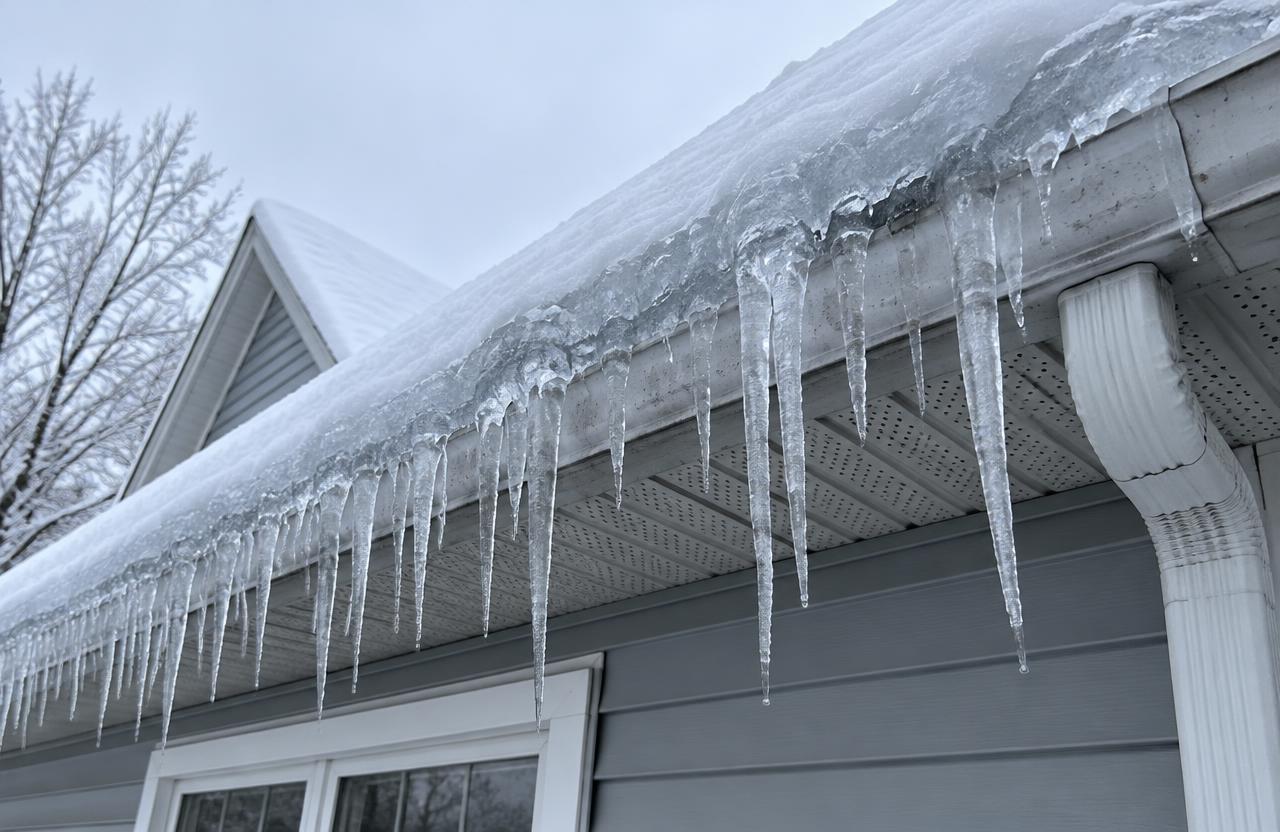
An ice dam is a ridge of ice at the roof edge that traps melt water behind it. The water can back up under shingles and leak inside. The cause is usually heat from the house warming the roof, often from air leaks and thin insulation. Right now, stay safe and limit water damage. Later, fix the attic so dams do not come back.
How an ice dam forms
It starts with snow on the roof. Warm air from the house leaks into the attic and warms the roof deck. Snow on the upper roof melts, even when it is below freezing outside.
The melt water runs down the roof. At the edge, the roof hangs past the warm walls and stays cold. The water freezes there. Day after day, that ice builds into a ridge.
Now melt water from above has nowhere to go. It pools behind the ice. Shingles shed water that runs down, but they are not made to hold back standing water. It seeps under them and into the house.
Right now: safety comes first
If you have an ice dam and water is coming in, start with these steps.
- Do not climb on the roof or lean a ladder on an icy gutter.
- Stay away from the area under the roof edge. Ice and icicles can fall.
- Keep clear of power lines and service wires near the roof.
- Catch drips with buckets and towels, and move furniture and electronics.
- If water is near light fixtures or outlets, shut off that circuit at the panel if you can do so safely, or call an electrician.
- Take photos of the ice from the ground and the stains inside.
What not to do
Do not chop or chip ice with an axe, hammer or shovel. It is easy to break shingles and gutters, and you can fall. Do not use open flames, torches or heat guns on the roof. They can start fires and burn roofing.
Do not pour hot water on ice from a ladder. It can refreeze, make surfaces slick and soak the area below. The National Weather Service reminds people that ice and cold are dangerous; working on an icy roof adds a fall risk on top.
| Now (safe steps) | Later (lasting fix) |
|---|---|
| Stay off the roof and away from falling ice | Air seal leaks from the house into the attic |
| Catch drips and move valuables | Add insulation to the recommended level |
| Take dated photos of ice and inside stains | In a vented attic, make sure soffit-to-ridge airflow works |
| Call a crew that removes ice safely, if water is coming in | Fix bath fans that vent into the attic |
| Dry wet areas quickly | Ask about ice and water membrane at the eaves with your next roof |
Professional ice removal
Some crews remove ice dams with low-pressure steam. Steam melts channels through the ice without the force that cuts shingles. The crew should use fall protection and work from safe positions.
Ask how they remove ice, what equipment they use and how they protect the shingles and gutters. Be careful with crews that plan to hammer ice off. That can trade a leak for a roof repair.
Drying out inside
The EPA advises drying wet areas within 24 to 48 hours to help prevent mold. Pull back wet carpet and pads if you can. Run fans and a dehumidifier.
Water may have soaked attic insulation and wall cavities. Look from the attic hatch with a light. Wet, matted insulation near the edges is a sign. A crew can check whether it needs to be replaced.
The lasting fix is in the attic
Ice dams are a heat problem, not a roof shingle problem. Most of the heat that melts roof snow comes from warm house air leaking into the attic and from thin insulation.
ENERGY STAR lists air sealing as a first step, then adding insulation. For attic floors in climate zone 5, which includes the Omaha area, ENERGY STAR lists R-49 to R-60. Common air leaks include gaps around lights, pipes, wires, chimneys and the attic hatch.
Vented attics and airflow
In a vented attic, outside air should come in at the soffits and leave near the ridge. That airflow helps keep the roof deck cold. Insulation pushed into the soffits can block it. Baffles at the eaves keep the path open.
In an unvented, sealed attic, the insulation is under the roof deck instead. The Department of Energy explains that design. Adding vents to a sealed attic is not the fix and can cause new problems. Know which kind you have before changing anything.
Other heat sources
Some spots melt snow faster because of what is under them. Bathroom fans that blow into the attic add heat and moisture. Recessed lights that are not sealed leak warm air. Ducts and furnaces in the attic can warm it a lot.
If dams form above one room, think about what that room has. A crew can check the attic above it closely.
Roof protection at the edges
Many roofers lay a self-sticking ice and water membrane along the eaves when a roof is replaced. It seals around nails and holds back water that gets under shingles. It does not stop a dam from forming, but it can limit leaks.
Ask whether your new roof bid includes it, how far up the roof it will go and whether it is in the valleys too.
Gutters and ice
Gutters often fill with ice when a dam forms. The weight can bend hangers and pull gutters loose. Clogged gutters do not cause ice dams, but they can make the ice heavier.
After winter, look at your gutters from the ground for sagging or pulled-away sections. Our gutter page covers repairs.
Ice dam or condensation?
Not every winter drip is an ice dam. Frost on attic nails can melt on a warm day and drip, too. That comes from moist house air, not from water backing up on the roof.
If you see water inside with no ice ridge at the roof edge, think condensation. Our attic condensation page explains the difference.
Planning before next winter
Use the warm months to fix the cause.
- Have the attic checked for air leaks and insulation depth.
- Seal leaks around lights, pipes, wires and the hatch.
- Make sure bath and kitchen fans vent outside.
- In a vented attic, check soffit vents and baffles.
- Fix any roof or gutter damage from last winter.
- Trim branches that drop snow onto the roof.
Insurance after ice dam damage
Some policies cover damage from ice dams and some limit it. We cannot tell you what yours covers. Take dated photos, keep receipts and call your insurer to learn the steps.
Getting started
If water is coming in now, focus on safety and catching drips, then tell us what you see. If you want to stop dams before next winter, tell us about your attic and which spots ice up. We help homeowners across the Omaha area with both.
Living with snow until the fix is done
If the attic work has to wait until spring, a few habits can help this winter. Keep bath and kitchen fans running during and after use. Keep the attic hatch closed and sealed. Keep gutters and downspouts clear before the snow comes, so melt water has a path.
After big snows, watch the roof edge from the ground and check ceilings near outside walls. Catching a new drip early limits the damage. If ice starts to build fast, call a crew before water comes in.
Questions for an attic or roofing crew
Ask these when you plan the lasting fix.
- Is my attic vented or sealed, and how can you tell?
- Where are the biggest air leaks into the attic?
- How deep is my insulation now, and what will you add?
- Are the soffit vents clear and are there baffles?
- Do my bath fans vent outside?
- Would ice and water membrane at the eaves help when I reroof?
Where dams form most
Ice dams often form above warm spots: over a bathroom, a kitchen or a room with recessed lights. They also form where roofs are low-sloped or in valleys, where snow piles up.
North-facing roofs that get little sun may hold snow longer. Long eaves over porches, which hang far past the warm walls, can also build big dams.
Cathedral ceilings
Rooms with sloped ceilings have very little space between the ceiling and the roof. Insulation there is often thin, and air leaks around lights and fans go right to the roof deck.
These spots are hard to fix from the attic because there is no attic above them. Fixes may include sealing lights from below, adding insulation during a reroof or other methods. A crew that knows these ceilings can explain the choices.
Heavy snow on the roof
Very heavy snow and ice can add a lot of weight. Signs of a problem include sagging ceilings, new cracks in drywall, doors that suddenly stick inside and creaking sounds.
If you see any of these signs, leave the building right away. Massachusetts safety officials advise calling 911 from outside. Do not go back in to check, and do not go on the roof to shovel. Let trained responders and a structural pro decide when it is safe.
Signs you need help now
Call a crew soon if you see any of these.
- Water dripping from a ceiling, wall or light fixture.
- Wet or bulging drywall below the roof edge.
- Gutters pulling away from the house under the ice.
- Very large icicles hanging over doors or walkways.
- Ice building up thicker each day with no sign of melting.
How our request form works
We serve homes and businesses across the Omaha area. This website is a preview right now. The online form checks your answers, but it does not save or send them yet, so no roofer gets your request from it.
When online requests are turned on, this note will change. Until then, the form is a way to see what we will ask: your town or ZIP, what you see and what kind of help you need. We do not sell your details.
Common questions
Are icicles always a problem?
A few small icicles are common. A thick ridge of ice at the edge, with large icicles and water stains inside, is a sign of an ice dam. Pay attention to the ridge, not just the icicles.
Should I use a roof rake?
Some people pull snow off the lower roof from the ground with a long roof rake. Stay on the ground, watch for falling snow and ice, and keep clear of power lines. Do not use one if you are not sure you can do it safely.
Can I put salt on the ice?
Rock salt can harm shingles, gutters, metal and plants. Some products are made for roofs, but placing them often means climbing. Leave ice removal to a crew.
Do heat cables stop ice dams?
Heat cables can keep small channels open for water. They do not fix the cause, they use power, and they need to be put in by someone qualified. Ask about attic fixes first.
Will a new roof stop ice dams?
Not by itself. A new roof can add ice and water membrane at the edges, which limits leaks. But the dam forms because of attic heat. Air sealing and insulation are still the main fix.
Related help
Sources we checked
Official and standards pages we used to check facts on this page. Rules can change, so confirm with the source.