Quick answer
Hail damage can be hard to see from the ground. Look for dents on gutters and vents, and grit at the downspouts. A roofer can check the shingles up close and tell real hail hits from normal wear. Keep notes and photos; only your insurer decides what a claim pays.
The short answer
Hail can hurt a roof without making a leak right away. It knocks grit off shingles and can crack or bruise them. Over time, those spots wear out faster.
You often cannot see this from the yard. But you can find clues. Then a roofer can look up close and tell real hail hits from normal aging. This page explains both, so you know what you are looking at.
Stay safe after hail
Do not climb on the roof. Hail stones can roll under your feet, and wet shingles are slick.
Watch for broken glass from skylights or windows. Stay away from downed lines.
If water is coming in, see our emergency roof repair page for safe first steps.
How hail hurts shingles
Asphalt shingles have three main parts. A mat in the middle, asphalt around it and grit on top. The grit shields the asphalt from the sun.
A hail stone can knock the grit off in a round spot. On softer shingles, it can also crush the mat under it. Roofers call this a bruise. It may feel soft when pressed.
Big hail can crack shingles or punch holes. It can also break the seal that holds shingles down. That makes wind damage more likely later.
| What you see | Often hail | Often wear |
|---|---|---|
| Round dark spot with grit gone | Yes, in a random pattern | Less likely |
| Soft spot that feels like a bruise | Yes | No |
| Grit loss all over in streaks | Less likely | Yes, from age |
| Cracks in a line or at nails | Less likely | Yes, from heat and age |
| Dents on gutters and vents too | Strong clue | No |
| Damage only on one side | Fits storm direction | Less likely |
How hail hurts other roof parts
- Metal vents and caps can dent.
- Gutters and downspouts can dent or split.
- Skylights can crack.
- Flashing can bend.
- Wood shakes can split.
- Window screens and siding can tear or crack.
Clues you can check from the ground
Walk around the house after the storm. Use your phone zoom. Write down what you find.
- Dents on gutters, downspouts and metal vents
- Piles of grit at the bottom of downspouts
- Torn screens and dents on the side the storm came from
- Dents on cars, mailboxes or patio furniture
- Broken or missing shingles
- Hail stones in the yard; photograph them next to a coin
Hail hits versus normal wear
Not every dark spot is hail. Old shingles lose grit over time. They crack from heat and cold. Some have small blisters from the way they were made.
Hail hits tend to be random. They show up across the roof, not in neat rows. They are often round. They may line up with dents on soft metal on the same side.
Wear tends to be more even. It often shows in streaks, at the bottom edge of shingles, or in lines. A good roofer can show you the difference in photos.
What a careful hail check covers
A careful roofer checks more than one spot. Ask if their check covers these.
- Every slope of the roof, not just the front
- Soft metal like vents, caps and flashing
- Gutters, downspouts and the roof edge
- Skylights and their frames
- A count of hits in a marked test area on each slope
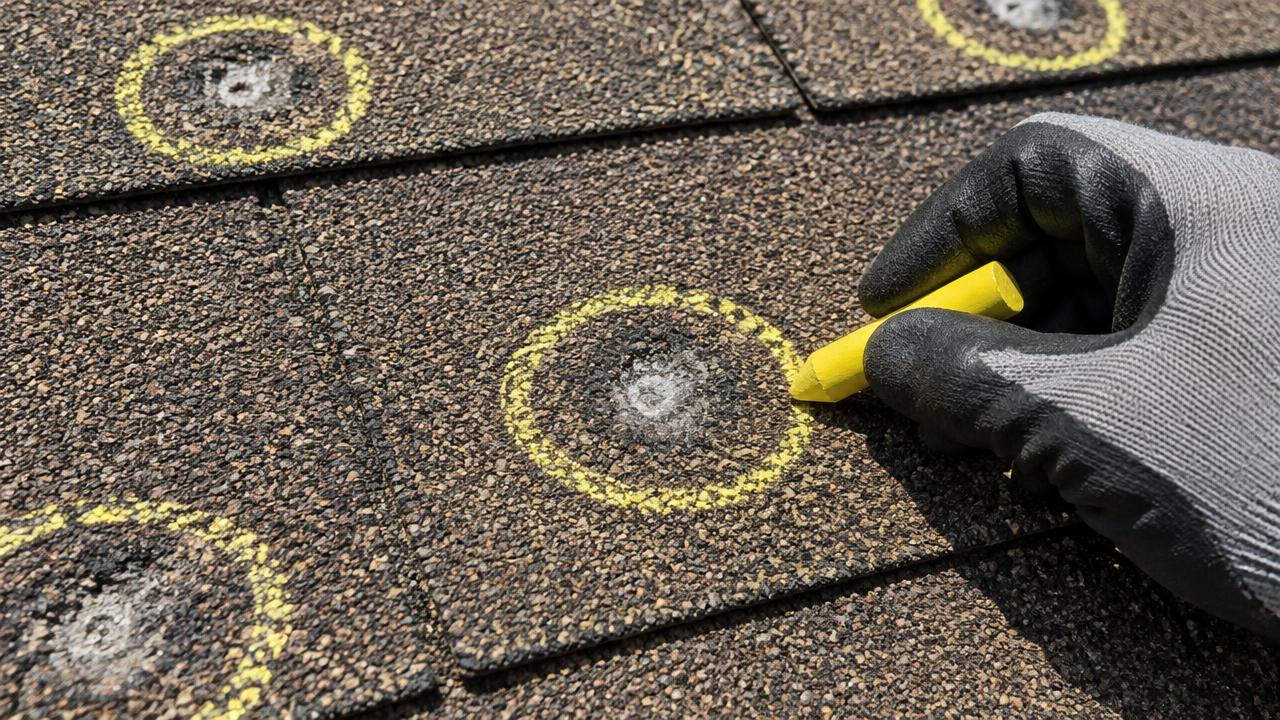
- Photos with each hit marked, often with chalk
- An honest call: no hail damage, repair, or replace
Why roofers use chalk circles
You may see roofers mark spots with chalk. That makes each hit easy to see in photos.
Some roofers also mark a square area on each slope and count the hits inside it. That gives a fair picture of how much damage there is.
Ask to see these photos. They help you, the roofer and your insurer talk about the same thing.
Your notes and photos
Write the date and the time of the storm. Note how big the hail looked, like a pea, a coin or a golf ball.
Take wide photos of each side of the house. Take close photos of dents and broken parts. Photos of hail in the yard with a coin for size can help.
Keep all of it in one folder with any roofer reports.
Insurance in plain words
Home insurance may help pay for hail damage. Every policy is different. Some have a separate wind and hail deductible. Some pay less for older roofs.
An adjuster may come to look at the roof. Have your notes and the roofer's photos ready. Only your insurer decides what is covered and paid.
Many policies have time limits for reporting. Check yours soon after the storm.
Be careful if anyone promises a claim will be paid or offers to cover your deductible. Ask your agent.
Repair or replace after hail
A few hits on a young roof may only need a repair. The roofer swaps the damaged shingles.
Many hits across every slope can mean the roof should be replaced. A patch would leave many weak spots behind.
Matching can matter too. If new shingles will not match, ask the roofer and your insurer how that is handled.
Hail and shingle choices
Some shingles are tested for impact. They carry a rating that shows how well they resisted a steel ball dropped in a lab. Higher ratings can resist hail better.
Metal roofs can also resist hail, though they may dent. Ask how dents are treated in the warranty.
Ask your agent if any roof type changes your rate. Then compare the extra cost.
Hail in the Omaha area
Hail can fall in the Omaha area during spring and summer storms. Some storms hit one street hard and skip the next.
That is why your neighbor's damage does not tell you about your roof. A roof check after any big hail storm is a smart step.
What an adjuster may look at
If you file a claim, your insurer may send an adjuster. They look at the roof and decide what the policy covers.
Adjusters often check soft metal for dents, mark hits on shingles and count them in test squares. They may take photos of each slope.
You can ask to be there. You can also have your roofer's photos ready. If the adjuster and roofer see things differently, ask both to explain their photos. Your policy may have steps to ask for a second look.
Hail and wood, slate or tile roofs
Wood shakes can split from hail. Fresh splits look light colored and have sharp edges. Old splits are gray and worn.
Slate and tile can crack or chip. These roofs need roofers who know how to walk and repair them without breaking more pieces.
If you have one of these roofs, ask about the roofer's past work on that material.
Hail and metal roofs
Metal roofs can dent in hail. Many dents are only cosmetic, meaning they change the look but not how the roof sheds water.
Hail can also crack paint or damage seams and fasteners. That kind of damage can lead to rust or leaks.
Read your metal roof warranty and your insurance policy. Some cover only damage that affects function, not looks.
Damage that shows up later
A bruise may not leak for months. Over a hot summer, the bare spot can dry out and crack.
Check ceilings and the attic hatch area after big rains for a few months after a hail storm.
Keep your storm notes and photos even if you decide not to file right away. They show when the damage likely happened.
Questions to ask after hail
- Can you show me photos of each slope with hits marked?
- How many hits did you find in each test area?
- Which marks are hail and which are age?
- Did you check vents, gutters and skylights?
- Do you suggest repair or replacement, and why?
- Can I get your photos and notes in writing?
For business roofs
Hail can puncture or bruise flat roof membranes too. Damage there can let water into the insulation. See our commercial roofing pages for how flat roof hail checks work.
Gutters, siding and windows
Hail rarely hits only the roof. Dents on gutters and downspouts are common. So are cracks in vinyl siding and tears in screens.
Write these down with your roof notes. Different trades may fix them, but one set of photos helps you, your insurer and each contractor see the whole picture.
Dents in gutters do not always mean the shingles are damaged. Soft metal dents easily. A roofer still needs to check the shingles themselves.
Skylights after hail
Plastic dome skylights can crack or craze, which means fine lines spread across the dome. Glass skylights can chip or break.
A cracked skylight can let water pour in fast. Keep people away from broken glass. A roofer can cover it until a new one is put in.
Storm chasers after hail
Big hail storms bring crews from far away. Some knock on doors the next day. Many are honest. Some may leave once storm work slows down.
Ask for a local address, proof of insurance and any license your city needs. Do not sign on the spot. Read every page before you sign.
No one can promise your claim will be paid. If someone offers to cover your deductible, ask your agent first.
Keep your records
Keep one folder with storm notes, your photos, roofer reports, insurer letters and receipts.
Keep it after the roof is fixed. It helps if you sell the home or have another claim later.
Hail on one side of the house
Storms often move in one direction. Hail tends to hit the side facing the storm the hardest. You may see dents and torn screens on that side only.
A roofer should still check every slope. But damage that lines up with the storm's direction is a helpful clue that it came from hail, not age.
How our request form works
We serve homes and businesses across the Omaha area. This website is a preview right now. The online form checks your answers, but it does not save or send them yet, so no roofer gets your request from it.
When online requests are turned on, this note will change. Until then, the form is a way to see what we will ask: your town or ZIP, what you see and what kind of help you need. We do not sell your details.
Common questions
What size hail damages a roof?
It depends on the shingle, its age, the wind and the angle. Bigger hail does more harm, but even smaller hail can hurt an old roof. A close check matters more than hail size alone.
Will hail damage cause a leak right away?
Not always. Bruised shingles can lose grit and wear out faster. Leaks may show up months later. That is why early photos matter.
Are impact-rated shingles worth it?
Some shingles are tested for impact and rated. They can resist hail better. Some insurers may give a discount. Ask your agent and compare the cost.
Can I get my roof checked if neighbors are filing claims?
Yes. Homes near each other can get very different damage. A check tells you what happened to your roof.
Do you cover hail checks outside Omaha?
Yes. We serve Bellevue, Papillion, La Vista, Elkhorn, Gretna, Bennington and Council Bluffs too.
Related help
Sources we checked
Official and standards pages we used to check facts on this page. Rules can change, so confirm with the source.