Quick answer
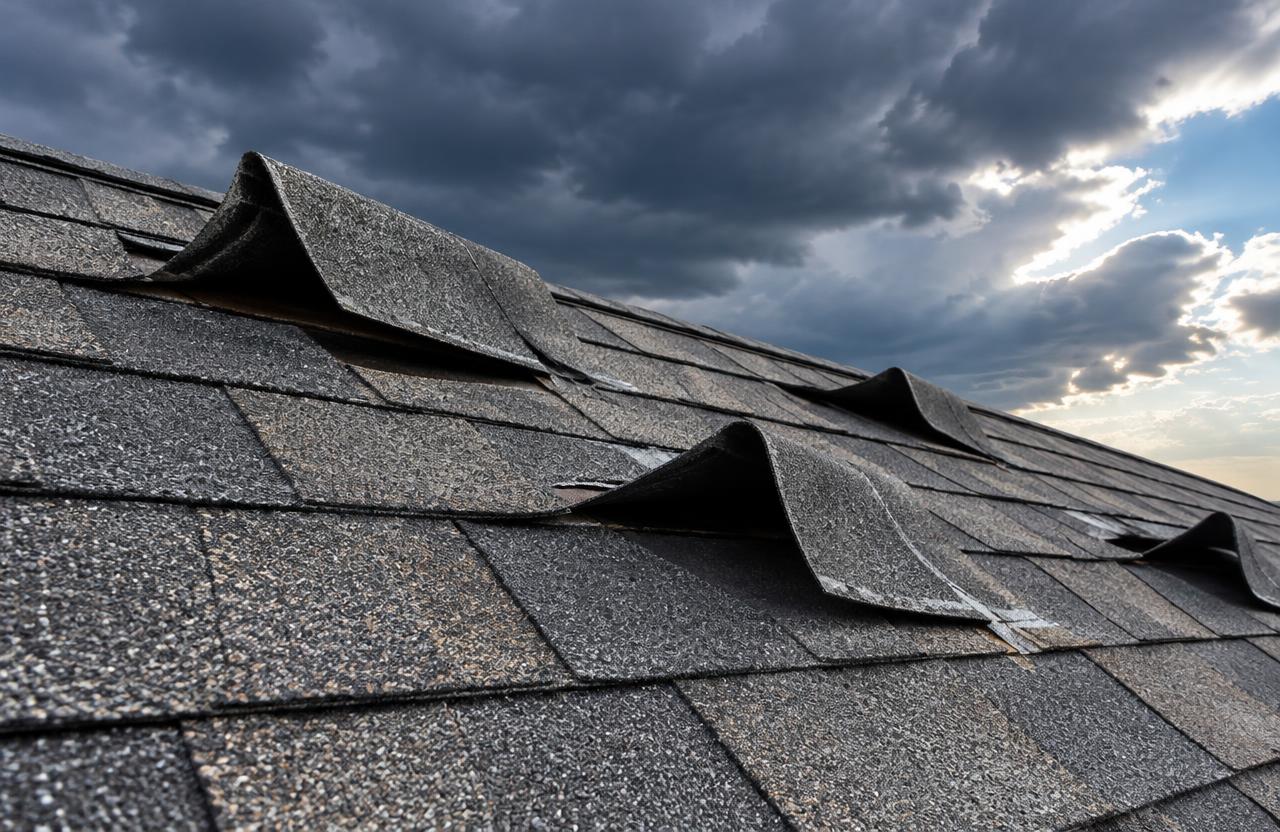
Wind damage on a shingle roof often looks like lifted, creased or missing shingles, bent flashing or loose ridge caps. Some damage is easy to see from the ground. Some is not, such as a shingle that lifted and broke its seal but lay back down. Look from the ground, take photos and have a qualified crew check up close.
How wind damages a roof
Wind does not push straight down on a roof. It flows over and pulls up, a lot like air over a plane wing. The edges, corners and ridge get the strongest pull.
Shingles are held by nails and a strip of tar-like glue that seals each shingle to the one below. When a strong gust lifts a shingle, the seal can break. Once it breaks, each new gust can flap the shingle until it creases, tears or blows off.
We serve homes across the Omaha area after wind storms. We help you sort out what you see and what to do next.
Right after the storm: stay safe first
Your roof can wait a few minutes. Your safety cannot.
- Stay away from downed power lines. Call the power company.
- Watch for hanging branches before you walk the yard.
- Do not climb on the roof. Wet, damaged shingles are slick.
- If water is coming in, move valuables and catch drips.
- If a tree hit the house, stay out of that area until a pro checks it.
What to look for from the ground
Walk all the way around the house. Use binoculars or a phone camera zoom. Look at each side of the roof, because wind often hits one side harder.
Look for dark patches where shingles are gone. Look for shingles that stick up, flap or look out of line. Look at the ridge along the top. Look at metal trim at the edges and around chimneys.
Check the yard and gutters for shingle pieces and grit. Pieces on the ground mean something came off, even if you cannot see where.
| Sign | What it means | How soon to act |
|---|---|---|
| Shingles missing, bare spots showing | The roof skin is open | Right away: cover and repair |
| Shingles folded back or flipped up | The seal broke and the shingle may be creased | Soon: get it checked before the next storm |
| A straight line across a shingle | A crease where it bent; it may tear later | Soon: ask about repair |
| Ridge caps loose or gone | The top seam is exposed | Soon |
| Bent metal flashing or drip edge | Water may get behind it | Soon |
| Shingle pieces in the yard, roof looks fine | Damage may be on a side you cannot see | Have the whole roof checked |
Damage you might not see
Some wind damage hides. A shingle can lift, break its seal and lay back down flat. From the ground it looks fine. On the next storm, it can blow off.
A crease is another hidden sign. It is a straight line across a shingle where it folded back. The shingle may still be there, but the crease weakens it.
A crew can check these up close. They may lift shingle edges by hand to test the seal. Ask them to photograph each problem they find.
Inside the house
Check ceilings on the top floor for new stains. Look from the attic hatch with a flashlight, if you can do it without climbing in. Look for daylight or wet spots on the underside of the roof.
A new stain after a wind storm points to an opening above it, but water can travel. The real opening may be a few feet away.
Taking good photos
Good photos help with repair bids and insurance.
- Take wide shots of each side of the house.
- Zoom in on each damaged spot you can see.
- Photograph shingle pieces in the yard where they landed.
- Photograph any inside stains with a date.
- Note the date and time of the storm.
Temporary protection
If shingles are gone and the underlayment shows, the roof needs cover soon. A crew can put a tarp or temporary patch over the spot.
Ask for photos before and after the tarp goes on. Keep receipts. Many policies expect you to take steps to prevent more damage, but read your own policy for the details.
Repair or more?
A few missing or creased shingles can often be replaced. The crew slides new shingles in, nails them and seals them.
It gets harder when the shingles are old. Old shingles can be brittle and crack when lifted. Matching color can also be hard. If many areas have broken seals, a crew may talk about a bigger repair or a new roof. Ask them to show you why.
Insurance basics
Wind damage claims depend on your policy. Some policies have a separate wind or storm deductible. We cannot tell you if a claim will be paid.
Call your insurer to learn the steps. Share your photos. The adjuster decides what is covered. A roofer can show the adjuster the damage, but the roofer does not make the coverage decision.
Watch out for storm chasers
After big storms, out-of-town crews may knock on doors. Some are fine. Some are not. The FTC suggests getting several written bids, checking references and never paying the full amount up front.
In Nebraska, contractors who work on other people's property must register with the state Department of Labor. Ask for the registration and proof of insurance.
Getting it checked
If you see any signs, or found shingle pieces in the yard, have a qualified crew check the whole roof. Bring your photos and notes. We help homeowners across the Omaha area after wind storms. Tell us what you see.
Siding, gutters and other clues
The roof is not the only thing wind hits. Look at siding for loose or missing panels. Look at gutters for spots pulled away from the house. Look at fences, sheds and trees in the yard.
Damage around the house can be a clue that the roof was hit too, even if you cannot see it from the ground. Photograph all of it. It helps tell the full story to a crew and to your insurer.
If your neighbors had shingles come off, that is another clue. Storms can leave a path, and homes on the same street often see similar damage.
Wind and older roofs
As shingles age, their seal strips can weaken and the shingles get stiffer. An older roof may lose shingles in a wind that a newer roof rides out.
That does not mean the storm did not cause damage. It means age and wind work together. When a crew checks your roof, ask them to note the roof's rough age and general condition along with the storm damage. That helps you weigh repair against bigger work.
Commercial and flat roofs
Wind also damages low-slope roofs on businesses. The membrane can lift at edges and corners. Metal edge trim and wall caps can peel back. Rooftop units can shift.
If you manage a building, look from safe spots on the ground and inside. Check ceilings near outside walls. Have a crew walk the roof with proper fall protection. Our commercial roof repair page explains more.
A short checklist for the first day
Keep this list handy after a strong storm.
- Make sure everyone is safe and stay clear of power lines.
- Walk around the house and look at each side of the roof.
- Take wide and close photos, and save the date and time.
- Check top-floor ceilings for new stains.
- Catch any drips and move valuables.
- Call a qualified crew to check the roof up close.
Where wind hits hardest
Wind pull is strongest at the roof's edges, corners and ridge. That is why damage often starts there. Shingles near the edge of the roof and along the rake, the slanted edge at the end of the house, are often the first to lift.
Roofs that face open fields or sit on a hill get more wind than roofs tucked between trees and houses. Damage does not always land on the side that faced the storm, because wind swirls and pulls hardest at edges and corners. FEMA's roof guide shows these edge and corner zones. A crew should check every slope, edge and corner.
Wind damage or normal wear?
Not every problem after a storm is from the storm. Shingles also wear out. Old shingles curl at the edges, lose grit and crack. Those signs build slowly over years.
Wind damage tends to show up suddenly after a known storm, often as missing, flipped or creased shingles on the side that faced the wind. A crew can help tell the difference. It matters for repairs and for insurance.
Flashing, vents and trim
Wind can bend metal flashing at chimneys and walls. It can loosen the drip edge along the roof's edge. It can pull off vent caps or loosen ridge vents.
These parts are small but they guard the weakest spots in a roof. A loose piece of flashing can let water in even if the shingles look fine. Ask the crew to check each one and photograph what they find.
Trees and branches
Falling branches can puncture shingles and even crack the deck. Branches rubbing on the roof in wind can wear through shingles over time.
If a big limb is on the roof, do not try to pull it off yourself. It may be holding weight or hiding a hole. A tree crew and a roofing crew may both be needed.
Keeping the next storm from doing the same
When shingles are replaced, ask the crew to check nailing and seals on the shingles around the repair. Ask whether the edges and ridge need extra attention. Trim trees that hang over the roof. Keep gutters secure so wind cannot catch and tear them.
How our request form works
We serve homes and businesses across the Omaha area. This website is a preview right now. The online form checks your answers, but it does not save or send them yet, so no roofer gets your request from it.
When online requests are turned on, this note will change. Until then, the form is a way to see what we will ask: your town or ZIP, what you see and what kind of help you need. We do not sell your details.
Common questions
How strong does wind need to be to damage a roof?
The National Weather Service says isolated wind damage is possible when winds hold at 40 to 50 mph, and storms can bring much stronger gusts. Older shingles, weak seals or poor nailing can fail at lower speeds.
If a shingle laid back down, is it okay?
Not always. When wind lifts a shingle, the sticky strip that holds it can break. The shingle may look normal but is now loose. A crew can gently test the seal by hand.
Will insurance cover wind damage?
That depends on your policy and what the adjuster finds. We cannot promise any payment. Take dated photos, keep receipts for temporary repairs and read your policy.
Can a few shingles just be replaced?
Often, yes. The crew needs matching or close shingles and must check that nearby shingles are not too brittle to lift. Very old shingles can crack when bent.
Someone knocked on my door after the storm. Should I sign?
The FTC warns about storm chasers who push for quick deals. Take time, get written bids, check state registration and do not pay in full up front.
Related help
Sources we checked
Official and standards pages we used to check facts on this page. Rules can change, so confirm with the source.