Quick answer
A roof valley is the V where two slopes meet. It carries more water than any other part of the roof, so small problems there leak fast. Common causes are debris that dams the water, worn or cut shingles, a missing or torn underlayment, and nails driven too close to the center. The fix depends on how the valley was built.
Why valleys are a weak spot
Picture rain falling on two slopes that meet. All that water runs toward the V and then down it. A valley might carry water from a big part of the roof in a single line.
That means a small flaw that would not matter on a flat slope can leak in a valley. It also means debris collects there, because water carries it there.
Valleys also sit where two roof shapes join, which is often over rooms with ceilings close to the roof. A leak there may show up quickly inside.
What is under the shingles
Under every good valley is a strong underlayment. Many roofers use a self-sticking ice and water membrane down the full length of the valley. It seals around nails and acts as a second line of defense.
If that layer is missing, torn or was never installed, the valley relies only on the shingles or metal on top. When those fail, water goes straight to the deck.
Common valley problems
These are the causes crews find most often.
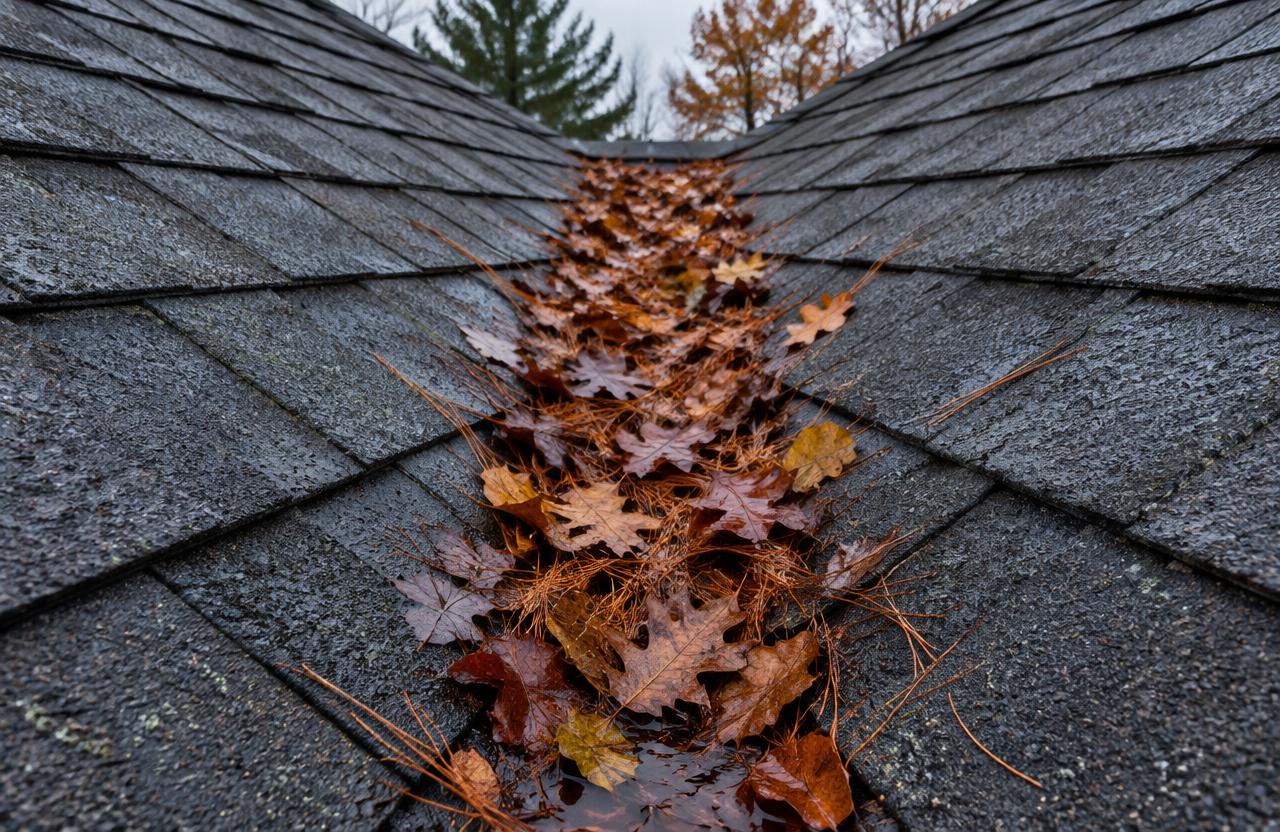
- Leaves, needles and seeds piled up, damming the water.
- Shingles worn thin at the center from years of heavy flow.
- Nails placed too close to the center line, where water flows over them.
- A cut line on a closed valley that has lifted or curled.
- Rusted or loose metal in an open valley.
- A valley that ends into a wall or a gutter in a way that dumps water badly.
| Style | What it looks like | Things to watch |
|---|---|---|
| Open metal valley | A strip of bare metal shows down the V | Rust, loose edges, debris on the metal |
| Closed-cut valley | Shingles from one side run across; the other side is cut in a straight line | Cut line worn or lifting, nails too close to center |
| Woven valley | Shingles from both sides weave across the V | Worn shingles at the center, cracking on thick shingles |
| Any style | Debris piled in the V | Water backs up under shingles |
Debris: the easy one to spot
From the yard, look at each valley with binoculars after leaves fall. Piles of leaves or needles slow the water. It can then back up under the shingle edges or soak the shingles until they wear.
Trees that hang over the roof make this worse. Trimming branches back is one of the most useful things you can do for your valleys. A crew can clean the valleys safely when needed.
Where valleys meet gutters
At the bottom of a valley, a big rush of water hits one spot of the gutter. It often shoots right over the edge. That splash can rot the fascia and soak the ground by the wall.
A small splash guard on the gutter or a downspout near the valley can help. Our gutter page covers this in more detail.
Inside clues
Valley leaks often show up as a stain on a ceiling right under the V, or in a corner where two rooflines meet. Look from the attic hatch with a light. Water stains on the wood along the valley line are a clue.
Water can also travel along a rafter and drip farther away. A stain does not always sit right below the leak.
How valleys are repaired
For small damage, a crew may replace a few shingles along the valley. But valleys work as one line from top to bottom. Patching one spot often moves the problem a few feet away.
For a lasting fix, many crews remove the shingles along the full valley, lay new ice and water membrane, then rebuild it as an open metal, closed-cut or woven valley that fits the roof and the shingle maker's rules.
Ask the crew which style they plan and why. Ask for photos of the deck and underlayment once it is open.
Soft deck in the valley
A valley that has leaked for a long time often has soft or rotted deck boards below. New shingles and membrane need a solid base.
The EPA says wet building materials should be dried or replaced quickly to help prevent mold. Ask the bid to name a price for deck repair if it is found, so you know before work starts.
Winter and valleys
Snow drifts into valleys and melts slowly. When it melts by day and freezes by night, ice can build up and trap water behind it. That water can push up under shingles.
The ice and water membrane helps here. So does keeping heat out of the attic, which our ice dam page explains. Do not chip ice out of a valley. It is easy to damage the roof and fall.
After a storm
Hail and wind can damage valley shingles and metal. Branches can fall right into the V. If you suspect storm damage, take photos from the ground and call your insurer to learn the steps.
The FTC warns that storm chasers may push quick deals. Get written bids and do not pay the full price up front. In Nebraska, ask for the contractor's state registration.
Questions to ask a roofer
Use these to compare bids for valley work.
- What valley style is on my roof now?
- Will you redo the full valley or patch part of it?
- Will you install ice and water membrane the full length?
- How will you handle where the valley meets the gutter?
- What happens if the deck is soft?
Getting started
Take photos of your valleys from the ground and any stains inside. We help homeowners across the Omaha area fix valley leaks so they stay fixed.
Old patches in the valley
Many leaking valleys have been patched before. You may see black tar smeared along the center line or a few shingles that look newer than the rest.
Patches like these often hide the real problem and trap debris. When a crew opens the valley, ask them to tell you what the old patch was covering. If the deck under it is soft or the membrane is torn, that explains why the patch did not last. Plan on a full valley repair rather than another patch over the old one.
Valleys and new roofs
When a roof is replaced, the valleys are rebuilt too. This is the best time to choose the valley style, add full-length membrane and fix any soft deck.
Ask the bid to spell out the valley style, the membrane and the metal, if any. Valleys are one of the details that most often separate a careful roof job from a rushed one.
What a valley repair looks like
On the day of a valley repair, the crew usually starts at the top. They lift and remove shingles a set distance on both sides of the V. They check the deck, then lay new membrane down the full length.
Then they rebuild the valley, working from the bottom up so each piece laps over the one below. At the end, they clean up nails and debris and check the gutter at the bottom. Ask for photos at each stage.
Metal choices for open valleys
Open valleys use a strip of metal down the V. Common metals include painted or coated steel, aluminum and copper. Copper lasts a long time but costs more.
Some open valleys have a small raised rib down the center. It keeps water from one slope from rushing across and up under the shingles on the other side. That helps where one slope is much bigger or steeper.
Big slope meets small slope
Many valleys join a big roof slope with a small one, like a dormer or a garage. The big slope sends far more water. It can push across the valley and up under the small side.
A careful crew plans the valley for that. They may choose an open valley or set the cut line to favor the big slope. Ask how they will handle uneven flow on your roof.
Valleys on metal and flat roofs
Metal roofs have valley pans with special trim and closures. Leaks often come from failed sealant or closures that let wind-driven rain in.
Low-slope roofs may have valleys or crickets that guide water to drains. Ponding at the low point of these valleys is a common problem. Our flat roof page covers those systems.
Gutter guards near valleys
The rush of water at the bottom of a valley can shoot past some gutter guards. Leaves from the valley can also collect on top of a guard.
If your valley overflows at the gutter, tell the gutter crew. They may suggest a different guard there, a splash guard or an extra downspout.
Valley or nearby flashing?
Valleys often run into walls, chimneys or skylights. A leak at the top or bottom of a valley may come from the flashing where it meets those parts, not the valley itself.
A water test, done by the crew, can help sort it out. They wet the valley in sections while someone watches inside.
Keeping valleys healthy
Trim trees so branches do not hang over valleys. Have a crew clear valleys after heavy leaf fall if debris builds up. Keep gutters at the bottom clear so water can leave the valley freely.
Look at your valleys from the ground each spring and fall. Catching a pile of leaves or a lifted shingle early saves a repair.
How our request form works
We serve homes and businesses across the Omaha area. This website is a preview right now. The online form checks your answers, but it does not save or send them yet, so no roofer gets your request from it.
When online requests are turned on, this note will change. Until then, the form is a way to see what we will ask: your town or ZIP, what you see and what kind of help you need. We do not sell your details.
Common questions
Can a valley be patched?
Small spots sometimes can. But valleys carry so much water that patches with tar often fail. Many roofers will redo the whole valley line from top to bottom to get a proper seal.
Should I clean the leaves out of my valley?
Not by climbing on the roof. Valleys are steep and slick. A crew can clear them, and trimming trees above the roof cuts down on how often it is needed.
Why does the valley leak in winter?
Snow and ice collect in valleys. When melt water backs up behind ice, it can push under shingles. That is related to ice dams and attic heat. Ice and water underlayment in valleys helps.
Is one valley style best?
Each can work when done right. Open metal valleys move water and debris well. Closed-cut and woven valleys are common and look neat. The shingle maker's instructions say which styles they allow.
Does a valley leak mean I need a new roof?
Not by itself. If the rest of the roof is in good shape, a valley repair may be enough. If the whole roof is worn, a crew may suggest doing it all at once.
Related help
Sources we checked
Official and standards pages we used to check facts on this page. Rules can change, so confirm with the source.