Quick answer
In a roof emergency, keep people safe first, then slow the water down inside. Do not go on the roof. A roofer can put on a tarp or a quick patch to keep rain out until the real repair. Ask what the short-term fix covers, what it costs and what comes next.
The short answer
A roof emergency is when water, wind or a fallen tree is hurting your home right now. The goal in the first hours is simple: keep people safe and keep more water out.
The full repair can come later. First comes a short-term fix, like a tarp or a quick patch. This page walks you through what to do, what to skip and what to ask the roofer.
Keep people safe first
Get everyone out of a room where water is pouring in or the ceiling sags. A wet ceiling can fall without warning.
Stay away from water near lights, outlets and wires. Do not touch a wet breaker panel. If you cannot reach a dry panel from a dry floor, call an electrician or the power company.
If a tree is on the house, leave the rooms under it. Watch for downed power lines outside. Treat every line as live and call the power company.
Do not go on the roof. Wet shingles, wind and dark skies make falls much more likely. That job belongs to a trained crew with safety gear.
Slow the water down inside
You can cut down the harm while you wait. These steps are safe and simple.
- Put buckets or bins under drips. Empty them before they fill.
- Move beds, rugs, electronics and papers out of the way.
- Lay towels to soak up water on floors.
- Open closet and cabinet doors near the leak so they can dry.
- Run fans once the water stops, if the area is safe from wires.
- Take photos of each step as you go.
| What you see | How urgent | First step |
|---|---|---|
| Water pouring in, or a ceiling bulging | Act now | Get people out of that room. Stay clear of wires. |
| A tree or limb through the roof | Act now | Leave the rooms below. Call for help. |
| A steady drip in one spot | Soon | Catch the water and request a roofer. |
| Shingles gone, but no water inside | Soon, before the next rain | Take photos and request a check. |
| An old stain that is dry | Not urgent | Plan a normal roof check. |
What a roofer does in an emergency
A roofer's first job is to stop more water. That is often called making the roof safe or dry in.
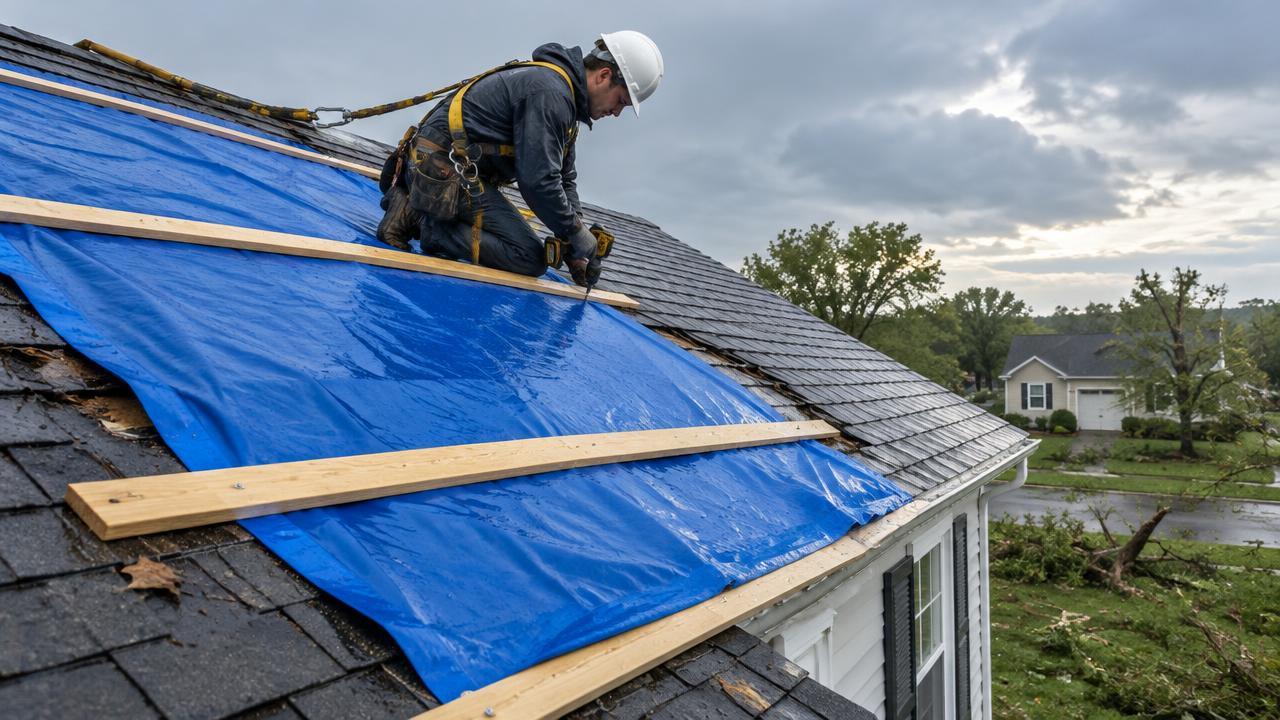
The most common fix is a tarp. The crew lays a big plastic sheet over the hole. They hold it down with wood strips nailed through to the roof. A good tarp runs past the ridge so rain cannot run under it.
For small spots, a roofer may use a quick patch instead. That can mean new shingles over the spot, a sealant or a piece of metal. It is still a short-term fix unless they tell you it is the final repair.
A careful roofer will also take photos of the damage before they cover it. Ask for copies. You may need them for insurance.
Tarp or patch: what to ask
Short-term fixes vary a lot. Ask each roofer these questions so you know what you are paying for.
- Is this a tarp, a patch or a final repair?
- What does it cover, and what does it leave open?
- How long should it hold?
- What will it cost, and is that cost separate from the full repair?
- Will you take photos before and after?
- When can you come back to look at the full repair?
Common roof emergencies
Most urgent calls come from a few kinds of events. Each one needs a little different help.
- Wind tears off shingles and leaves bare wood or paper showing.
- Hail breaks shingles or skylights and water comes in.
- A tree or big limb falls on the roof.
- Ice dams push melt water under shingles in winter.
- A pipe boot or flashing fails during a hard rain.
- Snow load pushes a weak area down.
Wind and hail emergencies
After strong wind, you may see bare spots where shingles blew off. Even if no water comes in yet, the next rain may find that spot. Request a check before the next storm if you can.
After hail, a skylight may crack or a vent may break. Water can then pour in fast. Keep people away from broken glass. A tarp or board can cover the opening until it is replaced.
Our storm damage page has more on what hail and wind do and how to take notes.
Tree on the roof
A tree on the roof is two jobs. A tree service removes the tree. A roofer covers the hole and repairs the roof.
Do not try to cut or pull the tree yourself. It can shift and fall further. Wait for trained crews.
Once the tree is off, the roofer can see how far the damage goes. It may reach the rafters, which are the wood beams that hold up the roof. That part may need a builder.
Winter emergencies
In cold weather, ice dams can form at the roof edge. Snow melts higher up, then freezes again at the cold edge. Water backs up behind the ice and slips under shingles.
Do not chip at ice with a hammer or climb up with a shovel. That can break shingles and cause falls. A roofer can remove ice safely and look at why it formed.
Heavy, wet snow can also stress a roof. If you see a ceiling crack or bow, or hear loud creaks, leave that area and call for help.
Taking notes for insurance
Write down the date and time the damage started. Write what caused it if you know, like wind, hail or a tree.
Take photos of the outside from the ground and of the damage inside. Keep receipts for tarps, buckets, fans and any emergency work.
Many policies ask you to take steps to stop more damage. Read your policy or call your agent soon. Only your insurer decides what is covered and paid.
After the emergency
Once the water is stopped, plan the real fix. Ask for a full roof check, not just a look at the tarp. There may be more damage nearby.
Let wet areas dry fully. Wet insulation and drywall can grow mold. Some may need to be removed. A drying company can help with large wet areas.
Then compare repair bids. Our roof repair page explains how to read a bid and what to ask.
Watch for pressure after storms
Big storms bring many crews to town. Most are honest. Some push people to sign a full contract while the home is still wet.
You can say yes to a tarp without signing a full roof contract. Read anything before you sign. Ask for a written price for the short-term fix alone.
Be careful with anyone who asks for full payment up front or says your insurer will pay for anything.
For business owners
If a business roof is leaking, the steps are close to the same. Keep people safe and move stock and machines away from water.
Flat roofs often leak far from the hole on top. Our commercial emergency page explains drains, wet insulation and keeping your doors open during repairs.
What to tell the roofer when you call
Clear facts help a roofer know what to bring and how fast to plan. Have these ready.
- Your address and the best phone number
- What happened, like wind, hail, a tree or ice
- Where water is coming in and how fast
- If power is off in any room
- If anyone is hurt or the home is unsafe to stay in
- Photos you took from the ground and inside
- Your insurance company name, if you plan to file
If you need to leave the home
Sometimes a home is not safe to stay in. A big hole, a sagging ceiling or wet wiring can all be reasons to leave for a night.
Take medicines, papers, chargers and pets. Lock up if you can. Tell the roofer and your insurer where to reach you.
Many policies have help for extra living costs when a home cannot be lived in. Ask your agent and keep receipts.
Signs the short-term fix is failing
A tarp or quick patch needs checking, especially after wind. Look from the ground and inside for these signs.
- The tarp edge flaps or has pulled loose
- Wood strips have lifted or split
- Water pools on the tarp
- New drips or stains inside
- The tarp has torn or faded badly
Keep a simple emergency log
Write each step in one place. Note the time you called, who came, what they did and what it cost.
Add photos of the damage, the tarp and the inside. This log helps you, your roofer and your insurer stay on the same page.
Keep it until the final repair is done and paid.
Things that make an emergency worse
Some quick fixes cause more harm. Skip these.
- Climbing up with a tarp in wind or rain
- Smearing roof tar on wet shingles
- Poking holes in a bulging ceiling with wires nearby
- Running power tools near standing water
- Waiting weeks to report the damage to your insurer
Getting ready for the next storm
Once the roof is fixed, a few steps can lower the risk next time. Trim branches that hang over the roof. Keep gutters clear so water can drain.
Keep a small kit ready: buckets, towels, a flashlight, plastic sheeting for furniture and your insurance info. Save a roofer's number in your phone.
Have the roof checked after big storms, even if nothing leaks. Small problems found early rarely turn into emergencies.
How our request form works
We serve homes and businesses across the Omaha area. This website is a preview right now. The online form checks your answers, but it does not save or send them yet, so no roofer gets your request from it.
When online requests are turned on, this note will change. Until then, the form is a way to see what we will ask: your town or ZIP, what you see and what kind of help you need. We do not sell your details.
Common questions
Can a roofer come out at night?
Some roofers take night calls and some do not. Working on a wet, dark roof is risky, so many will make the home safe from inside and tarp at first light. Ask what they can do and when.
How long can a tarp stay on?
A tarp is short-term. Wind and sun wear it out. Ask the roofer how long they expect it to hold and check it after every windy day.
Will insurance pay for the tarp?
Many policies expect you to take steps to stop more damage. Some pay for those steps. Only your insurer decides. Keep the receipt and photos.
Should I cut a hole to drain a bulging ceiling?
We suggest you do not. Keep people away from it and ask a roofer or handyman. The ceiling can fall, and there may be wires above it.
Do you serve the whole Omaha area for urgent requests?
Yes. We serve Omaha, Bellevue, Papillion, La Vista, Elkhorn, Gretna, Bennington and Council Bluffs. Send the request, and a local roofer contacts you.
Related help
Sources we checked
Official and standards pages we used to check facts on this page. Rules can change, so confirm with the source.