Quick answer
Roof work on an industrial building has to fit the process inside. Exhausts, dust, hot equipment, utilities and chemical systems can all affect where and when a crew can work. Plan with the facility's safety team: which areas need isolation or permits, what needs a shutdown, and how hot work rules apply. Some rules, like OSHA's process safety rule, cover only certain processes, not every factory.
Industrial roofs are part of the process
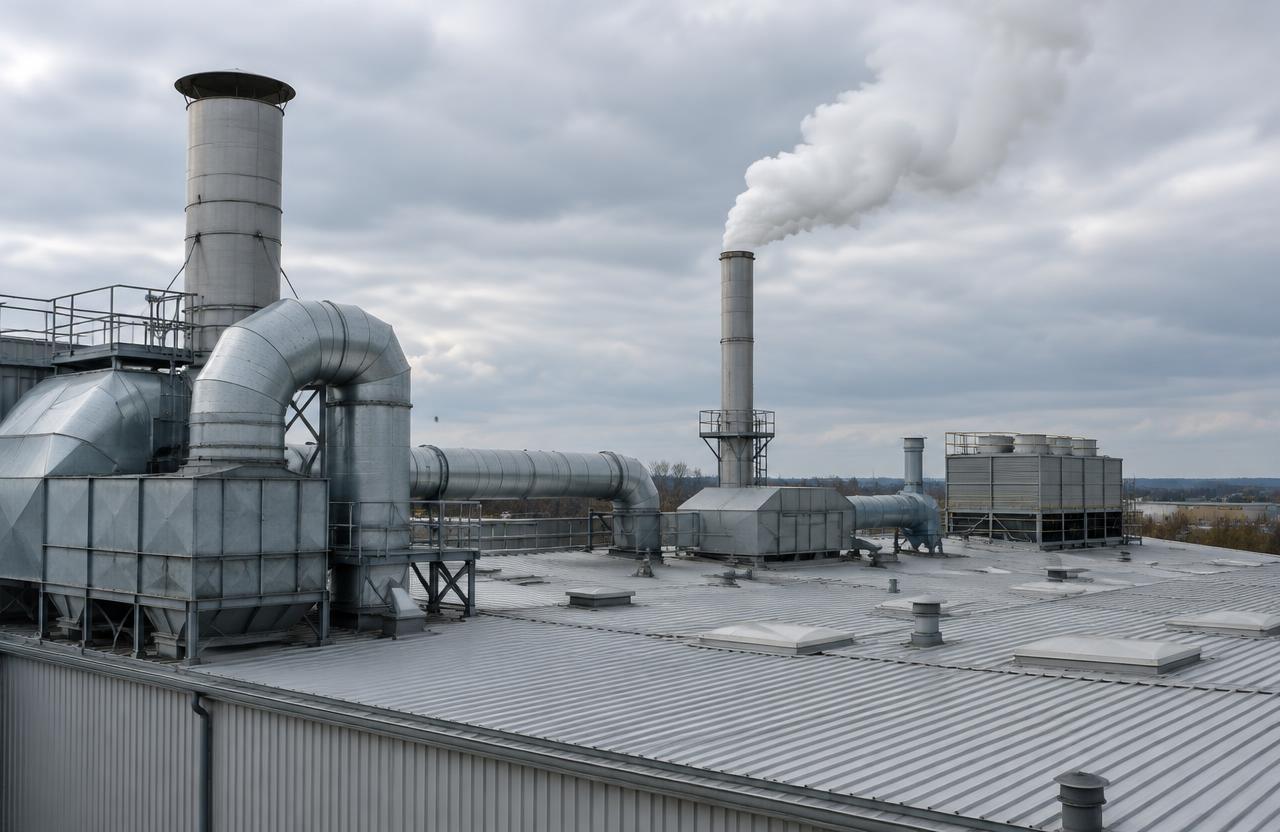
On many industrial buildings, the roof is more than a cover. It holds exhaust fans, stacks, ducts, cooling units and process lines. Some of these run all day. Some carry heat, fumes or dust.
That means roof work has to be planned with the process in mind. A crew that treats an industrial roof like a plain warehouse roof can put people and the plant at risk.
Start with the facility's safety team
Each plant has its own hazards and rules. The facility safety team knows them best. Before any bid is final, the crew should walk the roof with that team.
Together they can mark exhaust outlets, dust areas, hot equipment and utilities. They can agree on which areas need permits, isolation or shutdowns. They can also set who has the authority to stop work.
Chemical and process exhaust
Exhaust outlets may release fumes or vapors. Workers near them can breathe what comes out. Some exhaust may also harm roof materials over time.
The facility should identify what each outlet releases. The plan may move work away from outlets, schedule work during shutdowns, or add protection. The EPA's indoor air guidance for building managers also warns about roof work fumes reaching intakes. Plan both ways: what comes out of the plant, and what roof work may send in.
| Hazard near the roof | Why it matters | Plan with |
|---|---|---|
| Chemical or process exhaust | Workers near outlets can breathe harmful fumes | Facility safety and process owners |
| Combustible dust on the roof | Dust can burn or explode near heat or sparks | Facility safety; dust cleanup before work |
| Hot ducts, stacks and equipment | Burns and heat damage to roof materials | Operations, for shutdown or guarding |
| Gas, power and process lines | Damage can cause leaks, fires or outages | Utilities and maintenance team |
| Hot work near any of these | Sparks or flames can start a fire | Facility hot work permit process, if one applies |
| Covered processes under OSHA PSM | Extra rules for contractors | Facility PSM coordinator, if the process is covered |
Combustible dust
Some plants make dust that can burn or even explode. Examples include grain, wood, some metals, plastics and food powders. This dust can settle on roofs near vents and collectors.
Dust near sparks, flames or hot tools is dangerous. The facility should check for dust on the roof and plan cleanup before work. Hot work near dust areas needs extra care or may not be allowed.
Hot equipment and utilities
Ducts, stacks and some units can be very hot. They can burn workers and harm roof materials placed too close. Gas lines, power lines and process piping also cross many industrial roofs.
The plan should list each one. Some may be shut down or cooled for a time. Others need guarding or keep-away zones. Damage to a gas or process line can cause leaks, fires or outages. Mark them clearly and agree on who controls them.
Hot work, permits and fire watch
Some roof work uses torches, welding or other heat. OSHA's construction rule on welding and cutting fire prevention says to move fire hazards away or guard them. It calls for a fire watch when certain conditions exist, like nearby combustibles or openings where sparks can fall.
That rule applies when its conditions apply. It does not set one fire watch time for every job. Many plants also have their own hot work permit policy. Follow both. Ask the crew how they will meet the rules and your permit.
One case is not optional. For hot work on or near a process covered by OSHA's Process Safety Management rule, 1910.119(k) says the employer must issue a hot work permit. Not every factory or process is covered. Your facility should confirm whether a covered process is near the roof work.
Process safety management, only when it applies
OSHA's Process Safety Management rule covers processes that use certain highly hazardous chemicals above set amounts. Covered plants have extra duties for contractors, like sharing hazard info and controlling entry.
Most roof jobs are not at PSM-covered processes. But if your plant has one, the roof crew must follow the plant's PSM contractor rules near it. Ask your facility if any covered process is near the roof work.
Isolation and shutdown planning
A fan that has stopped or a valve that is shut is not the same as a safe system. Machines can restart. Pressure, heat, springs and stored power can stay behind. Safe isolation follows a written, checked energy-control plan run by people the facility has trained and allowed to do it.
OSHA's lockout rule, 1910.147, covers certain servicing and maintenance of machines in general industry. It does not cover construction work, and it does not cover every roofing task. Even so, the facility and the roof contractor should agree in writing on who controls which energy sources, and how stored energy is handled, before work near equipment. The roof crew should never shut down or lock out plant equipment on its own.
Shutdowns cost time and money, so plan them well. Group roof work near the same equipment into one window. Agree on start and end times. Agree on who confirms the system is safe before work and back on after.
Roof penetrations on industrial buildings
Industrial roofs often have many penetrations: pipes, ducts, supports and curbs. Each one is a possible leak point. Heat and vibration can stress flashings.
Flashings should match the roof system and the heat of the item. Some need special high-temperature details. Our penetration leaks page covers this more. Ask the crew which detail they plan for each type.
Air quality inside the plant
Roof work can send dust or fumes inside through intakes, openings or gaps. In some plants, clean air matters for the product. In others, it matters for worker health.
Work with the facility on which intakes are near the work. Plan product choice and timing. Changing HVAC settings should be a facility decision, not a crew guess.
Records and the handoff
Ask the crew for a final file. It should list the roof system, products used, details at each penetration, and any changes made near process equipment. Photos help.
This file helps future crews and plant staff. It also helps if a leak shows up near equipment later.
Plan the job around plant down time
Many plants have planned down time for upkeep. That can be a good time for roof work near hot or busy equipment. Fans can be off. Lines can be cool.
Ask your plant team when the next down time is. Plan the hardest roof areas for then. Do the rest when the plant is running, with the right safety steps.
Roof materials and plant fumes
Some plant fumes can harm roof materials over time. Oils, greases and some chemicals can soften or crack certain membranes.
Tell the roof designer what comes out of each vent. Ask if the roof near those spots needs a different product or extra care. Check the roof near vents more often.
Tell plant workers about the job
Plant workers need to know where roof crews will be. They should know which areas are closed and why. They should know who to call if they see a problem.
Share the plan at shift meetings. Post maps. Make sure workers know roof crews may be above them.
Roof checks after the job
Industrial roofs take a beating. Heat, fumes and foot traffic wear them down. Check them on a set schedule and after big storms.
Look most at spots near vents, units and pipes. Keep records of what you find.
Roof loads from new equipment
Plants change over time. New fans, ducts or units may go on the roof. Each adds weight and new holes.
Before adding gear, ask an engineer if the roof can carry it. Ask the roof crew to plan the flashing. Do not let a new unit be set without a roof plan.
Keep it simple: a short checklist
Big plans can get lost. Make a one-page list for each roof area. Write what is near it, what must be off, who said it is safe and when work can start. Post it where the crew starts each day.
Who can stop work
Anyone who sees danger should be able to stop work. That means plant staff and roof crew alike. Make this clear at the start.
Set how to call a stop, who to tell and how work starts again. A stop that is easy to call keeps people safe.
Leaks over plant gear
A leak over a machine or panel can cause more than a wet floor. It can stop a line or start a short. Find out which gear sits under the roof work.
Plan covers or moves where it is safe. Tell the plant team what to do if water shows up near gear. Do not touch wet electric gear. Call the right staff.
Noise and the people inside
Roof work adds noise on top of plant noise. Workers may not hear alarms or calls as well. Tell the plant safety team when loud work will happen.
Make sure alarms can still be heard or seen. Plan the loudest work for times with fewer people near it.
Cleanup at the end of each day
Loose roof scraps, screws and tools can blow into fans or fall into the plant. Ask the crew to clean up each day. Ask them to tie down or remove loose items before they leave.
Report any debris near fans, guards or intakes to the facility. Never reach toward or walk up to moving equipment. Only people the facility has authorized, using its energy-control steps, should clear debris from fans or machines.
Questions to ask before work starts
Use these in the planning meeting with the crew and facility team.
- Which exhaust outlets, dust areas, hot items and utilities are near the work?
- Which areas need isolation, shutdown or permits?
- Is any hot work planned, and how will the rules and our permit be met?
- Is any OSHA PSM-covered process near the roof work?
- How will dust and fumes be kept from intakes?
- Who can stop work, and how do we tell each other?
Common questions
Does every factory fall under OSHA's process safety rule?
No. OSHA's Process Safety Management rule applies to processes with certain highly hazardous chemicals above set amounts. Many factories do not have a covered process. Your facility knows if it does.
How long must a fire watch last after hot work?
It depends on the rule that applies and the conditions. OSHA's construction welding rule calls for a fire watch when certain conditions exist, and other standards and your facility's permit may set more. We do not give one time for every job.
Do we have to shut down the plant for roof work?
Not always. Some areas may need short shutdowns, isolation or rerouted exhaust. Others can run with set safety steps. The facility and the crew should plan this area by area.
Can the roof crew handle exhaust outlets themselves?
Not on their own. Exhaust and process systems belong to the facility. The crew should work with the facility team on isolation, guarding or timing.
Who decides if an area is safe to work?
The facility's safety process and the crew's competent person work together. Either should be able to stop work if something looks unsafe.
Related help
Sources we checked
Official and standards pages we used to check facts on this page. Rules can change, so confirm with the source.