Quick answer
Commercial metal roofs come in two main kinds: exposed-fastener panels with screws through the face, and standing seam panels held by hidden clips. Both move as the metal heats and cools. Good repairs respect that movement and the original attachment design. Extra screws and stiff patches are not a general fix. Rust, mixed metals and the wrong sealant can cause trouble. Wavy-looking panels are often cosmetic, not a sign of failure.
Two main kinds of metal roof
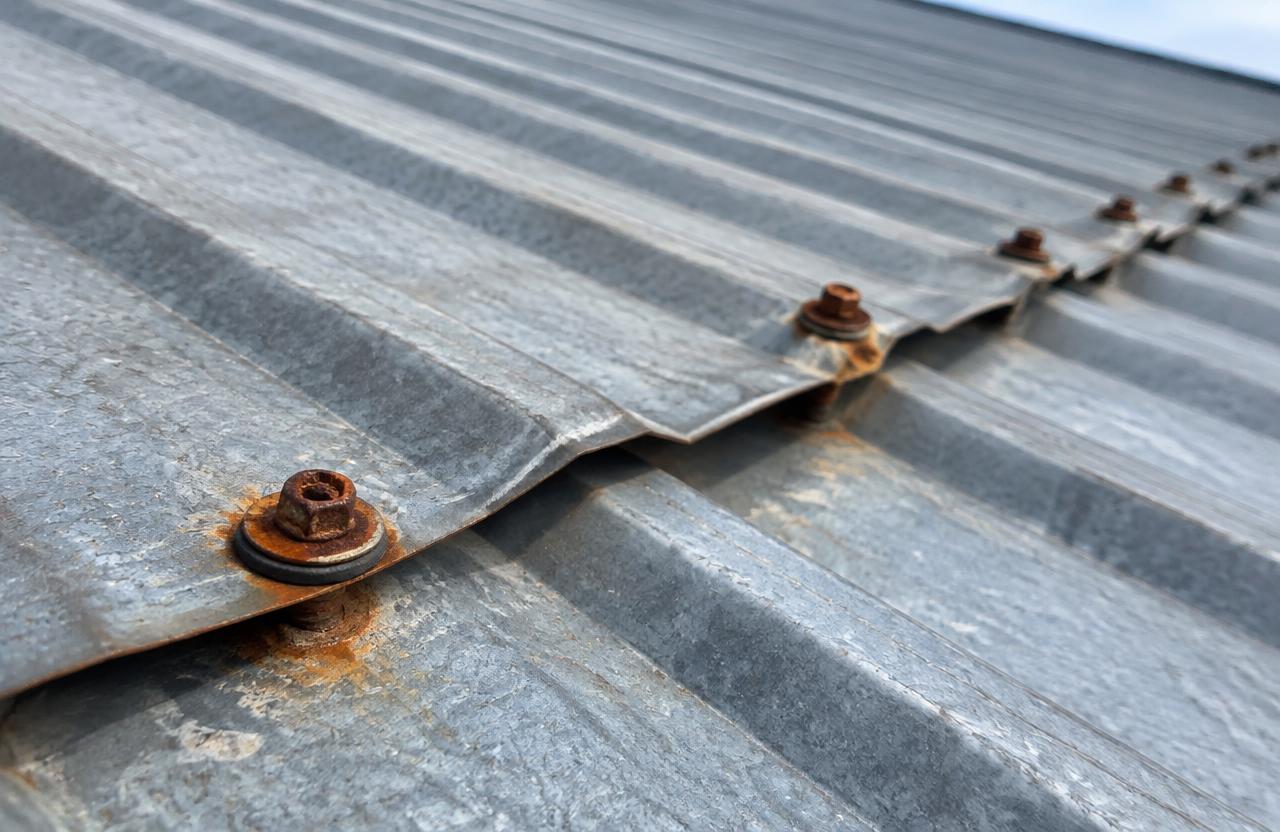
Most commercial metal roofs are one of two kinds. Exposed-fastener panels have screws through the face of the panel into the framing. You can see rows of screw heads. Standing seam panels are held down by clips hidden under raised seams. You do not see screws on the flat part.
Each kind has its own strengths and repair needs. Knowing which one you have is the first step.
Metal moves with heat and cold
Metal grows when it heats up and shrinks when it cools. A long panel can move a fair amount over a day. Roof design has to allow for that.
On standing seam roofs, many clips let panels slide. Some systems use fixed clips. The exact design depends on the system and the maker. On exposed-fastener roofs, screws hold panels tight, so movement works on the screws and washers over time.
Repairs should respect this movement. A stiff patch or extra screw that pins a panel can lead to new stress, torn metal or new leaks.
Fasteners and washers
On exposed-fastener roofs, screws are a common leak point. Rubber washers under the screw heads can crack from sun and age. Screws can back out as panels move. Water then finds a path in.
A common repair is to replace screws with new ones of the right size and type. The panel maker lists what is right. Over-tightened screws can crush washers. Under-tightened ones can leak.
| What you see | What it may be | Question to ask |
|---|---|---|
| Rust around screw heads | Worn washers or fasteners | Will you replace screws to match the panel maker's spec? |
| Leaks at panel laps | Failed sealant or movement at the lap | What sealant and closure does the maker call for? |
| Wavy panels in sunlight | Oil canning, often cosmetic | Is this only a looks issue, or is something loose? |
| Rust where different metals touch | Galvanic corrosion | Which metals are touching, and how will you separate them? |
| Loose or lifted edges after wind | Attachment problem at edges | What does the tested design call for at edges? |
Seams, laps and closures
Panels overlap at laps. Sealant tape and closures help keep water and wind out. Over time, sealant can dry out and closures can shift.
Fixes at laps should use sealants and closures the maker lists. Many general caulks do not hold up on metal or move well. Ask which products the crew will use and why.
Rust and mixed metals
Rust often starts at cut edges, scratches and screw holes. It can also start where water sits. Small spots may be cleaned and treated. Wide rust may mean the panels are near the end.
Some metals react when they touch in the wet. This is called galvanic corrosion. For example, copper runoff onto steel or the wrong fasteners can speed up rust. The Metal Construction Association explains which metals work together. Ask how the crew will keep metals that react apart.
Oil canning is often cosmetic
Oil canning is a wavy look in flat parts of metal panels. It shows most in low sun. It comes from how the metal was made, formed and installed.
In most cases, oil canning is only a looks issue. It does not by itself mean the roof is failing. But if a panel is loose, bent or leaking, a crew should check the clips and fasteners.
Attachment design and wind
Metal roofs hold down through clips or screws into framing. The spacing and type come from tested design data. Edges, corners and ridges often need more attachment.
Repairs should follow that design. A crew should not guess at screw spacing or swap clip types. Ask what the design calls for and how the repair will match it. Our wind uplift page covers this more.
Coatings and metal roofs
Some metal roofs can be coated to slow rust or seal small leaks. The roof must be cleaned and rust handled first. The coating must be made for metal.
Ask for the product data sheet and an adhesion test. A coating does not fix loose panels or failed attachment. Those need repair first.
Safety on metal roofs
Metal roofs can be very slick, most of all when wet, frosty or dusty. Skylights in metal roofs can look like panels and give way. OSHA says roof workers need fall protection.
Stay off the roof yourself. Watch from the ground. Let trained crews with fall protection do the work.
Gutters, valleys and eaves
Metal roofs shed water fast. That water goes to gutters, valleys and eaves. If gutters are too small or clogged, water can back up under panel ends or spill over walls.
Snow and ice can slide off metal roofs in big sheets. Snow guards may be part of the design to hold snow in place. Ask how snow will be managed over doors, walkways and parking areas.
Penetrations through metal panels
Pipes, vents and unit curbs that go through metal roofs are common leak points. On standing seam roofs, some boots and curbs are designed to let panels move under them. Others are fixed.
A curb or boot set without regard for panel movement can tear or leak. Ask the crew which detail they will use and if it fits the panel system. Ask if the maker has a detail drawing for it.
Skylights and light panels
Some metal roofs have clear or translucent panels to let in light. These can look like metal panels from a distance. They can crack with age or sun. They often cannot hold a person's weight.
Workers can fall through them. OSHA lists skylights as a fall hazard. Crews should guard or cover them. Owners should mark them on roof plans so everyone knows where they are.
Condensation under metal roofs
Metal gets cold quickly at night. If warm, damp inside air reaches the underside, it can condense. That water can drip and look like a leak.
Insulation and a vapor control layer can help. So can managing inside humidity. Before chasing a roof leak, a crew should ask if the drips happen on clear, cold nights without rain. That clue points to condensation.
Repair or replace panels?
A single bent or rusted panel can often be replaced. The new panel should match the profile, gauge and finish as closely as possible. Older profiles may be hard to find.
When rust is wide, fasteners are failing across the roof or panels are thin, replacement may make more sense. A retrofit over the old roof is another option for some buildings. Our metal retrofit page explains what to study first.
Finish and paint
Many metal panels have a factory paint finish. It protects the metal and gives the color. Scratches from foot traffic or tools can expose the metal and start rust.
Touch-up paint from the panel maker can cover small scratches. Large areas of faded or chalky paint may point to aging. Ask the crew if the finish is still doing its job.
Keeping records on a metal roof
Keep the panel maker, profile, gauge and finish on file if you know them. Add each repair, with photos and the date. Note where screws were replaced and where leaks came back.
These records help the next crew match parts and spot patterns. They also help with warranty claims.
Walking paths and service traffic
Service techs often walk metal roofs to reach units. Walking on the wrong part of a panel can dent it or bend seams. Dents can hold water and start rust.
Ask the crew where it is safe to walk on your panel type. Some roofs get marked paths or walkways. Service techs should use fall protection and follow those paths.
Ridge caps, rakes and trim
Trim pieces cover the top ridge, the sloped edges called rakes and the eaves. They keep water and wind out of panel ends. Closures under trim block wind-driven rain and pests.
Loose or missing trim is a common problem after wind. It can let water in and let wind get under panels. Ask the crew to check trim and closures on every visit.
Planning a checkup
Many owners have metal roofs checked on a set schedule and after big storms. A checkup can include fasteners, laps, trim, gutters, penetrations and rust spots. Ask for photos and a short report each time. Small fixes found early often cost far less than leaks found late.
Hail and dents
Hail can dent metal panels. Some dents are only cosmetic. Others crack paint, open seams or damage fasteners, which can let water in or start rust.
After hail, a trained crew can check dents, seams and fasteners. Photos and notes help you and your insurer tell looks damage from damage that affects how the roof works.
Old sealant and new sealant
New sealant does not always stick to old sealant. Crews often need to remove old, dried sealant and clean the metal first. Then they use a sealant the panel maker lists. Ask how the crew will prep laps and trim before resealing.
Questions to ask the crew
Use this list when talking with a metal roof crew.
- Is my roof exposed-fastener or standing seam?
- What fasteners, sealants and closures will you use, and does the maker list them?
- How will your repair allow for metal movement?
- Which metals are touching, and how will you keep them apart?
- Is the wavy look only cosmetic?
- What does the attachment design call for at edges and corners?
Common questions
Why do metal roof screws leak?
Over time, rubber washers can crack and screws can back out as panels move. Water then gets in around the screw. Replacing screws with the right size and type, as the panel maker lists, is a common repair.
Is oil canning a defect?
Usually not by itself. Oil canning is a wavy look in flat parts of panels. It is often cosmetic. But if panels are loose, bent or leaking, a crew should check the attachment.
Can a crew just add more screws to stop a leak?
Not as a general fix. Extra screws in the wrong spot can pin panels so they cannot move, which can cause new problems. The fix should follow the panel's attachment design.
Can any sealant be used on metal?
No. Some sealants do not stick well to metal or can harm finishes. Use sealants the panel maker lists for that use.
Can a metal roof be coated?
Some metal roofs can, with the right prep and a product made for metal. Rust must be handled first. Ask for the product data sheet and an adhesion test.
Related help
Sources we checked
Official and standards pages we used to check facts on this page. Rules can change, so confirm with the source.