Quick answer
PVC roofing is a single-ply plastic sheet, usually light colored, with seams joined by heat welding. It is used on many flat and low-slope commercial roofs. Whether it fits your building depends on the roof below, what lands on the roof, the other materials it touches and the maker's rules. Ask for the exact system, not just the word PVC.
What PVC roofing is
PVC stands for polyvinyl chloride, a type of plastic. For roofs, it is made into flexible sheets with a fabric or fiber layer inside for strength. ASTM D4434 is a standard for this kind of sheet.
That standard sets minimum quality tests for the sheet. It also says that in-place roof design factors, such as fire resistance, material compatibility, wind uplift and shrinkage, are things to consider beyond the sheet test. So a sheet that meets the standard still has to be part of a well-designed system.
How the seams work
Most PVC seams are welded with hot air. The tool melts the top and bottom sheets together into one piece. When done right, the seam can be as strong as the sheet.
Welding takes skill. Heat, speed and pressure must match the sheet and the weather. Crews test welds by probing the seam edge, and some cut test samples. Ask how they check their seams each day.
Ways PVC is attached
There are three common ways to hold the sheet down. Each fits different decks, buildings and wind zones.
- Mechanically fastened: plates and screws hold the sheet at the seams.
- Fully adhered: the sheet is glued to the insulation or cover board.
- Ballasted: heavy stones or pavers hold the sheet in place, where the structure allows it.
| Question | Why it matters | Who can answer |
|---|---|---|
| What is under it now? | Some old roofs or insulation may need a separation layer | The roofer, using the maker's guide |
| What lands on the roof? | Grease, oils or chemicals affect membranes differently | The maker's chemical resistance info |
| How will it be attached? | Fastened, glued or ballasted systems suit different decks and winds | The roofer and the maker's system rules |
| What is it next to? | Some asphalt products and plastics may not be compatible | The maker's compatibility list |
| What warranty comes with it? | Terms differ by system and installer | The written warranty |
What is under the sheet
Below the PVC, there is usually insulation and often a cover board. The insulation slows heat. The cover board adds a tougher surface and can help with hail and foot traffic.
Ask what type and thickness of insulation is planned, and whether there will be a cover board. These choices affect energy use, how the roof handles traffic and what wind rating the system can reach.
Compatibility with other materials
PVC can react badly with some other materials. Contact with certain asphalt products, old tar and some foam insulation can harm the sheet over time. That is why many PVC systems need a separation layer over an old roof or between the sheet and certain products.
Each maker publishes its own rules. Ask the crew to show you what the maker says about your existing roof and any sealants or pipe materials on the roof. Do not rely on a general rule.
Grease, oils and chemicals
Restaurants, food plants and some factories vent grease or chemicals onto the roof. These can soften or damage roof sheets. Some PVC products are made to resist certain fats and oils better than many other roofs.
That does not make PVC immune to everything. Resistance differs by product and by substance. Ask the maker for its chemical resistance info for what actually lands on your roof. Grease traps, catch boxes and regular cleaning still matter.
Color and heat
Most PVC roofs are white or light gray. Light roofs reflect more sunlight. The Energy Department's cool roof guide explains how reflective roofs can lower roof surface heat and cooling needs in some buildings.
Dirt and age can lower how much the roof reflects. Savings depend on your building, insulation and climate. Treat any savings number in a bid as an estimate.
Details: walls, curbs and pipes
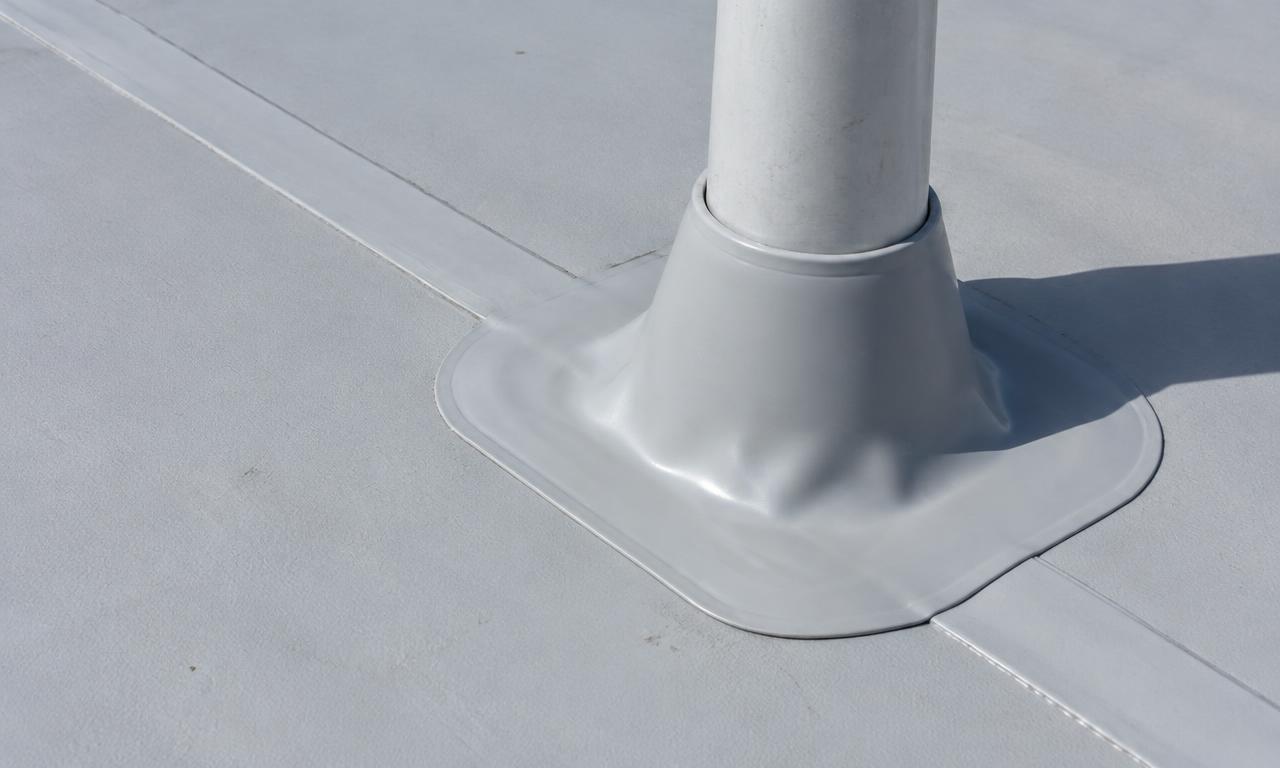
Most leaks start at details. PVC systems use molded boots for pipes, pre-made corners and PVC-coated metal for edges. These parts weld to the sheet, which can make tight seals.
Walls and curbs get base flashing that runs up and is held at the top. Ask how high it will go and how it will be capped. Ask whether air units can be raised if the flashing needs more height.
Repairs on a PVC roof
Small cuts and punctures are often fixed by cleaning the area and welding a PVC patch over it. Older PVC may need special cleaning before a patch will weld.
If welds will not take on an old roof, that is a sign the sheet is aging. Ask the crew to show you test welds. Repairs should follow the maker's rules if the roof is under warranty.
PVC in cold weather
Like many roof sheets, PVC gets stiffer in the cold. Crews may need to take care when unrolling and welding on cold days. Some adhesives have temperature limits too.
Ask how the crew handles cold-weather installs and whether any part of the job should wait for warmer days.
Hail and foot traffic
Hail can puncture or bruise many roof sheets, especially over soft insulation. Thicker sheets and cover boards can help. Ask what the system's impact ratings are and what they mean.
Foot traffic wears roofs too. Walk pads to air units and doors help protect the sheet from service crews.
Warranties
PVC systems often come with a maker's warranty and an installer's workmanship warranty. Terms differ by system, thickness and installer. Some cover only material, some cover labor too.
The FTC says warranties should be available to read before you buy. Ask for the full written warranty and its upkeep rules.
Comparing PVC bids
Line up bids on these points so you compare the same roof.
- Exact sheet product, thickness and color.
- Attachment method and wind design.
- Insulation type and thickness, and any cover board.
- Tear-off or recover, and any separation layer.
- Detail parts for edges, curbs and pipes.
- Warranty type, length and who issues it.
Safety on the job
Roof work near edges needs fall protection. OSHA's rule covers construction work near unprotected edges. Hot air welders and adhesives add their own hazards.
Ask how the crew protects people below and around the work, how they handle fumes near building air intakes and how they secure materials in wind.
PVC on a building with lots of rooftop gear
Air units, fans and pipes all need flashing. On a busy roof, details can add up fast. PVC parts made to weld to the sheet can help seal these spots.
Ask how many details the bid includes and how each one will be sealed. Ask about walk pads for service paths. Busy roofs often see the most wear around gear.
Recover versus tear-off
Some PVC jobs go over the old roof. This is called a recover. It can save tear-off costs. But it only works if the old roof is dry and the code allows another layer.
A tear-off removes the old roof down to the deck. It lets the crew check the deck and fix it. Ask which is planned, why, and what tests were done to decide.
Upkeep for a PVC roof
Keep drains clear and check seams and details on a schedule. Clean areas where grease or oil lands. Keep foot traffic to walk pads.
After storms, have a crew check for punctures and lifted edges. Small fixes are easier on a newer sheet, so do not wait.
Questions for the PVC maker
Some questions are best answered by the maker. Your roofer can help you get these answers in writing.
- Does this product resist the oils or chemicals on my roof?
- Is a separation layer needed over my old roof?
- What sealants and parts are approved with it?
- What wind rating can this system reach on my deck?
- What upkeep does the warranty require?
PVC thickness
PVC sheets come in more than one thickness. A thicker sheet has more material over the fabric layer inside. That can help with wear, punctures and long-term aging.
Thicker sheets cost more. Ask what thickness the bid lists and why. Compare bids at the same thickness, or ask each crew to explain the difference.
Fire ratings
Commercial roofs often need a fire rating for the whole roof system, not just the sheet. The rating depends on the deck, the insulation, the cover board and the sheet together.
Ask the crew what fire rating the system carries on your type of deck. Your local code or your insurer may set the level you need.
Signs a PVC roof is aging
As PVC ages, it may get stiffer and harder to weld. Seams may start to open. The surface can crack or craze in spots that get the most sun.
If a crew struggles to make patches stick, ask for a full report. It may be time to plan a bigger repair or a new roof.
Seam testing on the job
Every welded seam should be checked. Crews often run a dull probe along the edge of each seam to feel for gaps. Any spot that opens gets welded again.
Some crews also cut small test pieces at the start of each day and pull them apart. A good weld tears the sheet before the seam lets go. Ask the crew to note these checks in the job records and share them with you at the end.
How our request form works
We serve homes and businesses across the Omaha area. This website is a preview right now. The online form checks your answers, but it does not save or send them yet, so no roofer gets your request from it.
When online requests are turned on, this note will change. Until then, the form is a way to see what we will ask: your town or ZIP, what you see and what kind of help you need. We do not sell your details.
Common questions
Is PVC good for restaurant roofs?
Some PVC products are made to handle certain fats and oils better than others. Resistance is not the same for every product or every substance. Ask the maker for its chemical resistance info for your exhaust area and plan grease control too.
What is the difference between PVC and TPO?
Both are light-colored single-ply sheets with heat-welded seams. They are made from different plastics and have different additives, costs and maker rules. Compare the exact products, not just the names.
Can PVC go over my old roof?
Sometimes. It depends on the old roof's condition, moisture, local code and the maker's rules. Some old roofs need a separation layer under PVC. Wet insulation should come out first.
How are PVC seams joined?
Usually with hot air welders that melt the edges together. The crew then probes seams to check them. Ask how they test their welds.
Will a white PVC roof lower my bills?
Light roofs reflect more sunlight and can lower roof heat in summer. How much that helps depends on your building, insulation and climate. Treat savings numbers as estimates.
Related help
Sources we checked
Official and standards pages we used to check facts on this page. Rules can change, so confirm with the source.