Quick answer
A seam is where two roof sheets overlap and join. On a flat roof, seams are a common place for leaks to start. How a seam is joined depends on the roof type. Some are melted together with hot air. Some are glued or taped. That means the right repair depends on the roof type, its age and the maker's rules. There is no one fix for every seam.
What a seam is and why it matters
Most flat commercial roofs are made of large sheets. The sheets come in rolls. Crews lay them side by side and overlap the edges. The overlap is called a lap, and the joined part is called a seam. A roof can have hundreds of feet of seams.
The sheet itself is often strong. The seams are where two pieces have to stay joined through sun, heat, cold and wind for many years. If one seam opens, water can run under the sheet and show up far away inside. That is why seams get a close look on every check.
We serve building owners across the Omaha area. Seam leaks are common on flat roofs of every type, but the fix is not the same on each one.
Welded seams: TPO and PVC
TPO and PVC roofs are often joined with hot air. A welding tool blows very hot air between the two sheets. Then a roller presses them together. The two sheets melt into one piece along the seam. A good weld is often stronger than glue.
Welds can still fail. A weld can be too cold, so the sheets never fully join. It can be too hot and burn the sheet. Dirt or water in the seam during install can weaken it. Over years, the sheet can age and the edge can pull.
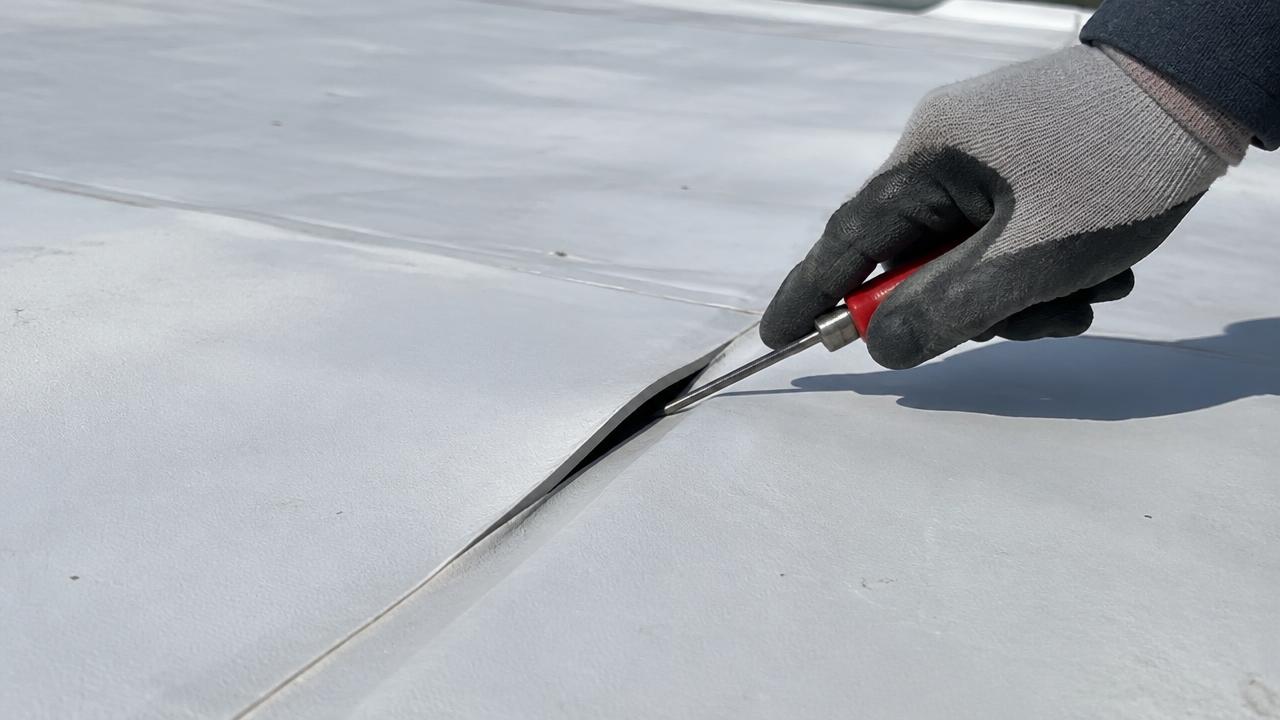
Crews often check welds by running a probe along the seam edge. The probe finds spots that are not joined. ASTM has standards for TPO and PVC sheets. The roof maker's guide gives the rules for welding its own product.
Glued and taped seams: EPDM
EPDM is a black rubber sheet. It does not melt like TPO or PVC. Its seams are usually joined with seam tape or glue. The crew cleans the sheet, puts on a primer, then lays the tape and presses it down with a roller.
These seams fail in different ways. The glue can dry out. The tape edge can lift. Dirt can get under the lap. Older roofs may have glued seams with no tape at all. Some seams have a cover strip on top.
A crew checks EPDM seams by looking at the edges and gently lifting where they see a gap. A good repair cleans and primes the area, then uses tape or patches the maker allows.
| Roof type | How seams are usually joined | What a crew checks |
|---|---|---|
| TPO (often white) | Hot air welding melts the two sheets together | Weld width, probe test, cold or burned welds, aged sheet that won't weld |
| PVC (often white or gray) | Hot air welding | Weld quality, shrinking, what has touched the sheet |
| EPDM (often black rubber) | Seam tape or glue with primer | Lifted edges, dried glue, loose tape, cover strips |
| Modified bitumen | Heat, cold glue or self-stick laps, based on the system | Open laps, cracked edges, loose granules |
| Built-up (felt and asphalt) | Layers glued with hot asphalt or other bitumen | Splits, blisters, dry or cracked felts |
Other systems: modified bitumen and built-up
Modified bitumen roofs have laps too. Based on the system, they may be heat welded with a torch or hot air, set in cold glue, or self-stick. Torch work needs a trained crew and a fire safety plan. It is never a DIY job.
Built-up roofs use many layers of felt and hot bitumen. They do not have seams in the same way. But the layers can split, blister or dry out. Each of these roof types has its own repair methods. Our pages on modified bitumen and built-up roofs cover them.
Signs of a seam problem
You can spot some signs from a safe window or a roof hatch, without walking the roof.
- An edge of one sheet lifted, curled or flapping.
- A dark line of dirt along a seam, which can mean water sits there.
- Wrinkles or fishmouths, which are small open bumps at a seam edge.
- Caulk or tar smeared on a seam from an old quick fix.
- Leaks inside that show up after wind-driven rain.
- Water stains that follow a straight line on the ceiling.
Why one repair does not fit all
A repair that works on one roof can harm another. A hot air weld will not work on EPDM rubber. Primers, tapes and patches are made for certain sheets. Some makers sell a primer approved for both EPDM and TPO, but only with the parts and steps they list. The exact sheet, primer, patch and detail must all be approved by the maker. Some sealants can harm some sheets.
So the first step is to know what roof you have. A crew can often tell by looking. Old roof papers, warranty papers or install records help too. Then the crew follows the maker's repair guide for that roof. Membrane makers, such as Carlisle, publish details and guides for their products.
We do not give step-by-step seam repair advice online. The right steps depend on the sheet, its age, how clean it is and the weather that day.
How a crew usually checks seams
A seam check often starts with a walk of the whole roof. The crew looks at every seam, not just the one near the leak. On welded roofs, they may run a probe along each seam. On taped roofs, they look for lifted tape edges.
They mark weak spots and take photos. They may cut a small test piece in an area that will be patched, to see how well the weld holds. If the leak spot is not clear, they may use leak finding tools. Our leak detection page explains those and what they can't do.
Patch, strip or bigger repair?
A short open seam on a roof in good shape can often be repaired. A crew may reweld it, add a cover strip, or put on a patch made for that roof. Many open seams across the roof tell a different story. They can mean the sheet is aging or was not installed well.
Ask the crew to count and mark every weak seam. Ask how much of the roof is affected. If most seams are weak, ask about the cost of fixing them versus a new roof or a recover. A recover is a new roof put over the old one when the old one is dry and allowed.
Safety on the roof
Seams run all the way to the roof edge. OSHA has fall protection rules for work near unprotected edges. Hot air welders get very hot and use power cords on the roof. Only trained crews should do this work.
Building staff should not try to weld, torch or glue seams. Do not walk the roof in rain, ice or wind. If you see water coming in, move people and things away from it, and call for help.
Old quick fixes can hide the real problem
Many roofs have tar, caulk or tape smeared over old seam leaks. These quick fixes can crack and let water in again. They can also hide how wide the seam opening really is. A crew may need to remove old patch material to see the seam and repair it the right way.
Why seams fail early or late
Seams that fail in the first few years often point to install problems. The weld may have been too cold, or the sheets were wet or dirty when joined. On taped roofs, the primer may have been skipped or the tape not rolled down well.
Seams that fail after many years often point to age and wear. Sun and heat break down materials over time. Freeze and thaw cycles in Omaha winters work on every edge. Roofs also move a little each day as they heat and cool. Over thousands of days, that movement can wear a seam open.
Knowing which it is can matter for a warranty. Install problems may be covered by the installer or maker. Age wear may not be. Photos and a dated report help sort this out.
Wind, foot traffic and seams
Wind pulls up on a flat roof, most of all at corners and edges. If a seam near the edge is weak, wind can lift it further. That is one reason crews pay close attention to edge and corner seams after storms.
Foot traffic is another cause. Workers servicing air units walk the same paths for years. They may drop tools or drag parts across seams. Walkway pads made for the roof type can protect the busiest paths. Ask your roofer where pads would help.
Seams and moisture under the roof
An open seam may let water into the insulation long before it drips inside. That water can spread, so the wet area may be much bigger than the gap. If a seam has been open for a while, ask whether the insulation near it should be checked.
Our wet insulation page explains how crews look for trapped water and the limits of each method. Fixing the seam without checking for wet layers can leave a hidden problem behind.
Weather and seam repair
Seam repairs need the right weather. Welding and gluing work best on a clean, dry sheet. Cold, wet or windy days can make repairs harder or weaker. Makers list the conditions they allow.
If water is coming in during bad weather, a crew may put in a short-term fix to slow it. Then they come back for the full repair when weather allows. Ask the crew to label what is temporary and when the full fix will happen.
What to ask before seam work
These questions help you compare crews and avoid surprises.
- What roof type do I have, and how do you know?
- Will you follow the roof maker's repair guide?
- How many seams are weak, and can you mark them on a roof plan?
- Will you test the repair, and how?
- Does this work affect my warranty?
- What photos will I get before and after?
Common questions
Can any roofer fix any seam?
No. Welding TPO or PVC takes the right tools and training. Gluing EPDM takes the right primer and tape. Ask what roof type you have and whether the crew works on that type often.
Can old TPO be welded again?
Sometimes. Older or dirty sheets may not weld well. Crews often clean the sheet and try a test weld first. If it fails, they may use another method the maker allows, or a cover strip.
Will caulk fix an open seam?
Caulk or general sealant is not a seam repair on most single-ply roofs. It may slow water for a short time, but it can make a proper repair harder later. Ask for a repair that fits the roof type.
Does a seam repair keep the warranty?
It depends on the warranty. Some maker warranties need repairs done by a crew they approve. Read the warranty, or call the maker before work starts.
How do I know if many seams are failing?
A crew can probe seams across the roof and mark weak spots. If many seams are failing, the report should say so. Then a bigger repair or a new roof may make more sense than patching.
Related help
Sources we checked
Official and standards pages we used to check facts on this page. Rules can change, so confirm with the source.