Quick answer
A commercial roof price depends on the exact assembly: deck, insulation, cover board, membrane, how it is attached, flashing and drainage. Tear-off, recover and coating are different jobs. They are not equal, and a roof is not automatically able to take a recover or coating. Compare measured areas, repairs, exclusions, unknowns, phasing and change-order terms. We don't list local unit prices, permit fees or returns. No bidder can know every hidden problem in advance.
Price the assembly, not just the membrane
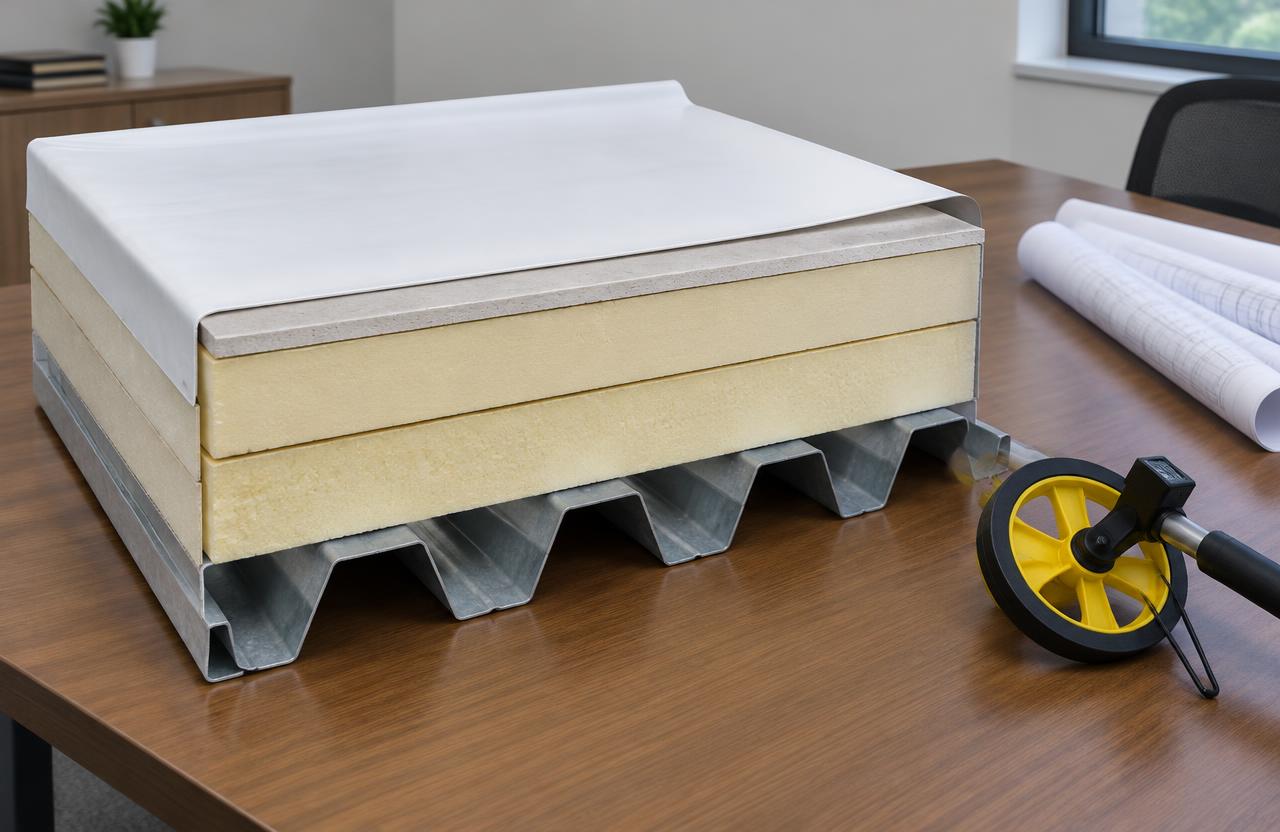
A commercial roof is a stack of parts. There's a deck, insulation, often a cover board, a membrane on top, and fasteners or adhesive holding it all down. Flashing seals edges and openings. Drains move water off.
Each part has choices and costs. Two bids for "TPO roof" can use very different insulation, attachment and flashing. Ask each bidder to name every layer.
The deck
The deck is the base. It may be steel, concrete, wood or something else. A bid can't fully price deck repairs until the old roof is off.
Ask how deck damage will be found, shown to you and priced. A per-unit price for deck repair helps you compare bids and avoid surprises.
Insulation and cover board
Insulation affects energy use and code needs. Its type and thickness change the price. Some roofs use tapered insulation to create slope toward drains.
A cover board sits between insulation and membrane on many roofs. It can protect the insulation from foot traffic and hail. Ask whether each bid includes one and which type.
| Path | What it means | First things to check |
|---|---|---|
| Full tear-off and replace | Remove down to the deck, build a new assembly | Deck condition, drainage, code and design needs |
| Recover | Add a new roof over the old one | Is it allowed, is the old roof dry and sound, weight and layers |
| Coating | Add a liquid layer over a sound roof | Moisture, adhesion, drainage and maker approval |
Membrane and attachment
The membrane is the waterproof layer. TPO, PVC, EPDM, modified bitumen and built-up roofs each have their own costs.
How the roof is held down also matters. It may be mechanically fastened, fully adhered or held by ballast. Each method has its own labor, materials and wind design. GAF's commercial roof selector shows how many system choices exist.
Flashing and edges
Edges, walls, curbs and pipes all need flashing. On a roof with lots of units and openings, flashing can be a large share of the cost.
Ask for a count or list of openings and how each will be flashed. A low bid that skimps here may leak early.
Drainage
Water that sits on a roof can cause problems. A new roof is a chance to fix poor drainage with tapered insulation, crickets or drain changes.
Ask whether each bid addresses drainage. Drain work may involve plumbing. Overflow paths may be needed. These can add cost, but skipping them can lead to trouble.
Measured area
Bids should be based on a measured area. Ask how it was measured and whether it includes walls, curbs and edges.
If two bids use very different areas, ask why. One may include more of the roof, or one may have measured wrong.
Tear-off versus recover
A tear-off removes the old roof down to the deck. A recover adds a new roof on top of the old one. A recover often costs less up front because there's less removal.
But a recover is not always allowed or wise. Local rules may limit layers. Wet insulation left in place can cause problems. The new system must be approved over what's there. Ask for a moisture survey and proof that a recover fits.
Coating is a different job
A coating adds a liquid layer over a sound roof. It is not the same as a new roof. GAF's guide on coating versus replacement explains that roof condition decides which fits.
Not every roof can take a coating. Wet layers, poor adhesion, wide damage or bad drainage may rule it out. Our coating-or-replacement guide goes deeper.
Wet insulation and moisture surveys
Wet insulation is heavy, doesn't insulate well and can harm the deck. It usually needs to come out.
A moisture survey can map where layers may be wet. Core cuts confirm what's there. The amount of wet material can change the bid a lot, so ask how it was measured.
Repairs before the main work
Some bids include repairs first, like fixing a curb or a damaged drain. Others leave them out.
List the repairs each bid includes. A bid that seems higher may simply include repairs another bid ignores.
Exclusions
Every bid leaves things out. Common ones are deck damage, structural work, rooftop unit moves, electrical or plumbing changes, permits and interior repairs.
Ask each bidder to list their exclusions in writing. Compare them side by side. This often explains price gaps.
Unknowns and change orders
No bidder can know every hidden problem in advance. Some things show up only once the old roof is off.
A good bid explains how unknowns will be handled. Will work stop for approval? Is there a set unit price? Who signs off? Get this in writing so change orders are clear and fair.
Phasing and operations
Many buildings stay open during roof work. Phasing the job around tenants, operations and weather can affect cost and timing.
Ask how each bidder plans phases and what that adds. Ask how the roof is closed up each day.
What we don't claim
We don't publish local unit prices or permit fees. We don't claim a return on investment or energy savings for your building.
If those matter, ask your energy provider, insurer and local building office. Ask bidders to support any claims in writing.
Get more than one bid
The FTC's advice on home improvement scams suggests getting more than one written estimate. That advice fits commercial work too.
Give every bidder the same scope and area. Ask them to price items on their own lines. Then compare like with like.
Questions to ask each bidder
What exact assembly are you quoting, layer by layer? How is it attached? What area did you measure? Does the bid address drainage and wet insulation?
What do you exclude? How will unknowns be priced and approved? How will you phase the work? What warranty comes with it, and from whom?
Rooftop units and other trades
Many commercial roofs hold heating and cooling units, fans and pipes. Some must be lifted or moved so the roof can go under them. That needs the unit's vendor, not just the roofer.
Ask each bid how rooftop units will be handled. Is the vendor's cost included? Who disconnects and hooks up each unit? Gaps here can turn into surprise bills.
Edge metal and wind
The edge of a roof takes the most wind. The metal at the edge holds the roof down there. It has to match the roof's wind design.
Ask what edge metal each bid uses and how it is held on. A cheaper edge may not match the system's tested setup. Edge work can be a big part of the cost on a roof with long walls.
Code and design needs
A new roof may have to meet current rules for things like insulation and wind. Those rules can add layers or change how the roof is held down.
We don't state local rules here. Ask your designer or the local building office what applies. Ask each bidder how their bid meets those rules, and who pulls any permit.
Warranty choices change the price
A maker's warranty for a commercial roof often depends on the system, the installer and the term. Longer terms may need more layers, inspections and fees.
Ask which warranty each bid includes. Ask what it covers and what upkeep it needs. A bid with a longer term may cost more because the roof itself has more in it.
Timing and weather
Some roof products need dry days and warm enough air to go on well. Cold or wet months can slow a job or limit which products work.
Ask how weather could change the schedule. Ask how the roof is kept dry each night. A rushed job in bad weather can cost more later.
Records to ask for at the end
When the job is done, ask for the final drawings, product names, warranty papers and photos of hidden layers. Keep a list of what was changed during the job.
These records help with future repairs and claims. They also help the next owner or manager know what is on the roof.
Daily close-up and leaks during the job
When a roof is open, rain can get in. Each day, the crew should seal the edge of the new work so the roof stays dry overnight. This is often called a night seal.
Ask how each bidder does this. Ask who pays if water gets in during the job. Ask who you call, and how fast they will come look. Get it in writing.
Safety on the roof
Roof work is high work. Crews need fall protection, safe ladders or lifts and guards at open edges and skylights. These take time and gear, and they are part of the cost.
A bid that seems cheap may cut corners on safety. Ask how the crew will keep workers and people below safe. Don't let your own staff go up to check the work.
How we serve commercial owners comparing costs
We are serving building owners and managers across the Omaha area. Use the form on this page to ask for a roof check and a written bid.
We will name the assembly layer by layer and list exclusions, so you can compare bids fairly.
Common questions
What does a commercial roof cost per square foot here?
We don't publish one. We don't have verified local unit prices, and assemblies vary too much. Get written bids based on a measured area and a named assembly.
Is a coating always cheaper than a new roof?
It may cost less up front, but it is a different job. Many roofs aren't good candidates. Wet layers, poor adhesion or bad drainage can rule it out or add work first.
Can we just put a new roof over the old one?
Sometimes. It depends on local rules, the number of existing layers, whether the old roof is dry and sound, and the new system's rules. Ask for proof that a recover fits your roof.
Why do bids for the same building differ so much?
They may use different assemblies, areas, attachment methods or exclusions. One may include drainage fixes or wet insulation removal. Line them up field by field.
Will the bid cover everything we find?
Not always. Some damage stays hidden until work starts. A good bid explains how unknowns will be priced and approved.
Related help
Sources we checked
Official and standards pages we used to check facts on this page. Rules can change, so confirm with the source.