Quick answer
On a tile roof, the tiles are only part of the job. The layers under them, called underlayment, and the flashing do much of the work of keeping water out. A broken tile can often be replaced if a match can be found. But leaks that come from worn underlayment or flashing need work under the tiles. Tile is heavy, and the exact weight depends on the product.
How a tile roof keeps water out
Tile roofs use clay or concrete tiles laid in rows. The tiles shed most rain. But wind can blow water under them, and water can run under at laps and edges. So on many tile roofs, the layers under the tiles, called underlayment, do much of the work of keeping water out of the house.
The Tile Roofing Industry Alliance publishes installation guides. They treat the tile, the underlayment, the flashing and the fasteners as one system. When a tile roof leaks, the cause may be any of these parts.
We serve homeowners across the Omaha area. This page helps you sort tile problems from problems under the tile.
Tile problems: broken and slipped tiles
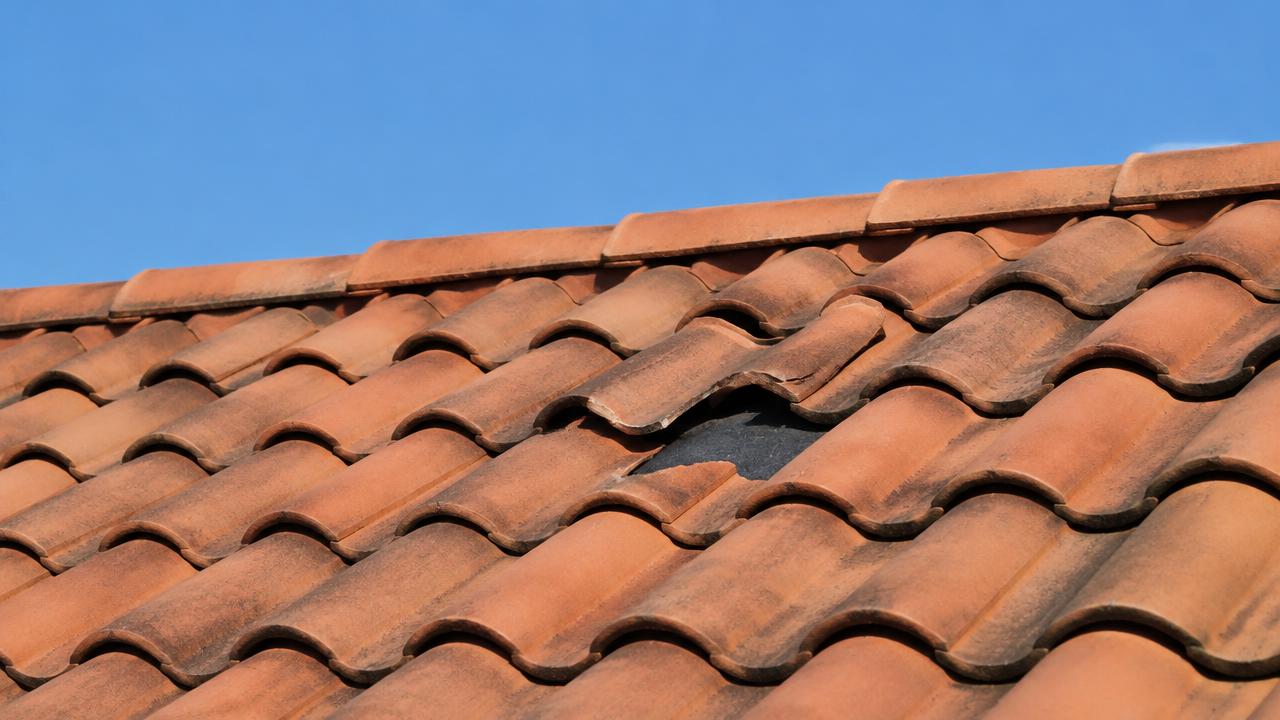
Tiles can crack from hail, falling branches or people walking on them. They can slip if fasteners fail. A single broken tile may not leak right away, since the underlayment is below it. But it lets sun and water reach the underlayment, which can wear it faster.
Broken tiles can often be replaced one at a time. The crew lifts the tiles around it, removes the broken one, and puts in a new one, fastened the way the maker or the Alliance guide shows for that tile.
The matching problem
Tiles come in many shapes, called profiles, and colors. Some old profiles are no longer made. A new tile may be a slightly different shape, so it does not lock in with the old ones. Colors can fade over time, so even the same product may look different.
Crews have a few options. They can search for salvaged tiles. They can move tiles from a hidden area, like a back slope, to the front, and use the closest new tile in the hidden spot. Ask the crew how they plan to match before work starts. A tile that does not fit right can let water in.
| What is found | Likely part | What to ask |
|---|---|---|
| One cracked or broken tile, no leak | The tile | Can you find a matching profile and color? |
| Leak with tiles that look fine | Underlayment or flashing | Will you lift tiles to check what is under them? |
| Leaks near walls, chimneys or valleys | Flashing | How is the flashing built, and is it worn? |
| Many broken tiles in walk paths | Foot traffic damage | Who has been on the roof? |
| Old roof, discontinued tile | Matching problem | Can you salvage tiles from a hidden area? |
Flashing on tile roofs
Flashing seals valleys, walls, chimneys and vents. On tile roofs, flashing must work with the shape of the tile. That can be tricky with curved profiles. Flashing that is too short or worn can send water under the tiles.
Many tile roof leaks start at flashing. If a leak is near a wall, chimney or valley, ask the crew to check the flashing first. Our flashing page explains more.
Weight: know your exact product
Tile is heavy, but how heavy depends on the exact product. Clay and concrete tiles differ. Thickness, shape and how they are put on matter too. A generic number does not tell you what your roof weighs.
Before switching to tile, or to a heavier tile, ask for the maker's weight for the exact product and system. Then have a design pro or engineer confirm the frame can carry it. We do not judge roof strength online.
Fastening is product-specific
Tiles may be nailed, screwed, clipped, wired or set with foam adhesive. The right way depends on the tile, the slope, the wind area and local rules. The Alliance guide gives methods for many cases, and the maker's instructions apply too.
We do not give one fastening rule for all tile roofs. Ask the crew which method they will use and where it comes from.
Cold weather and tile
Omaha has freezing winters. Water that soaks into some tiles can freeze and crack them. Some tiles are tested and rated for freeze and thaw. Others are not meant for cold areas.
If you are choosing tile, ask for the maker's data on freeze and thaw for that exact product. If you have an older tile roof, a crew can check for cracks and flaking after winter. We do not say tile in general suits or does not suit cold weather.
Repair, re-lay or replace?
A few broken tiles with good underlayment is a repair job. Good tiles over worn underlayment may be a re-lay job: lift the tiles, replace the underlayment and flashing, then put the tiles back. Tiles that are cracked or flaking across the roof may mean new tile or a different material.
Ask the crew which fits, and why. Ask how many tiles they expect to break during the work, and how they will replace them.
Safety and who should go up
Tiles crack easily under feet, and roofs can be steep. Trained crews know where to step and use fall protection. Every broken tile from a careless visit is a new problem.
Please stay off your tile roof. One wrong step can crack several tiles at once.
Gutters below a tile roof
Bits of broken tile and grit can wash into gutters. Leaves pile up too. A full gutter can push water back under the bottom row of tiles. Have gutters cleared from a ladder by a trained person, not from the roof.
Keep a tile roof record
Write down the tile maker, profile and color if you can find them. Old papers from when the house was built may say. Add each repair with the date and photos. Note where spare tiles are stored. This saves time when a tile breaks and a crew needs to find a match fast.
If you do not know the profile, a crew can often tell by looking at a loose tile. Ask them to write it down for you.
Valleys, hips and ridges
Valleys carry the most water on a roof. On tile roofs, they often have metal running under the tile edges. If leaves pile up, water can spill over the metal. If the metal rusts, it can leak.
Hips and ridges are the peaks of the roof. Tiles there may sit on a wood strip or be set in mortar or foam, based on the system. Cracked mortar or loose ridge tiles let water and wind in. Ask the crew to check these spots on every visit.
Tile and attic airflow
If your attic is vented, it needs clear paths for air to come in low and go out high. Some homes have an unvented attic, sealed and insulated at the roof line on purpose. That design does not use attic vents and should not get them added without a design review. Some tile systems also let air flow under the tiles.
Ask whether your attic is vented or unvented, and how the new tile plan fits that design. Our attic ventilation page explains the difference.
Clay vs. concrete tile
Clay tile is made from baked clay. Its color often goes all the way through. Concrete tile is made from sand, cement and water, and its color may be on the surface or mixed in. The two can look alike from the street.
They weigh different amounts. They soak up water differently. They wear in different ways. Repairs should use the same type as the roof. Ask the crew which kind you have and how they can tell.
Signs you can spot from the ground
Look from the yard with binoculars. These clues help a crew know where to start.
- Cracked or broken tiles, often with a light edge.
- Tiles that have slid out of line.
- Gaps where you can see dark underlayment.
- Pieces of tile in the gutter or on the ground.
- Stains on ceilings near valleys or walls.
- Rust or holes in valley metal.
Hail and tile
Hail can crack tiles. Small cracks can be hard to see from the ground. After a big storm, a crew can look closely and take photos of each slope.
Some tiles have impact ratings from lab tests. Tests help compare products, but real hail varies. No tile is hail proof. Our hail damage page explains how storm checks work.
Rooftop work by other trades
Satellite dish installers, solar crews, painters and gutter cleaners may step on a tile roof. Each visit can crack tiles. Ask any trade how they will protect the tiles. Ask them to take photos before and after.
If you see new broken tiles after someone worked on the roof, take photos and tell them soon. A crew can then replace the broken tiles before water reaches the layers below.
Keep spare tiles
If you get new tile, ask the crew to leave a few extra tiles. Store them in a dry place. Old profiles go out of stock, and colors change between batches. Having spares from the same batch makes later repairs much easier.
Questions to ask a tile crew
Use these to compare crews and plans.
- Is the problem the tile, the underlayment or the flashing?
- How will you match my tile profile and color?
- Which guide or maker instructions will you follow for fastening?
- How many tiles do you expect to break, and how will you replace them?
- If I am switching materials, what does the exact product weigh?
- Can you show photos of what you found?
Common questions
Are the tiles what keep water out?
Tiles shed most water, but on many tile roofs the underlayment and flashing are the main water barrier. The Tile Roofing Industry Alliance guide treats them as key parts of the system.
Can a broken tile be replaced?
Often, yes, if a match can be found. Older or discontinued profiles can be hard to match. Crews sometimes move tiles from a hidden area to the front.
Can tile go on any house?
Tile is heavy. The weight depends on the exact tile and how it is put on. A design pro or engineer should confirm the frame can carry it.
Is tile good in Omaha winters?
That depends on the exact tile. Some products are tested and rated for freeze and thaw. Ask for the maker's data for the tile you are looking at. We do not say all tile suits cold weather.
Can I walk on my tile roof?
No. Tiles crack easily under feet. Trained crews know where and how to step, and use fall protection.
Related help
Sources we checked
Official and standards pages we used to check facts on this page. Rules can change, so confirm with the source.