Quick answer
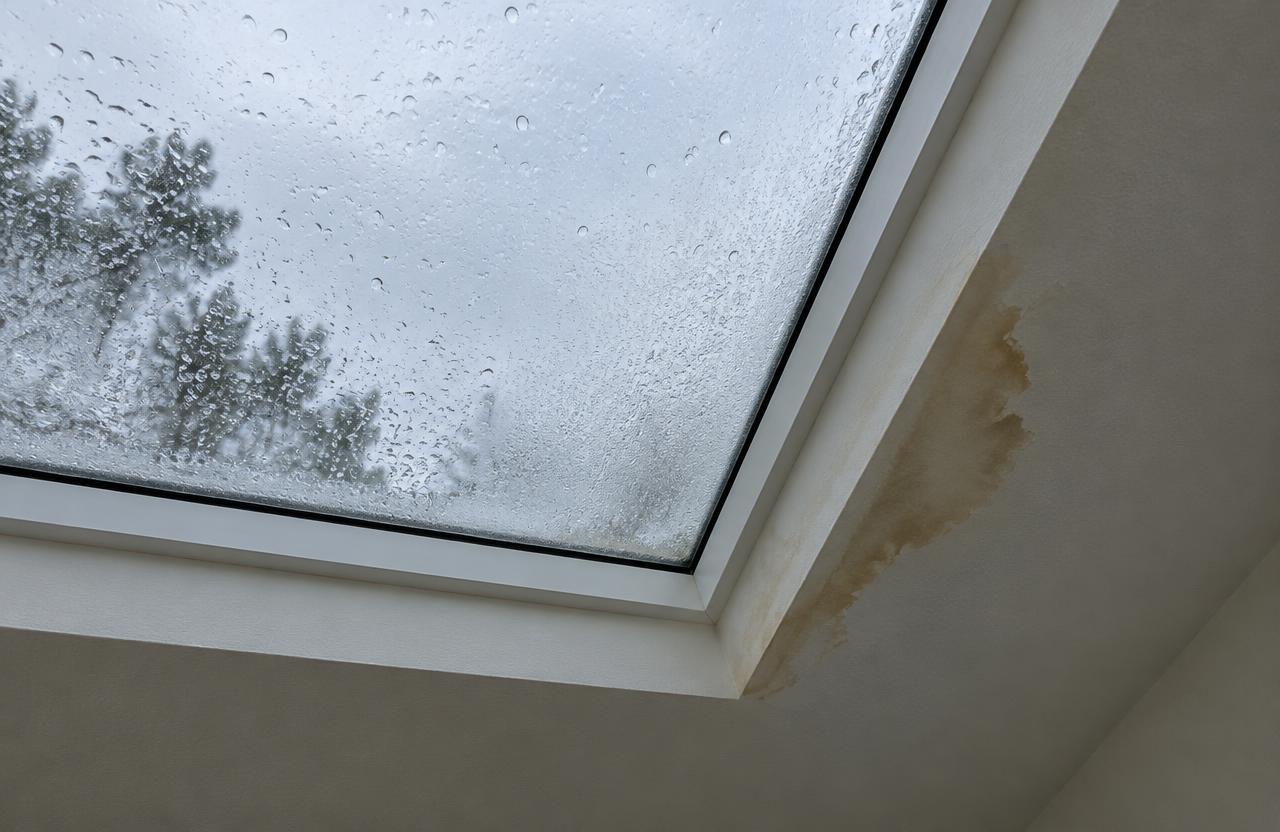
Water around a skylight can come from four places: the flashing that seals it to the roof, the seal between the glass and frame, the frame itself, or condensation from warm, damp air inside. Rain-only leaks usually point to flashing or seals. Drips on cold days with no rain usually point to condensation. The right fix depends on which it is.
The parts of a skylight
A skylight is a window in your roof. It has the glass, which is often two panes sealed together, and a frame that holds the glass. VELUX describes two main ways to mount one. A curb-mounted skylight sits on a short framed box built on the roof. A deck-mounted skylight fastens right to the roof deck. Tube skylights are a third type, with a small dome on the roof and a shiny tube down to the ceiling. Each type uses its own flashing, often a kit made for that model.
Under it is a shaft, the short tunnel through the attic down to your ceiling. Water can show up anywhere along that path.
Leak or condensation: the key question
Before anyone goes on the roof, figure out when the water shows up. This one clue sorts out most skylight problems.
If water shows up during rain or snowmelt, look at the roof side: flashing, curb or frame and glass seals. If it shows up on cold mornings when it is dry outside, condensation is one likely cause. But water can also drip late, after snow melts slowly or water trapped in the flashing works its way in. If it shows up in both, you may have both.
Notes to keep while you wait for help
If water is dripping now, call for help right away and protect your things. Do not hold off to keep a log. While you wait for the visit, these notes help the crew.
- Date, time and weather each time you see water.
- Whether drops are on the glass, the frame or the shaft walls.
- Outside temperature and whether it was sunny or cloudy.
- Whether you had cooked, showered or run a humidifier.
- A photo of the wet spot and the stain.
| What you see | Likely cause | Common fix |
|---|---|---|
| Drips at the edge of the frame in rain | Flashing around the skylight | Reflash, often with a kit made for that skylight |
| Fog or water between two panes of glass | Failed seal in the glass unit | Replace the glass unit or the skylight |
| Drops on the inside of the glass on cold days | Condensation from indoor moisture | Lower humidity, improve airflow, air seal the shaft |
| Stain on the walls of the shaft below | Flashing leak or condensation running down | Check timing to tell them apart |
| Cracked glass or plastic dome | Hail, age or impact | Replace the unit |
Flashing leaks
Skylight flashing is a set of pieces that wrap the skylight. On a shingle roof, side pieces often step with the shingles. A head piece on top sends water around. A sill piece on the bottom lets water flow off. The pieces differ for curb, deck and tube models, so the flashing should match the exact model.
Most skylight makers sell flashing kits made for their units. A crew that uses the right kit and follows the maker's steps has a better chance of a lasting seal than one that smears tar around the edges.
Flashing leaks often show up at the top corners, where water and debris collect. Leaves piled above a skylight can push water under the head flashing.
Glass seal failure
Many skylights have two panes with a sealed gap. When that seal fails, moist air gets in between the panes. You see fog or drops that you cannot wipe off from either side.
This is not a roof leak, but it means the glass unit is wearing out. Some skylights let the glass unit be swapped. Others need the whole skylight replaced.
Condensation on the inside
Glass is colder than walls. In winter, warm, damp indoor air meets cold glass and forms drops. On a skylight, those drops can run down onto the frame and shaft and leave stains that look like a leak.
Ways to cut condensation include running bath and kitchen fans, keeping indoor humidity in check and not drying clothes indoors. In some homes, the shaft walls are not insulated or air sealed, which makes the shaft cold. ENERGY STAR explains how air sealing and insulation work together. A crew can check the shaft.
What you can look at safely
From inside, look at the glass, frame and shaft. Note where the stains are. Look for fog between panes.
From the yard, use binoculars to look at the skylight on the roof. Look for leaves piled above it, cracked glass or dome, or dark streaks running down from it. Do not go on the roof. Skylights are a fall hazard, and you should never step on one.
Repair choices
Once the cause is clear, these are the common paths.
- Clear debris above the skylight and check the head flashing.
- Reflash the skylight using the maker's kit.
- Replace the glass unit if the maker offers one.
- Replace the whole skylight with a new unit and new flashing.
- Insulate and air seal the shaft to cut condensation.
- Remove the skylight and roof over the opening.
Repair or replace the skylight?
If the skylight is fairly new and only the flashing failed, reflashing makes sense. If the glass seal has failed, the unit is old or the frame is cracked, replacement is often the better value.
Timing matters too. If you plan a new roof soon, replacing the skylight at the same time avoids opening the new shingles later. Ask the roofer to show you the condition of the skylight and to price both options.
Hail and skylights
Hail can crack glass, plastic domes and the metal trim. Look for cracks or dents after a hail storm. If you file a claim, photograph the skylight from inside and, from a safe spot, from outside.
The insurer decides what is covered. We cannot promise any payment.
Damage around the skylight
Long-term leaks can rot the curb, the deck and the drywall in the shaft. The EPA says to dry wet materials quickly to help prevent mold.
When a skylight is opened up, ask the crew to photograph the curb and deck. Dark wood alone does not prove it must be replaced. The crew should check whether it is still wet, soft or decayed. Wood that is rotted or weak should be fixed before new flashing or a new unit goes on.
Questions for the crew
Write down their answers to compare crews.
- Do you think this is a leak, condensation or both, and why?
- Will you use the skylight maker's flashing kit?
- Is the glass unit replaceable on this model?
- Will you check the curb and deck when you open it up?
- What does your work warranty cover on skylight jobs?
Getting started
Bring your log and photos. Tell us how old the skylight is if you know. We help homeowners across the Omaha area sort out skylight leaks from condensation and get the right fix.
Skylights in rooms with high moisture
Skylights over bathrooms and kitchens see the most steam. Even a well-flashed skylight there may drip from condensation on cold days.
A strong bath fan that vents outside, run during and after showers, helps a lot. A vented skylight can also let damp air out, as long as it is closed before rain. If drips over a bathroom continue, tell the crew the room type. It helps them focus on air and moisture instead of only the roof.
Sun, heat and fading
Skylights let in a lot of sun. That can heat a room in summer and fade floors and furniture. Newer glass can have coatings that cut heat and fading.
This is not a leak issue, but it matters when you choose between repair and replacement. A new unit may solve both a leak and a comfort problem.
The shaft below the skylight
The shaft walls run through the attic, which is cold in winter and hot in summer. If they are thin drywall with no insulation, they can get very cold. Then condensation forms on them, not just on the glass.
A crew can add insulation around the outside of the shaft from the attic and seal gaps where it meets the ceiling. That often helps a lot with drips that are not leaks.
Fixed, vented and tube skylights
A fixed skylight does not open. A vented skylight opens to let air out, often with a crank or a motor. A tube skylight is a small dome on the roof with a shiny tube that carries light down to a round lens in the ceiling.
Each type can leak in its own way. Vented units have moving seals that can wear. Tube skylights have a small dome and flashing, plus joints in the tube that can let in damp air. Tell the crew which type you have.
Vented skylights left open
A vented skylight left open during a storm will let rain in. Some have rain sensors that close them, but sensors can fail.
If water shows up after a storm, first check that the skylight was fully closed and the seal is clean. That is an easy thing to rule out.
Where the skylight sits on the roof
Skylights placed low on a roof get more water flowing past them. Skylights below a valley or near a roof-to-wall line get extra water too. Those spots need careful flashing.
Skylights on low-slope roofs need a model made for that slope. Using the wrong model can cause leaks no matter how good the flashing is. Ask whether your skylight fits your roof's pitch.
Snow and ice around skylights
Snow piles up on the high side of a skylight and can drift over it. Warm air rising through the skylight may melt the snow, and the water can refreeze at the bottom edge like a small ice dam.
If leaks happen mostly in winter, mention it. Air sealing and insulation around the shaft can help, along with good flashing. Do not climb up to clear snow from a skylight.
Choosing a new skylight
If you replace a skylight, ask about glass type, whether it opens and whether shades are built in. Ask how the new unit and flashing will fit the old opening. A different size may mean reframing.
Some makers offer warranties that depend on using their flashing kit and following their steps. Ask the crew to follow the maker's guide, and keep the warranty papers.
How our request form works
We serve homes and businesses across the Omaha area. This website is a preview right now. The online form checks your answers, but it does not save or send them yet, so no roofer gets your request from it.
When online requests are turned on, this note will change. Until then, the form is a way to see what we will ask: your town or ZIP, what you see and what kind of help you need. We do not sell your details.
Common questions
Should I replace my skylight when I get a new roof?
Often it makes sense if the skylight is old. Its seals may fail before the new roof does, and swapping it later means opening the new roof. Ask the roofer to price both ways.
Can a skylight be removed and roofed over?
Yes. The opening can be framed in, decked and shingled. Inside, the ceiling is patched. It takes a roofer and often a drywall crew. Ask whether a permit is needed for your address.
Why does my skylight drip when it is not raining?
Warm, moist air from cooking, showers and breathing can form drops on cold glass and run down the frame. That is one possible cause. Water can also show up a day or more after rain or as snow melts, from water trapped in the flashing or roof. Have a crew check both.
Are plastic dome skylights different?
Yes. Older plastic domes can turn yellow and brittle and crack. Many are replaced with newer glass units. The flashing method may differ too.
Will caulk around the outside fix it?
Caulk can block the paths water should drain through and is not a lasting fix. Most skylight makers sell flashing kits designed for their units.
Related help
Sources we checked
Official and standards pages we used to check facts on this page. Rules can change, so confirm with the source.