Quick answer
In a commercial roof emergency, people come first. If you see sagging, hear cracking or water is near electrical gear, get people out and call 911 or your utility from a safe place. Next, block off the wet area and protect what you can from the floor. Then have a qualified crew assess the roof once it is safe. Temporary protection buys time. It is not the full repair.
People first, roof second
When water comes through a roof, it is easy to rush to fix it. But your first job is to keep people safe. A leak can be a sign of a bigger problem. Heavy water, snow or ice can make a roof sag or fail.
Look for warning signs. These include a sagging ceiling, new cracks, beams that look bent, doors that stick or creaking sounds. If you see any of these, get everyone out of the building. Call 911 from outside. Do not go back in to look.
Stay clear of wet electrical gear
Water and power are a deadly mix. If water is near panels, lights, outlets or machines, keep people away. Do not touch the gear. Do not stand in water to reach a switch.
Call your utility or a licensed electrician from a safe place. They can decide how to shut off power safely. Once power is safe, the roof work can begin.
Block off the wet area
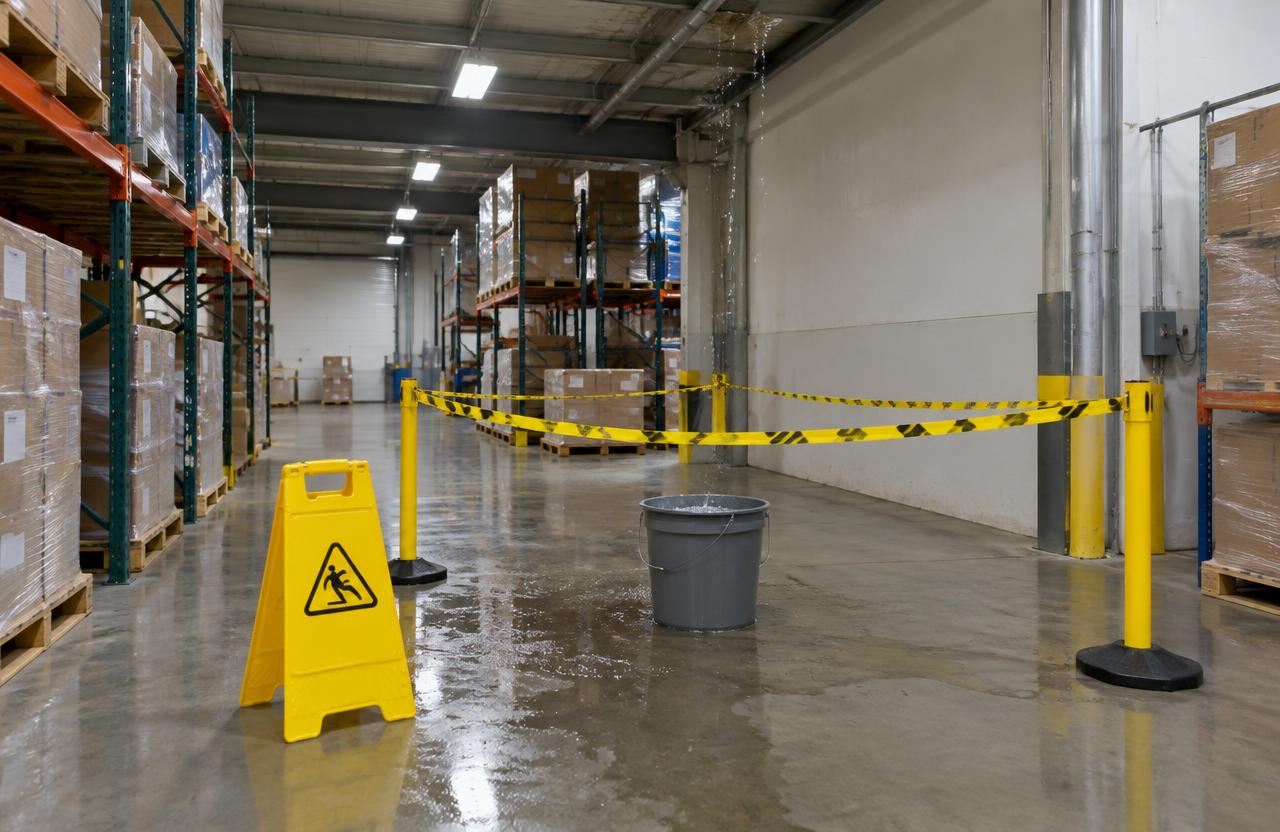
If there are no signs of collapse or electrical danger, block off the wet area. Use tape, cones or signs. Wet floors are slick, and people can fall.
Set buckets or bins under drips. Move stock, records and equipment away if you can do it safely. Cover things that cannot be moved with plastic sheets. Do not climb ladders or racks to do this if it is not safe.
| What you see | First step | Then |
|---|---|---|
| Sagging ceiling, cracking sounds, bowed beams or doors that stick | Get everyone out and call 911 from outside | A structural engineer checks before anyone goes back in or up |
| Water near panels, lights or machines | Keep people away; call your utility or an electrician from a safe spot | Do not touch wet electrical gear or switch panels yourself |
| Steady drip in one area, no other danger | Block off the area, catch water, move items if safe | Call a roof crew to assess once weather allows |
| Roof sheet or edge metal flapping after wind | Keep people away from the walls below | Crew secures it after winds die down |
| Leak found after the storm has passed | Photo and log it, protect items below | Schedule a prompt roof assessment |
Log what you see
Write down the time the leak started. Note where the water shows up and how fast it drips. Take photos of the ceiling, the floor and anything wet. Mark the spot on a floor plan if you have one.
This record helps the roof crew find the source faster. Water often travels before it drips, so the inside spot may not be right under the hole. Your notes also help with any insurance claim.
Keep everyone off the roof during storms
No one should go up during a storm. Wind can knock people over. Lightning is a real danger on a roof. Rain and ice make surfaces slick. Skylights and weak spots can give way.
OSHA guides say roof workers need fall protection when working at heights. Wait until the storm passes and it is safe. Then trained workers can go up with the right gear.
Structural safety before roof access
If water, snow or ice has piled up, the roof may be carrying more weight than normal. That extra load can weaken it. Workers should not walk on a roof that may be overloaded or damaged.
A structural engineer may need to look first. They can check from below and decide if the roof is safe to access. Only then should a crew go up to work.
What temporary protection is
Once it is safe, a crew may set temporary protection. This might be a cover over a damaged area, a quick patch on a seam or clearing a blocked drain. The goal is to slow water until a real repair.
Temporary protection is not a full fix. Covers can blow off. Patches can let go. Plan a real repair soon after. Ask the crew to tell you in writing what they did and what still needs doing.
What a full assessment covers
After the emergency, a crew should check the whole roof, not just the leak. They look at seams, flashings, drains, edges and any damage from wind or hail. They may test for wet insulation.
Ask for photos and a written report. It should list what was found, what was done and what is still needed. This helps you plan repairs and talk with your insurer.
Have a plan before the next one
OSHA suggests that every workplace plan for emergencies. For roofs, that means knowing who to call, where shutoffs are and how to get people out. It also means keeping drains clear and fixing small leaks before storms.
- Keep a list of who to call: roof crew, electrician, utility, engineer, insurer.
- Mark where power and water shutoffs are.
- Keep tarps, buckets and tape in a known spot inside.
- Have roof drains checked and cleared on a schedule.
- Keep roof drawings and past repair records handy.
Who does what in the first hour
A clear split of jobs keeps people safe and saves time. One person makes the safety call and gets people out if needed. One person calls for help. One person blocks off wet areas and protects stock. One person keeps the log and takes photos.
Write these jobs into your plan ahead of time. Pick a backup for each job. In a real emergency, people forget steps. A short printed card near the main office helps.
Snow, ice and water weight
Flat and low-slope roofs can hold a lot of weight when drains freeze or clog. Drifting snow can pile up next to taller walls and units. Rain on top of snow adds even more weight.
Signs of too much weight include new sagging, cracks in walls or ceilings, doors that suddenly stick and popping or creaking sounds. If you notice these, treat it as a life-safety event. Get people out and call 911. Do not send staff up to shovel. Snow removal on a loaded roof is dangerous work for trained crews, after an engineer says it is safe.
Protecting stock, records and equipment
Some things inside matter more than others. Think about this before a storm. Which shelves hold costly stock? Where are paper records kept? Which machines would be hurt by water?
When a leak starts, move the most important items first, if you can do it safely. Cover what you cannot move. Do not climb tall racks or reach over wet electrical gear. Your safety is worth more than any item.
Talking with your insurer
Many policies ask you to take reasonable steps to stop more damage. Catching water and blocking off areas can count. Read your policy or call your agent to learn what they expect.
Keep receipts for supplies and any emergency work. Keep your log and photos. Ask the roof crew for a written report of what they found and did. Do not throw away damaged items until your insurer says it is okay.
Why the leak spot may not be the roof spot
Water often runs along the deck, beams or pipes before it drips. The drip you see may be many feet from the opening in the roof. That is why the crew may look in a wider area than you expect.
Your log helps. Note if the drip moves, gets faster in wind or only shows up during heavy rain. These clues point to seams, edges, drains or units. Our commercial leak detection page explains testing methods and their limits.
Common mistakes to avoid
These steps can make an emergency worse.
- Sending staff onto the roof during a storm or onto a sagging roof.
- Touching or switching wet electrical gear.
- Poking holes in a ceiling bulge without knowing what is above it or what wires are near.
- Leaving a temporary cover in place for months.
- Hiring the first door-knocker without checking who they are.
Checking who shows up
After big storms, crews from far away may knock on doors. Some are fine. Some are not. Before anyone works on your roof, ask for their business name, address, license if one is needed and proof of insurance.
Get any emergency work in writing, even if it is short. It should say what they will do, what it costs and that it is temporary if it is. Do not sign over insurance payments without reading the terms. Call your insurer if you are not sure.
Tenants and staff
If people rent space in your building, tell them what is going on. Let them know which areas are closed and why. Ask them to report new drips or stains right away.
Give staff clear rules: stay out of taped areas, do not touch wet gear and do not go on the roof. Simple rules, said often, keep people safe.
Night and weekend leaks
Leaks often start when the building is empty. A water alarm near key rooms can alert you sooner. Security staff can check known trouble spots during storms.
Give night and weekend staff the same simple rules as day staff. Make sure they know who to call and where the safety supplies are kept.
After the storm passes
Even after a storm, stay alert. The National Weather Service warns about downed power lines, standing water and damaged buildings after big storms. These general safety steps apply to many kinds of storms.
Walk around the outside from a safe distance. Look for fallen debris, bent edges or loose roof parts. Keep people away from walls where debris might fall. Report what you see to the crew.
Common questions
Should someone go up and tarp the roof during the storm?
No. Wind, lightning, rain and ice make roofs very dangerous. Wait until the storm passes and it is safe. Then trained workers with fall protection can set temporary protection.
How fast can a crew get here?
We will not promise a set response time. It depends on the weather, how many buildings are hit and crew safety. Ask any crew for a written time window, and keep people safe in the meantime.
Can our maintenance staff check the roof?
Only if they are trained, have fall protection and the roof is known to be safe to walk. If there are signs of sagging or heavy water or snow, keep everyone off until an engineer has checked.
Is a temporary patch enough?
No. A temporary patch or cover only slows water until a real repair. Plan the full repair soon. Leaving a temporary fix too long can lead to hidden damage.
What should we write down?
Note the time, where water shows up, what was wet, photos from inside, and who you called. This helps the crew find the source and helps with insurance.
Related help
Sources we checked
Official and standards pages we used to check facts on this page. Rules can change, so confirm with the source.