Quick answer
An acrylic roof coating is a water-based layer rolled or sprayed over a sound roof. It can work well on the right roof in the right weather. It is a poor match where water sits for long periods, unless the maker says otherwise for that product. Before you choose it, check the roof type, moisture, adhesion and drainage, and follow the exact product's weather limits.
What acrylic coating is
Acrylic roof coating is a thick, water-based liquid. Crews roll or spray it on. As the water leaves, it dries into a rubbery layer. Most acrylic coatings are white, which can reflect sun.
Acrylic is one of several coating types. Others include silicone and urethane. Each has its own strengths and limits. This page is about acrylic. Our roof coatings page compares the general choice, and our silicone page covers silicone.
Start with the roof surface
A coating has to stick to the roof below. Different roofs have very different surfaces. Old metal, modified bitumen, single-ply sheets and spray foam all behave in their own ways.
Each acrylic product has a data sheet. It lists which roofs it is made for. It also says what cleaning and primer each roof needs. If your roof is not on the list, that product is not a match without the maker's written okay.
Check for moisture first
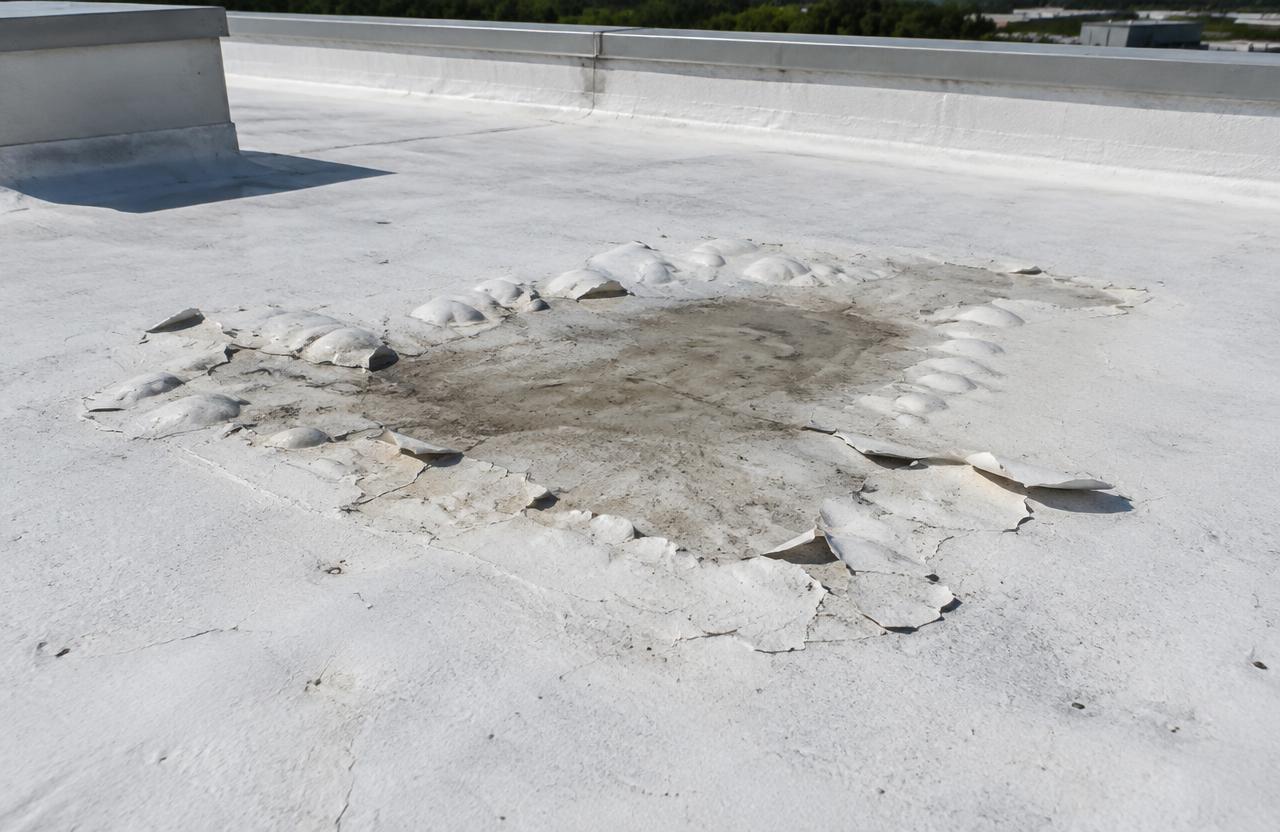
Coating a wet roof traps the water. Wet insulation can stay wet, lose its value and rust or rot what is below it. Water trying to escape can also push up blisters in the coating.
Ask for a moisture survey before coating. Core cuts confirm what the survey suggests. Wet sections should be removed and replaced before any coating goes on.
| Check | Good sign | Warning sign |
|---|---|---|
| Roof surface | Listed as approved on the product data sheet | Not listed, or unknown roof type |
| Moisture in the roof | Survey and cores show dry layers | Wet insulation not yet removed |
| Adhesion test | Test patch holds as the maker requires | Patch peels or was never done |
| Drainage | Water leaves within the maker's limit | Water sits after rain longer than the maker allows |
| Weather on the day | Within the product's temperature, dew and rain limits | Rain, dew, fog or freeze expected before it cures |
Adhesion tests on your roof
The best way to know if a coating will stick is to test it. Makers often describe a test patch. The crew cleans a small area, applies the coating, lets it cure and then pulls on it.
Ask for adhesion tests in a few spots, not just one. Different parts of a roof can age differently. Ask for photos and written results. If a test fails, the plan should change.
Drainage and standing water
Acrylic coatings dry as water leaves them. That same nature means long standing water can be hard on them. Many acrylic products are not made for spots where water sits for a long time.
Each maker defines what it means by ponding and how long water may sit. Look for that in the product guide. If water sits too long, the plan may need drain work, crickets or tapered insulation first. A coating is not a fix for poor drainage.
A photo of dry roof does not prove good drainage. Ask the crew to check after a rain, from a safe spot, or to show past records.
Weather limits on job day
Acrylic needs time and the right weather to cure. Rain too soon can wash it off. Dew or fog can slow drying. Cold can stop it from forming a good film. Freezing before it cures can ruin it.
There is no single set of numbers for all acrylics. Each product lists its own limits for air and surface temperature, humidity and time before rain. Ask the crew which limits apply and how they will check them that day. A good crew will wait rather than push through bad weather.
Seams, details and thickness
Seams, flashings and drains need extra care. Many makers call for fabric or a thicker coat at these spots. The main field gets a set thickness, often in two coats.
Ask how thickness will be measured. A wet film gauge during work and dry readings after help show the coat is not too thin. Thin spots wear first.
When acrylic is not the right fit
Acrylic may be a poor fit if water ponds a lot, if the roof is wet, if the surface is not on the product list or if adhesion tests fail. It also is not a fix for a deck that is weak or seams that have failed.
In those cases, repairs come first. Sometimes another coating type or a new roof makes more sense. Ask the crew to explain why they think acrylic fits your roof.
What about silicone over acrylic?
Some owners ask about adding silicone over acrylic where water ponds. Silicone does not stick to everything. One maker, GAF, has a technical note, C-47, about putting its silicone over its own acrylic in spots with poor drainage.
That note has a tight time window. The silicone goes on within 90 days of the first acrylic coat, before the final check, on GAF's listed acrylic. All the note's other rules still apply. It is part of a new job, not a repair plan for an aged roof.
Old acrylic that peels, flakes or has lost its grip is a different case. Loose coating has to be removed, or prepared the way the new product's maker says, before anything goes on top. Ask which guide a bidder is following and how they will test the old layer.
Warranty and records
Coating warranties vary by product, thickness and installer. Get the warranty in writing before work starts. Read what it covers and what it does not. Ask if ponding areas are excluded.
Keep a file with the data sheet, test results, thickness readings and photos. This helps with any claim. It also helps the next crew who works on the roof.
Cleaning and prep
Coatings do not stick to dirt, chalk, oil or loose material. Prep often includes power washing, scrubbing, fixing blisters and sealing seams. Some roofs need a primer or rust treatment.
Each product lists the prep it needs for each roof type. The roof must dry fully after washing. Ask how long the crew will wait between washing and coating.
Reflectance and energy claims
White acrylic coatings can reflect sun when new and clean. Some products are listed with rated reflectance. Dirt and age can lower that over time.
Energy effects depend on the building, insulation and climate. Treat any savings figure as an estimate. Ask what the number is based on.
Recoating over time
Coatings wear thinner over the years. Many makers offer a recoat path, where the roof is cleaned and a new coat goes on. The timing depends on the product, the weather and the original thickness.
Ask what the maker says about recoating that product. Ask what a recoat would involve. Keep your thickness readings so the next crew can compare.
Spotting trouble after coating
From a safe window or the ground, you may notice peeling, cracking or blisters. Bare spots or stains where water sits are another clue. Inside, watch for new leaks or stains.
Do not walk the roof to look. Photos from a safe spot help. Call the crew who did the work and check your warranty.
Acrylic compared with other coatings
Each coating type has trade-offs. Acrylic is water-based and often easier to work with. But it can be more sensitive to long standing water and to weather during cure. Silicone often handles standing water better but has its own limits on what will stick to it later.
The right choice depends on your roof, drainage and plans. Our general roof coatings page helps compare them.
Two coats and cure time
Many acrylic systems go on in two or more coats. Each coat needs time to dry before the next. Cool or damp days stretch that time.
Ask how long between coats for your product and expected weather. Rushing the second coat can trap moisture and weaken the film. A crew that plans for weather days is often a better sign than one that promises a fast finish.
Base repairs before coating
Coatings sit on top of what is already there. Open seams, loose flashing, split sheets and wet areas should be fixed first. Some makers also call for a base coat or fabric at seams.
Ask for a list of base repairs, with photos. A coating over unfixed problems may look good at first and fail early.
Reading the product data sheet
The data sheet is the best guide for any coating. It lists approved roof types, prep, primers, weather limits, coverage rates and cure times. Ask the crew for the data sheet of the exact product before work starts. Read the parts about your roof type and about standing water. If anything is unclear, ask the crew or the maker to explain it in writing.
Protecting people and property during work
Coating work can bring overspray, smells and wet surfaces. Spray can drift onto cars, walls and neighbors on windy days. Fresh coating can be tracked inside on shoes.
Ask how the crew will protect air intakes, cars and walkways. Ask if units need to be shut off while work happens nearby. Ask how they will keep people off the roof while it cures.
Who should apply it
Many coating makers train or approve the crews who use their products. Their warranty may require an approved applicator. Ask the crew if they are approved for the exact product and ask the maker to confirm it if the warranty depends on it.
Questions to ask the crew
Use these when comparing bids for an acrylic coating.
- Which exact product, and is my roof surface on its approved list?
- What did the moisture survey and cores show?
- Where will you do adhesion tests?
- How long does water sit on my roof, and does the product allow that?
- What weather limits apply, and how will you check them?
- What thickness, and how will you measure it?
- What does the written warranty cover?
Common questions
Can acrylic go on any roof?
No. Each product lists which roof surfaces it is made for and what prep it needs. Some roofs need a primer. Some are not approved at all. Check the product data sheet for your roof type.
What weather does acrylic need?
It depends on the product. Water-based coatings need time to dry before rain, dew, fog or freezing. Each maker sets its own temperature and timing rules. Ask the crew which limits apply to the exact product.
Why does ponding water matter for acrylic?
Many acrylic coatings are not meant to sit under water for long. Standing water can soften them or make them lose grip. The maker's guide says what counts as too much. Fixing drainage may need to come first.
If acrylic fails where water ponds, can silicone go over it?
Not as a simple fix. GAF's note C-47 is narrow. It covers its own listed acrylic, with its silicone added in low spots within 90 days of the first acrylic coat and before the final check, plus all its other rules. It is not a way to save old or peeling acrylic. Failed coating needs to come off or get the prep the maker calls for.
Is a coating a new roof?
No. A coating adds a layer on top of a roof that is still sound. It does not fix wet insulation, a weak deck or failed seams by itself. Those need repair first.
Related help
Sources we checked
Official and standards pages we used to check facts on this page. Rules can change, so confirm with the source.