Quick answer
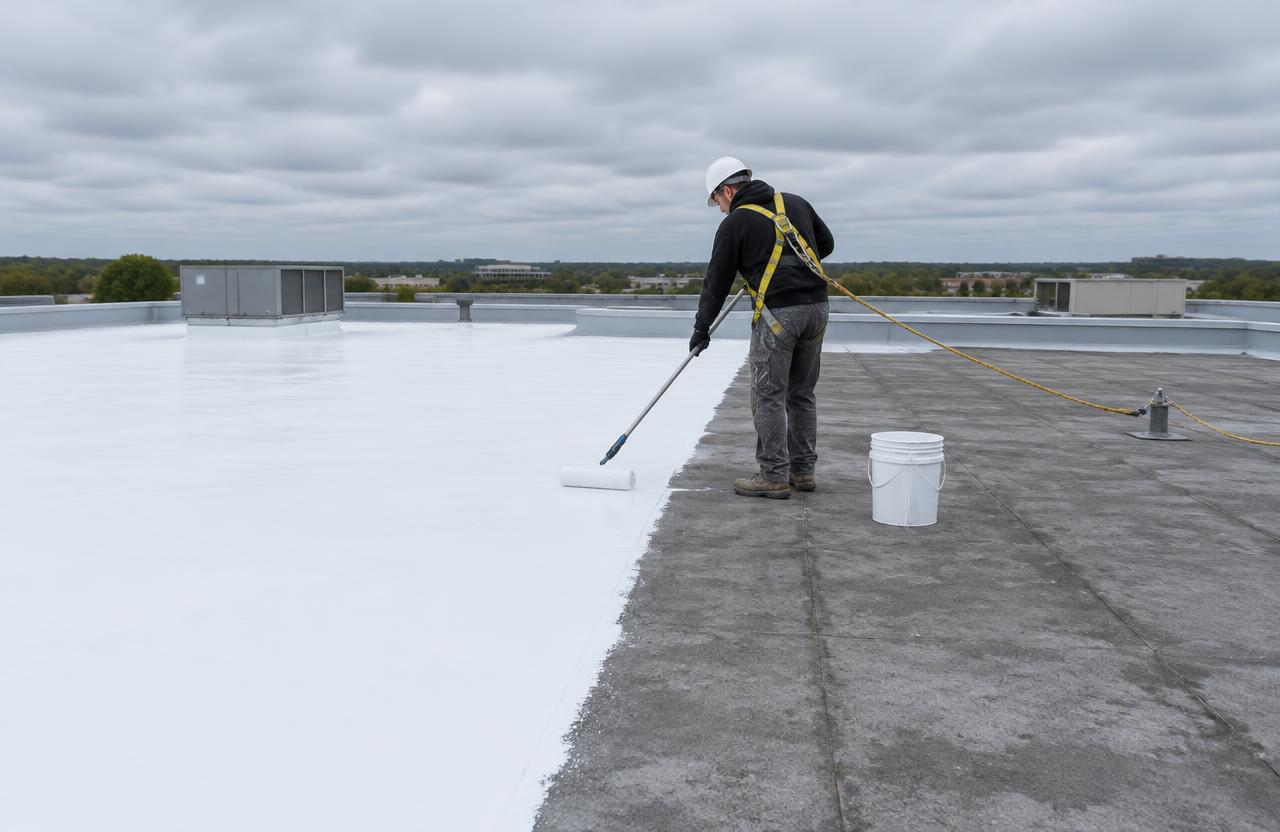
Roof restoration means cleaning, repairing and coating a worn roof so it can keep working. It can make sense when any wet areas are replaced first and the rest is dry and solid. It does not fix wet insulation, a soft deck or a roof that is falling apart. The first step is always a test of the roof's condition, not a sales pitch for coating.
What restoration really means
Restoration is a planned set of steps for a roof that is worn but still sound. It is not one coat of paint. It is cleaning, fixing, priming where needed and then putting down a liquid coating that dries into a seamless skin.
Restoration is a separate service from repair and from replacement. A repair fixes one spot. A replacement swaps the whole roof. Restoration treats the whole surface of a roof that still has life underneath.
We serve home and building owners across the Omaha area who want to know if their roof can be saved this way. We start by finding out if it should be.
Roofs that are often restored
Restoration is most common on these roof types. Each needs a coating made for it.
- Metal roofs on shops, warehouses and some homes.
- Older single-ply roofs like TPO, PVC and EPDM, when the maker allows it.
- Modified bitumen and built-up tar roofs.
- Spray foam roofs that need a fresh top coat.
Step one: find out what is under the skin
The biggest risk in restoration is sealing water in. If insulation under the roof is soaked, a new coating traps that water. The wet layer can keep harming the deck and lower the roof's warmth.
That is why a moisture survey comes first. Crews may use an infrared camera at night, a moisture meter at set points or small cuts to look at the layers. Each method has limits, so a good crew checks its findings.
Wet sections are usually cut out and replaced before any coating goes on. If too much of the roof is wet, restoration may not be the right choice at all.
| Check | Good sign for restoring | Sign to stop and rethink |
|---|---|---|
| Trapped water | Moisture survey finds little or none | Large wet areas under the roof skin |
| Roof deck | Solid, no sagging | Soft spots, rot or rust-through |
| Seams and flashing | Worn but repairable | Open everywhere, pulling loose |
| Ponding water | Small, clears in a couple of days | Deep or widespread ponds that stay |
| Coating fit | The maker's guide lists this surface and the test passed | Surface not listed in the maker's guide |
| Adhesion test | A test patch sticks well | The patch peels or bubbles |
Step two: check the deck and structure
The deck is the layer of wood, metal or concrete that holds the roof up. A coating cannot fix a soft or rusted deck. If you can see sagging from inside, or a crew finds soft spots, the deck needs real repair first.
On metal roofs, the crew looks for rust that has gone all the way through. Light surface rust can often be cleaned and primed. Holes need patches or new panels.
Step three: repair before you coat
Coatings are not glue for open seams. Before coating, a good crew fixes the weak spots by hand.
- Seal or reinforce open seams.
- Fix flashing at walls, curbs and pipes.
- Replace or tighten loose screws on metal roofs.
- Clean out drains and fix low spots if possible.
- Replace wet insulation sections.
Step four: clean and test
Coatings only work if they stick. Dirt, chalky old paint and oils can stop that. Crews clean the roof, often with a pressure washer and a cleaner made for that roof type.
Coating makers publish application guides. Neogard's roofing application manual, for one, says to always do an adhesion test to check that the coating suits the surface and whether a primer is needed. The crew applies a patch, lets it cure and pulls on it. A patch that peels is a warning, not a small detail. Ask to see the result in writing.
Step five: coat to the right thickness
Each coating system has a set thickness the maker wants. Too thin, and the coating wears out fast. Crews measure wet thickness as they go and may check dry thickness later.
Ask the crew how they will prove the thickness. Ask for the product names, the number of coats and the amount used per area. Those details matter more than the brand name on the bucket.
Silicone, acrylic and other coatings
Silicone coatings handle standing water better than many others. They can be slick and they can be hard to recoat with anything but silicone.
Acrylic coatings are water-based and often cost less. They can struggle where water ponds.
Other types, like urethane, are tougher against foot traffic. Each has a place. A good crew picks the coating to fit your roof, not the one they always use.
When replacement is the better call
Restoration is not right for every roof. Be wary if a bid skips past these signs.
- Large parts of the roof are wet under the skin.
- The deck is soft, rotted or rusted through.
- The roof already has the most layers local rules allow.
- The roof leaks in many places with no clear cause.
- The coating maker will not approve the surface.
Safety and access
Coating work happens across the whole roof surface, often near edges and skylights. Federal safety rules require fall protection for this kind of roofing work. You should not go up to watch or check the work yourself.
Ask the crew how they will guard the edges, how they will keep coating off cars and air units and how they will handle fumes near building air intakes.
Warranties and what they cover
Coating warranties vary a lot. Some cover only the material. Some cover material and labor. Most need regular checks and upkeep to stay valid.
Read the warranty before you sign. Ask who backs it, how long it lasts, what it leaves out and what you must do to keep it. The FTC suggests getting all promises in writing.
When you are ready, tell us about your roof and what you have seen. We help you find out if restoration fits before anyone opens a bucket.
Weather and timing for coating work
Most coatings need dry weather to go on and cure. Rain, dew, frost or very cold days can stop the coating from bonding. Each product has its own limits for temperature and humidity on the label.
That means a crew may need to wait for the right days, and the job can move on the calendar. Ask how they decide when it is safe to coat and what they do if rain comes before the coating cures. A crew that rushes a coating onto a damp roof can waste your money.
Restoration on homes
Most restoration work happens on commercial buildings, but homes can have low-slope roofs too. Porches, additions and garages often have a flat or near-flat section.
The same rules apply. Check for trapped water, fix the weak spots and use a coating made for that surface. Many shingle roofs are not a good fit for coating. A shingle maker may not approve it, and it can change how the shingles shed water and dry. Ask both makers before any coating goes on shingles.
Planning upkeep after the coating
A restored roof still needs care. Clean the drains, keep foot traffic to set paths and look at the roof after big storms. Have a crew check seams, openings and any spots where the coating looks thin or worn.
Keep the moisture survey, the product list, the thickness readings and the warranty in one folder. If you sell the building or file a warranty claim, those papers show what was done and when.
Restoration for metal roofs
Metal roofs on shops and warehouses are some of the most common ones restored. The work often starts with the screws. Old washers are cracked and screws have backed out. Crews replace or seal them, often with larger screws in worn holes.
Next, they treat rust. Loose rust is brushed or ground off. A rust primer goes on. Seams and laps may get a reinforced tape or fabric layer. Then the coating goes over the whole roof.
This kind of job can extend a metal roof's life when the panels are still solid. It will not save panels that are rusted through across large areas.
Restoration for flat membrane roofs
On TPO, PVC and EPDM roofs, the crew checks that the membrane is still stuck down and not shrinking away from walls. Shrinking can pull flashing loose. If it has pulled badly, that has to be fixed first.
Some membranes need a special primer so the coating will stick. Some older membranes may not take a coating well at all. That is why the coating maker's approval and an adhesion test matter so much.
How to compare restoration bids
Two coating bids can look alike but be very different jobs. Line them up with these points.
- Did they run a moisture survey, and how much wet area did it find?
- What repairs are done before coating, item by item?
- Which coating product, how many coats and what thickness?
- Is a primer or test patch included?
- Is the warranty for material only, or labor too, and which company stands behind it?
- What upkeep is needed to keep the warranty?
Red flags to watch for
Be careful with a bid that offers a coating without any moisture check. Be careful with promises of big energy savings or a set number of years. Be careful with a crew that says a coating can fix any roof.
A fair crew will tell you plainly when your roof is not a good fit. That honesty is worth more than a low price.
How our request form works
We serve homes and businesses across the Omaha area. This website is a preview right now. The online form checks your answers, but it does not save or send them yet, so no roofer gets your request from it.
When online requests are turned on, this note will change. Until then, the form is a way to see what we will ask: your town or ZIP, what you see and what kind of help you need. We do not sell your details.
Common questions
Is restoration the same as a new roof?
No. Restoration keeps the roof you have and adds repairs and a new top layer. A new roof takes off or covers the old one with a new system. They solve different problems, and their warranties are different too.
Can you coat a shingle roof?
Most coating systems are made for low-slope roofs and metal roofs. Shingle coatings exist, but shingle makers may not approve them and they can affect the shingle warranty. Ask the shingle maker and the coating maker before you agree.
How do I know if my insulation is wet?
You usually cannot tell from inside. A crew uses a moisture survey, such as an infrared scan, a meter grid or small test cuts. Ask which they used and how they confirmed it.
Will a white coating lower my bills?
It may lower roof surface heat in summer. The Department of Energy's cool roof guide explains this. How much you save depends on your building, insulation and climate, so treat any savings number as an estimate.
How often does a coating need care?
Coatings wear over time. The maker's guide and warranty will say what checks and recoats are expected. Plan for regular looks at seams, drains and openings.
Related help
Sources we checked
Official and standards pages we used to check facts on this page. Rules can change, so confirm with the source.