Quick answer
Silicone roof coating is a liquid that is sprayed or rolled onto some flat roofs. It cures into a rubbery white layer. It can be part of a plan to extend a roof that is still sound. But it only works on roofs that pass checks for wet spots, adhesion and drainage. It is not a fix for every roof, and each maker sets its own rules.
What silicone roof coating is
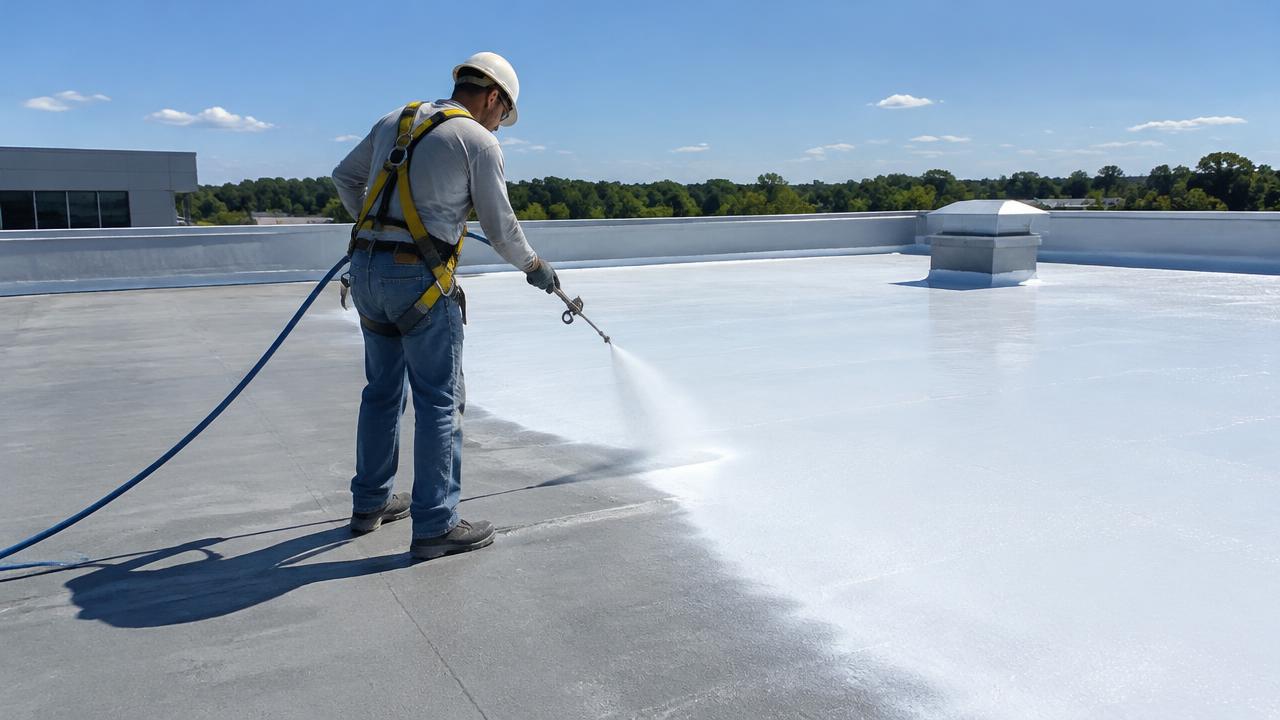
Silicone roof coating is a thick liquid. Crews spray it or roll it on. It cures into a rubbery layer that sticks to the roof below. Most silicone coatings are white or light gray. ASTM D6694 sets basic properties for silicone coatings used over spray foam roofs. It is not a blanket approval for every roof type. The product data sheet tells which roofs a coating is made for.
A silicone coating is not a new roof. It sits on top of the roof you already have. It can seal small cracks and add a new top layer. It can also reflect sun, which can lower roof heat in summer.
We serve building owners across the Omaha area. This page is about silicone in particular. Our roof coatings page compares coating types in general. Our roof restoration page explains the bigger repair-and-coat plan.
Who silicone may suit
Silicone is often looked at for roofs that are still sound but aging. Any wet or damaged areas must be removed and replaced first. The rest must be dry, well attached and free of big damage. Owners who want to delay a full replacement may ask about it.
It may not suit roofs with large wet areas, loose sheets, major structural problems or many failed seams. It may also not suit roofs where the owner wants to switch to a different coating later. Every roof has to be checked on its own.
Adhesion: will it stick?
Adhesion means how well the coating sticks to the roof. It is one of the biggest reasons coatings fail. Silicone may stick well to some roof types and poorly to others. Dirt, chalky old surfaces and leftover oils can all weaken it.
Makers list which surfaces they approve, how to clean them, and when a primer is needed. Coating makers, like Gaco, publish product and application data. The Neogard application manual describes a field pull test. A small patch is coated, allowed to cure, then pulled to see how well it holds.
Ask the crew to do a pull test on your roof and show you the result. Ask which maker's steps they will follow.
| Question | Why it matters | How it is checked |
|---|---|---|
| Is the insulation dry? | Coating over wet layers traps water | Moisture survey and core cuts |
| Will silicone stick to this roof? | Adhesion varies by roof type, age and dirt | Maker's prep steps and a field pull test |
| Does water drain off? | A coating does not fix slope or clogged drains | Look at drains and where water sits after rain |
| What will future recoats need? | Many makers say only silicone sticks well to old silicone | Read the maker's recoat rules |
| What does the warranty cover? | Coating warranties differ widely | Read the written warranty, not a summary |
Moisture: the roof must be dry under the coating
A coating seals the top of the roof. If water is trapped in the layers below, the coating can trap it there. That can cause blisters, peeling and more damage.
So a moisture check comes first. Crews often use an infrared scan or a moisture meter, and then confirm with core cuts. Wet areas are cut out and replaced before coating. Our wet insulation page explains these tests and their limits.
Drainage: coating does not fix slope
Some silicone makers say their product handles standing water better than some other coatings. Even so, a coating does not fix the reason water sits. If a drain is clogged, the slope is wrong, or a spot has sunk, water will still sit there.
Standing water adds weight, collects dirt and can shorten any roof's life. Fix drains and low spots as part of the plan. Then read the maker's own limits on standing water. Our ponding water page covers this in detail.
How a silicone job usually goes
The exact steps come from the maker's guide. A typical job looks like this.
- Check the roof: moisture survey, core cuts and a pull test.
- Repair: replace wet areas, fix seams, flashing and drains.
- Clean: wash the roof as the maker says.
- Prime: only if the maker calls for it on your roof type.
- Reinforce: some details, like seams and flashings, may get fabric or extra coating.
- Coat: apply to the thickness the maker lists, and measure it.
- Inspect: check thickness, coverage and details, and take photos.
Thickness and how it is measured
A coating has to be thick enough to do its job. Makers list how thick it must be after it cures. Crews often check this with a wet film gauge while spraying, and with small samples after curing.
Ask how thickness will be measured and recorded. Thin spots wear faster. A good report shows readings across the roof.
Recoating and the long term
Silicone can be slippery, most of all when wet. How much dirt builds up, and how it should be cleaned, depends on the exact product. Many other products do not stick well to old silicone. Many makers say only silicone should be used to recoat silicone.
Plan for that before you choose. If you might want a different system later, ask how hard that switch would be. Ask the maker what cleaning and prep they need before a recoat.
Weather and safety during the job
Coatings need the right weather. Makers list limits for temperature, dew and rain before and after the job. Omaha's cold months can limit when coatings go on.
Spraying happens near roof edges. OSHA has fall protection rules for that work. Overspray can drift onto cars and nearby buildings in wind. A good crew plans for both. Building staff should not try to coat a roof themselves.
Upkeep after the coating
A coated roof still needs checks. Drains still clog. Flashings still move. Workers can still cut the surface. Many coating warranties ask for regular inspections and records. Plan spring and fall checks, and a look after big storms. Fix small cuts early with the same product, following the maker's repair steps.
Signs a roof may not be a silicone candidate
These signs do not rule silicone out on their own, but they call for a careful look first.
- Large wet areas found in a moisture survey.
- Roof sheets that are loose, wrinkled or pulling away from the deck.
- Many failed seams or flashing details across the roof.
- Water that sits in the same low spots for days.
- A roof type the maker does not list as approved.
- A failed pull test, even after cleaning and primer.
Silicone in cold climates
Omaha has hot summers and cold winters. Coatings must handle both. Makers list the temperature range for applying their product, and some list how it handles cold after curing. Ask how the coating behaves in freeze and thaw, and when in the year the crew plans to apply it.
A white roof reflects sun in summer. In winter, it can also reflect some sun that would have warmed the roof. The Department of Energy's cool roof guide explains that the net effect depends on climate and the building. Ask for an honest view, not a promise of savings.
How silicone differs from other coatings
Acrylic coatings are water-based. They are often easy to clean up and recoat. Many makers say they should not sit under standing water for long. Urethane coatings are tough and often used where people walk. Silicone often stays flexible in sun and cold.
Each type has trade-offs. One is not always better than another. Our roof coatings page compares them side by side. This page helps you decide if silicone in particular fits your roof.
Seams, flashings and details
The flat open field of a roof is often the easy part. Seams, flashings, drains and penetrations are where coatings fail first. Many makers call for extra work on these spots before the main coat. That may include fabric, a thicker coat or a sealant made for that system.
Ask the crew how they will treat each detail. Ask for photos of details before and after. A coating that looks fine in the open but is thin at a drain may leak there first.
Dirt, slickness and walking
Silicone coatings can collect dirt over time. How much, and how to clean it, depends on the product, so follow its data sheet. A dirty roof reflects less sun, so energy benefits may drop.
Silicone can also be slick, most of all when wet. Workers servicing units need safe paths. Some makers offer walk pads or grit added to paths. Ask about this if people go on your roof often.
Repairs to a coated roof
Coated roofs can still get damaged. Hail, dropped tools and foot traffic can cut the coating. Repairs usually use the same coating type. Many makers say to clean the area and recoat with silicone.
Keep the maker's name, product name and batch numbers in your roof log. That helps the next crew find the right repair product and follow the right steps.
Comparing silicone bids
Silicone bids can look alike but differ in what they include. Compare these items line by line.
- Was a moisture survey done, and are wet areas being replaced?
- Which repairs come before coating?
- Which maker and product, and how thick after curing?
- Is primer included, if the maker needs it?
- How will thickness be measured and reported?
- What warranty, from whom, and with what upkeep rules?
Warranties and claims
Coating warranties differ a lot. Some cover only the material. Some cover labor too. Most have conditions, like upkeep and inspections. The FTC explains how to read warranties and what to ask.
Be careful with big claims. No coating is right for every roof. Ask for the written warranty, the maker's data sheet and the pull test results. The Department of Energy's cool roof guide explains how white roofs can lower roof heat, but energy savings depend on the building.
Common questions
Is silicone better than acrylic?
Each has trade-offs. Silicone often does well in sun and with some standing water, by maker claims. Acrylic is often easier to recoat with other products. The right choice depends on your roof and the maker's data.
Can silicone go over any roof?
No. Makers list which roof types they approve and what prep each needs. Some roofs need a primer. Some are not approved at all. A pull test on your roof helps confirm adhesion.
Does silicone stop ponding water damage?
Some makers say their silicone handles standing water better than some other coatings. That does not fix the cause of ponding. Drains and slope still need to work, and you should check the maker's own limits.
Can I recoat silicone with something else later?
Many makers say only silicone sticks well to cured silicone. Plan for that. Ask the maker what recoat steps they allow.
How long does a silicone coating last?
It depends on the product, how thick it is put on, the roof under it and upkeep. Read the maker's data and the written warranty. We do not promise a set number of years.
Related help
Sources we checked
Official and standards pages we used to check facts on this page. Rules can change, so confirm with the source.
- ASTM D6694/D6694M-25: silicone coatings used in spray polyurethane foam roof systems (summary)
- Gaco: GacoRoof GR16 Series silicone roof coating product data sheet, an example product (PDF)
- Neogard roofing application manual: surface prep and field adhesion testing (PDF)
- U.S. Department of Energy: Guide to Cool Roofs (PDF)
- FTC: warranties