Quick answer
A roof coating is a liquid that dries into a seamless layer over an existing roof. It can help some roofs last longer and reflect more sunlight. It does not fix wet insulation, a weak deck or poor drainage. Before any coating, a crew should check for moisture, fix weak spots and run an adhesion test to prove the coating will stick.
What a roof coating is and is not
A roof coating is a liquid applied to an existing roof. It dries into a flexible, seamless skin. Common uses are protecting an aging roof from sun, adding reflectivity and sealing small surface cracks.
A coating is not a new roof. It does not replace wet insulation, rebuild a soft deck or fix a structure that holds water. It works only after any wet areas are removed and replaced and the rest is confirmed dry and sound.
Step one: screen the roof
Before anyone talks about products, the roof should be screened. That means a close visual check, a moisture survey and test cuts. The goal is to find out whether the roof is a good candidate at all.
Some roofs are clear yes answers. Some are clear no answers. Many are in between and need repairs first. An honest crew will tell you if coating is not a good fit.
Moisture checks
Coating over wet insulation traps the water. The insulation can stay wet, lose some of its ability to slow heat and harm the deck over time.
ASTM C1153 describes infrared surveys to locate wet insulation. It notes that a survey does not find the cause or entry point of the moisture. So crews confirm wet areas with core cuts or meters and remove wet sections before coating.
| Check | Good sign | Stop sign |
|---|---|---|
| Moisture | Survey and cores show dry insulation | Wet insulation not removed |
| Deck and structure | Solid deck, no sagging | Soft spots, rust-through or sag |
| Drainage | Water drains or the coating is rated for ponding | Deep standing water with no plan |
| Adhesion | Test patch passes the maker's test | Patch peels or bubbles |
| Surface listed | The maker's guide lists this roof type | Surface not listed or approval missing |
Drainage and ponding
Water that sits on a roof is hard on many coatings. Some coatings are made to handle ponding better than others. Silicone is often chosen where water collects. Acrylics can struggle where water ponds.
Even so, a coating does not fix poor drainage. Clogged drains should be cleared. Low spots may need tapered insulation or drain work. Our ponding water page explains more.
Proving the bond with a pull test
No one can tell by eye whether a coating will grip an old roof. Old surfaces can be chalky, oily, dusty or made of a material the coating does not like. The only way to know is to try it on the real roof.
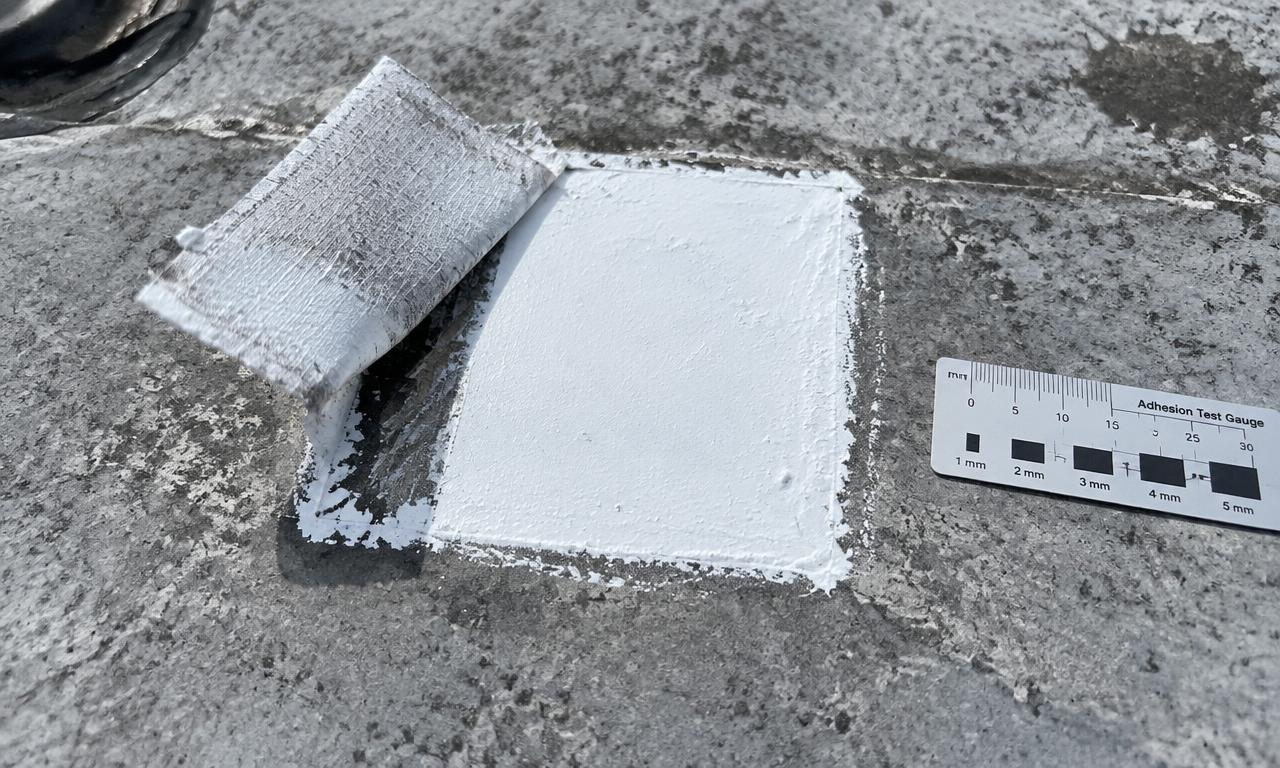
Coating makers publish application guides. Neogard's roofing manual says to always run an adhesion test to check that the coating suits the surface and whether a primer is needed. It also says to record the results. In a pull test, the crew puts a strip of fabric into a small patch of coating, waits for it to cure and then pulls it up. How hard it pulls tells them if the bond is good. Ask for the readings in writing.
Fix first, then coat
A coating covers a roof. It does not mend it. These problems need hand repair before any coating goes on.
- Seams or laps that have split or lifted.
- Flashing at walls, curbs and edges that is cracked or pulling away.
- Holes, tears and bubbles in the roof surface.
- Screws on metal roofs that are loose, rusted or missing.
- Sections of insulation that tested wet.
- Drains that are blocked, broken or set too high.
Three families of coatings
Silicone is often picked for roofs where some water may sit after rain. It tends to pick up dirt over time. Later coats usually have to be silicone too, since many other products will not stick to it. ASTM D6694 sets material properties for silicone coatings used over spray foam roofs. It says it does not tell crews how to apply them.
Acrylic is water-based. It is often a lower-cost choice for roofs that drain well. It needs warm, dry days to set, and it can soften where water lingers.
Urethane is often chosen for roofs with a lot of foot traffic or where a tough skin is wanted. It can cost more and may have stronger fumes. Whichever family you pick, the maker's guide should name your roof surface as approved.
Coatings on different roof types
Each roof surface has its own prep and product needs.
- Metal: rust treatment, fastener work and seam reinforcement.
- Modified bitumen and built-up: primers to block asphalt bleed in some cases.
- Single-ply sheets: special cleaners and primers; some older sheets may not bond well.
- Spray foam: coatings protect the foam from sun and must be kept up.
How much coating goes on
Each product has a spread rate, which is how much area one bucket should cover at the right depth. If a crew spreads it too far, the skin ends up thin and wears through sooner.
Ask the bid to list the product, the number of coats and the spread rate. Ask how the crew checks depth while they work, and whether they will cut small samples later to measure it. Ask that those numbers go in your roof log.
Picking the right days
Coatings are picky about weather. A rain shower, morning dew or a cold night before the coating sets can ruin the bond. Each product sheet lists its limits for heat, cold and damp air.
So the start date may shift. Ask how the crew decides it is safe to coat, and what they do if a storm rolls in partway through. A short delay costs less than a coating that peels.
Reflectivity and heat
White and light coatings reflect more sunlight. The Energy Department's cool roof guide explains how reflective roofs can lower roof heat and cooling needs in some buildings.
Dirt lowers reflectivity over time. Savings depend on your building, insulation and climate. Be careful with any bid that promises a set savings amount.
Warranties
Coating warranties differ widely. Some cover only the material. Some cover labor too. Many have upkeep rules and need recoats on a schedule.
Ask for the full written warranty. Ask what roof conditions it excludes, like ponding or wet areas.
Red flags
Be careful with anyone who offers a coating without a moisture check or adhesion test. Be careful with claims that a coating fixes any roof. Be careful with big energy savings or year promises.
Ask for references from roofs of the same type and age. Ask to see test results in writing.
Coating or replacement?
If all wet areas are replaced and the rest is confirmed dry, the deck is sound and drainage works, coating may be a good choice. If much of the insulation is wet, the deck is weak or the roof is failing in many places, replacement may make more sense.
Our coating or replacement guide walks through that decision in more detail.
What the bid should say
Line up coating bids on the same points. This helps you see what each crew is really offering.
- Moisture survey method and how many core cuts.
- Areas of wet insulation to be removed and replaced.
- Every repair to be done before coating, item by item.
- The exact coating, primer and fabric products.
- Number of coats and spread rate.
- Adhesion test results and the warranty offered.
Protecting the building during work
Coating work can drift in wind and drip off edges. Crews should guard edges, cover gear and keep coating away from cars and walls below.
Some coatings have strong fumes. Ask how the crew will keep fumes away from building air intakes, and whether air units need to be shut off during work.
Care after coating
A coated roof still needs upkeep. Keep drains clear, keep foot traffic to set paths and look at the roof after storms.
Have a crew check seams, details and any thin or worn spots. Many coating warranties need regular checks and records. Keep them in your roof log.
Coatings on metal roofs
Metal roofs are a common place for coatings. Rust, loose screws and open seams are fixed first. A rust primer may go on. Seams often get a fabric or tape layer before the full coat.
Ask how the crew will treat rust and which screws will be replaced. Ask whether the coating maker approves the metal and its paint.
When coating is the wrong choice
Coating is not a good fit when large areas of insulation are wet, the deck is soft or rusted through, or the roof leaks in many places. It is also a poor fit when water stands deep and long with no plan to fix drainage.
In those cases, a new roof may be the better use of money. A crew that tells you that is being honest with you.
Recoating later
Coatings wear over time. Many systems plan for a cleaning and new top coat years later. That can extend the roof again if it stays dry and sound.
Ask what the recoat plan looks like and what products are allowed over the first coat. Some coatings only bond to the same type.
Coatings and roof drains
The edges of drains are hard spots for coatings. Water moves fast there and debris collects. A coating can also build up and make the drain area slightly higher.
Ask how the crew will prep and finish around each drain. They should keep strainers in place, keep coating out of the pipe and make sure water still reaches the drain. Check those spots after the first big rain.
How our request form works
We serve homes and businesses across the Omaha area. This website is a preview right now. The online form checks your answers, but it does not save or send them yet, so no roofer gets your request from it.
When online requests are turned on, this note will change. Until then, the form is a way to see what we will ask: your town or ZIP, what you see and what kind of help you need. We do not sell your details.
Common questions
Will a coating stop my leaks?
Only if the leaks are fixed first. Crews repair seams, flashing and holes before coating. A coating over an open leak or wet insulation can trap water.
How do I know the coating will stick?
Ask for an adhesion test. Neogard's application manual, for one, says to always do one to check compatibility and the need for a primer. Get the result in writing.
Which coating is best?
It depends on your roof surface, drainage, traffic and budget. Silicone, acrylic and other types each have strengths and limits. The right one is the one the maker approves for your roof.
Will a coating lower my energy bills?
Light, reflective coatings can lower roof surface heat in summer. The Energy Department's cool roof guide explains this. Savings depend on your building, so treat any number as an estimate.
How long will a coating last?
That depends on the product, thickness, roof condition and care. Read the written warranty. Plan for checks and possible recoats over time.
Related help
Sources we checked
Official and standards pages we used to check facts on this page. Rules can change, so confirm with the source.