Quick answer
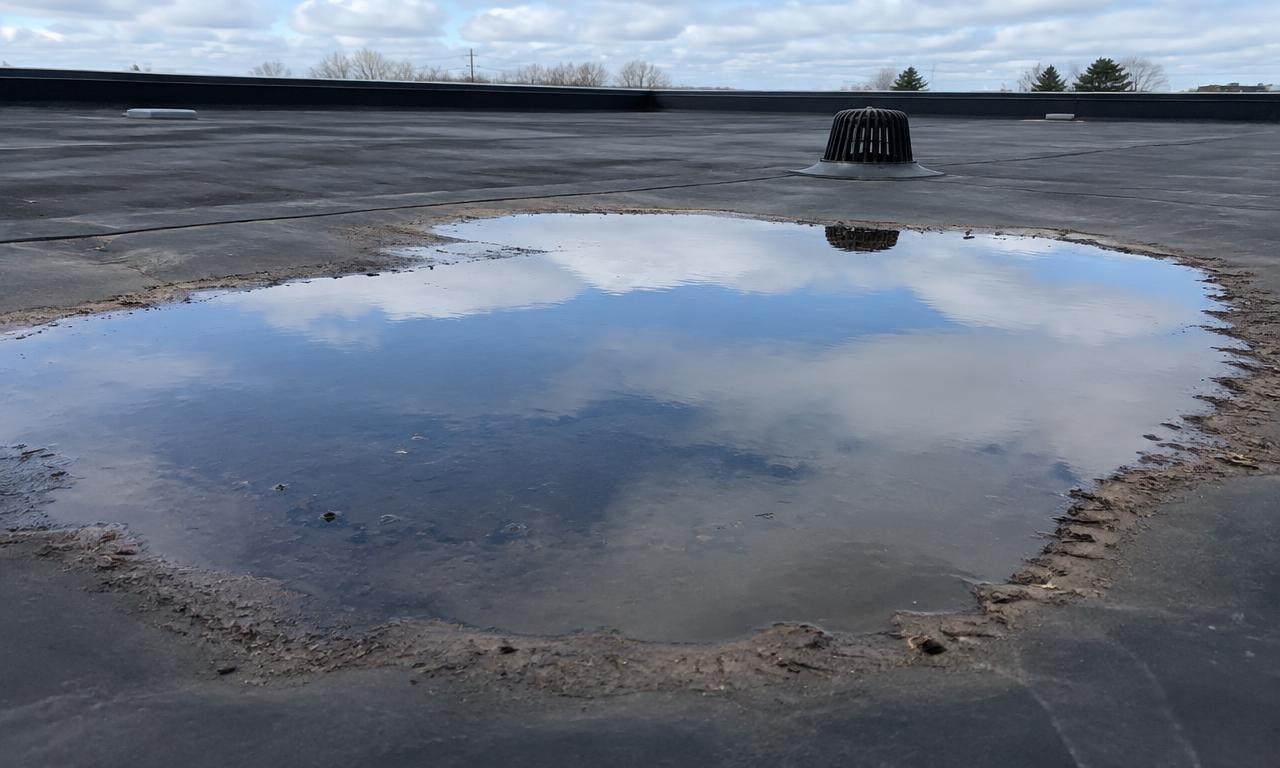
Ponding water is water that stays on a flat roof long after rain. It can come from clogged drains, low spots, sagging framing or how the roof was built. Some ponding is a small upkeep issue. Some is a sign of a bigger problem. A qualified person needs to check it in person. Nobody can judge the structure from a photo.
Safety first
FEMA's snow load guidance lists warning signs that a roof is under too much strain. These include sagging ceilings, popping or creaking sounds, bowed framing, doors that will not open or close, severe leaks and water collecting at spots on low-slope roofs where it does not drain.
FEMA says that if warning signs show up, the building should be promptly evacuated. Then a local building authority or qualified design professional should do a structural check. If you see these signs, leave and call 911 from outside. Do not go back in or onto the roof to look.
What ponding looks like
You may notice ponding from a window, a higher roof or a crew's photos. Look for these clues.
- Water still standing a day or more after rain.
- Dark rings of dirt or algae where water dried.
- Low spots that collect leaves and silt.
- Water around drains that sit higher than the roof around them.
- Ice sheets on the roof in winter after a thaw.
Common causes
Ponding has many possible causes. Often more than one is at work.
- Clogged drains, scuppers or gutters.
- Drains set too high or in the wrong spot.
- Low spots in the insulation or deck.
- Framing that has sagged over time.
- Roofs built nearly dead flat with little slope to drains.
- Rooftop gear or curbs that block water flow.
- Wet, crushed insulation that has sunk.
| What you see | What to do | Who to call |
|---|---|---|
| Water near a drain that is clogged with leaves | Have a trained crew clear the drain | Roofer or upkeep crew |
| Small puddle that dries within a couple of days | Note it in the roof log and watch it | Roofer at the next check |
| Wide or deep water that stays, with a dirt ring | Schedule a drainage check soon | Roofer, and an engineer if framing may be sagging |
| Water that gets deeper each time, or a dip that grows | Treat it as urgent and keep people off that area | Structural engineer and roofer |
| Ceiling sags, cracking sounds or doors that stick inside | Leave the building and call 911 from outside | Emergency services, then a structural engineer |
Why ponding matters
Water is heavy. A wide, deep pond adds load the roof must carry. If the framing bends a little under that load, the low spot gets deeper and holds even more water. That cycle is a reason to check growing ponds soon.
Standing water is also hard on roof materials. Many seams, coatings and surfaces wear faster under water. Dirt and plant growth can build up. Any small hole in a pond area lets in more water than the same hole on a dry spot.
Drainage versus deflection
Drainage problems mean water cannot get to a drain. The roof may be built too flat, or the drains may be clogged or set wrong. These are often fixed with drain work or tapered insulation.
Deflection means the structure itself bends down. It may come from undersized framing, damage or heavy loads over time. That needs a structural engineer. A roofer can note signs of sag, but should not judge whether the structure is safe. A web page cannot either.
Simple fixes for drain problems
Many ponding problems start with clogged drains. A trained crew can clear debris, put strainers back and check that water flows. Regular upkeep keeps this from coming back.
Sometimes the drain is set higher than the roof around it, often after a new roof layer was added. A crew may reset the drain or rebuild the area around it so water reaches it.
Tapered insulation and crickets
Tapered insulation is cut on a slight slope. Laid in a pattern, it guides water to drains. It is often added when a roof is replaced.
Crickets are small built-up ridges that push water around curbs, units and walls. Together, these can fix many drainage issues that are built into the roof.
Adding drains or scuppers
Some roofs need more ways for water to leave. New drains or scuppers can help. This work may involve plumbing and structural review, and it may need a permit.
Ask your contractor who will design the change and whether a permit is needed. Overflow drains or scuppers are part of some roof designs. Ask whether yours has them.
When the structure has sagged
If framing has sagged, roofing fixes alone will not solve it. A structural engineer can study the framing and loads and write a repair plan. A contractor then builds the repair.
Until then, keep people off the area and follow the engineer's advice. Do not add weight to the roof, like stored gear or new units, without review.
Moisture under the pond
Ponds often sit over wet insulation. Water gets in at a seam or hole and soaks the layers below. Wet insulation can sink, which makes the low spot worse.
ASTM C1153 describes infrared surveys to locate wet insulation. It does not find the entry point, so crews also check seams and details. Wet areas should be replaced before any coating or new layer goes on.
Ponding in winter
In winter, ponds can freeze into ice sheets. Snow can drift into low areas. FEMA notes that melt water can collect in low areas on flat roofs between snow events, adding load.
Keep drains clear before winter. After big snows, watch from inside for warning signs. Snow removal should be done only by trained crews with fall protection.
Ponding and coatings
Some coatings are made to handle ponding better than others. That can help a roof with small ponds. But coatings do not move water. If ponds are large or growing, fix the drainage or structure first.
Ask the coating maker whether the warranty covers ponding areas. Many have limits.
Keeping a record
Take photos of ponds from the same safe spot after rain. Note how long the water stays and whether it grows. Add them to your roof log.
This record helps the crew and engineer. It also shows whether a fix worked.
Safety for crews
Ponded areas can be slick, and ice can hide edges. OSHA's fall protection rule applies to roof work near unprotected edges. Crews need a plan that fits the roof.
Standing water can also hide weak or soft spots. Probing a spot does not prove it is safe to stand on. Workers should stay off suspect ponded or weak areas until a qualified person confirms the roof can carry them and a safe way to reach the work is set up. OSHA has fall protection rules for roof work.
Questions for the roofer
Ask these when a crew looks at a pond on your roof.
- What do you think is causing the water to stay?
- Are the drains clear and set at the right height?
- Is the insulation under the pond wet or crushed?
- Do you see signs the framing may be sagging?
- Should a structural engineer look at this?
- What fix do you suggest, and why?
Questions for the engineer
If an engineer is called, these questions help you understand the plan.
- Is the roof safe to use while we plan a fix?
- What loads was the roof built to carry?
- Is the framing bending under the water?
- What repair do you suggest, and does it need a permit?
- Should we limit rooftop gear or snow until it is fixed?
Ponding and warranties
Many roof warranties have rules about ponding. Some do not cover damage in areas where water stands. Others set their own terms for how long water can sit.
Read your written warranty. If you are unsure, ask the maker in writing. Keep their answer in your roof log.
Planning a new roof with better drainage
When a roof is replaced, it is a good time to fix drainage. Tapered insulation, crickets and drain changes can all be part of the new design.
Ask each bidder how their plan moves water to drains. Ask for a drawing that shows the slope. A new roof that holds water in the same spots will likely wear out early there.
Who to call first
If water is simply sitting by a clogged drain, call your roofer or upkeep crew. If ponds are large, deep or growing, call a roofer soon and ask whether an engineer should look too.
If you see ceiling sags, cracking sounds or doors that suddenly stick, leave the building and call 911 from outside. We serve businesses across the Omaha area and can match you with roofers who handle flat roof drainage.
Ponding on roofs with lots of gear
Air units and curbs can act like dams. Water backs up on the uphill side and sits there. Over time, that area can wear and leak.
Crickets on the uphill side of each unit help push water around. If new units are added, ask whether the drainage was planned for them.
Ponding after a new roof layer
Adding a new layer over an old roof can change how water flows. A drain should sit at the low point, so water runs down into it. Trouble starts when the drain rim ends up raised above the roof around it, when new insulation blocks the path water used to take, or when the low area around the drain, called a sump, is shaped poorly. Rough steps between old and new areas can trap water too.
If ponding started after a recent roof job, tell the crew who did it. Ask them to check the drain rims, the sumps and the slope.
Ponding near walls and edges
Some roofs hold water along parapet walls or edges, where the roof is lowest. Water there sits against the base flashing, which is a common leak spot.
Scuppers through the wall or added drains near the edge can help. So can tapered insulation that moves water away from the wall. Ask the crew to check the flashing in those areas closely, since long contact with water wears it faster.
How our request form works
We serve homes and businesses across the Omaha area. This website is a preview right now. The online form checks your answers, but it does not save or send them yet, so no roofer gets your request from it.
When online requests are turned on, this note will change. Until then, the form is a way to see what we will ask: your town or ZIP, what you see and what kind of help you need. We do not sell your details.
Common questions
How long can water sit on a flat roof?
There is no one rule for every roof. Many roof warranties and makers define ponding in their own terms. Read your warranty. Water that stays for days, or keeps growing, is worth a check.
Can ponding cause a roof to collapse?
Heavy water can add a lot of weight, and FEMA lists water collecting at non-drain spots on low-slope roofs as a warning sign. Whether your roof is at risk needs an on-site check by a qualified person.
Can a coating fix ponding?
No. Some coatings handle standing water better than others, but they do not change how water drains. Drainage problems need drainage fixes.
Is ponding covered by my warranty?
Some warranties exclude damage from ponding. Read your written warranty and ask the maker if you are unsure.
Can I sweep the water off myself?
Do not go on the roof. Roofs are slick and edges are dangerous. A trained crew with fall protection can clear drains and check the area.
Related help
Sources we checked
Official and standards pages we used to check facts on this page. Rules can change, so confirm with the source.