Quick answer
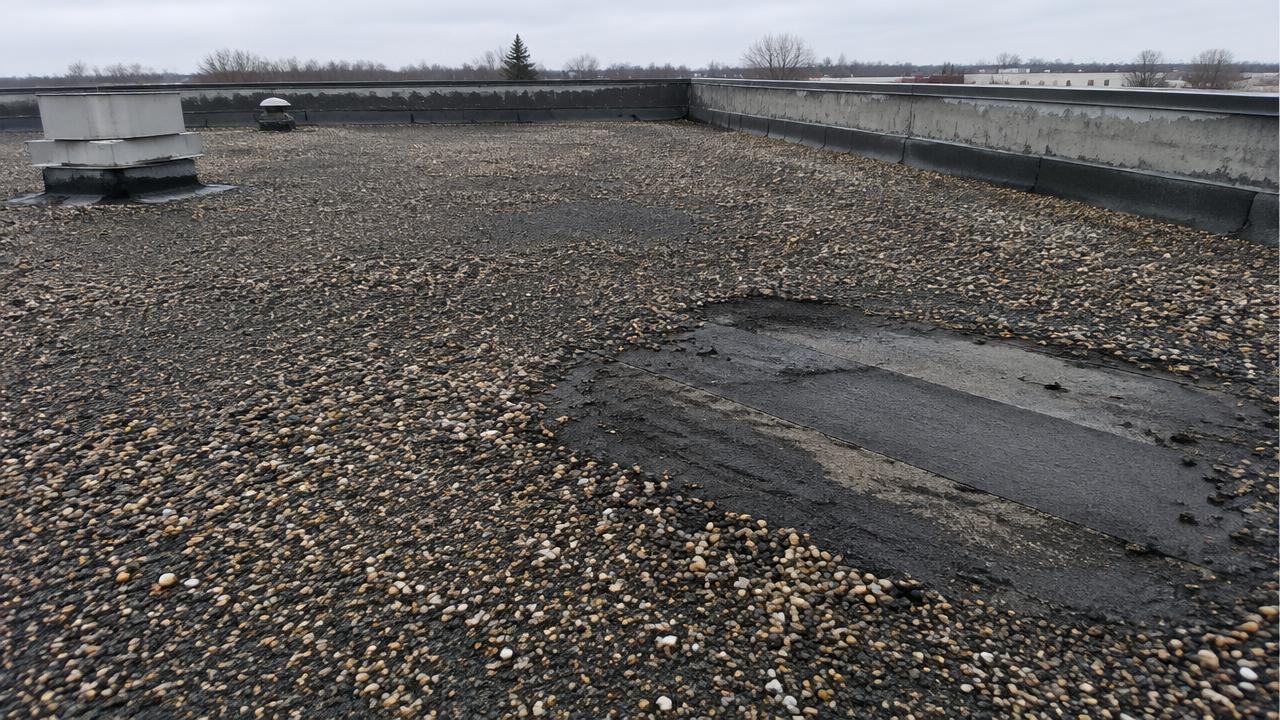
A built-up roof is made of several layers of felt glued together with hot asphalt or coal tar. It is often topped with gravel. Many older buildings have one. These roofs can last a long time, but they age in their own ways. Repair choices depend on how many layers there are, how dry they are and what condition the whole system is in.
What a built-up roof is
A built-up roof, often called BUR, is one of the oldest flat roof types. It is built in layers right on the roof. Crews lay down a sheet of felt, then a coat of hot asphalt or coal tar, then another felt, and so on. Each felt layer is called a ply.
On top, many built-up roofs have a flood coat. That is a thicker layer of hot asphalt or tar. Gravel is pressed into it while it is still hot. Some roofs use a cap sheet or a coating on top instead of gravel. ASTM sets standards for roofing asphalt and the felts used in these roofs.
We serve building owners across the Omaha area. Many older schools, shops, warehouses and offices still have built-up roofs.
How built-up roofs age
Built-up roofs can last many years when they are put on well and cared for. But they age in their own ways. The sun dries out the top coat over time. When gravel washes or blows away, bare spots dry out faster.
Dry asphalt gets brittle. It can crack, split or alligator, which means it cracks in a pattern like a lizard's skin. Water trapped between layers can turn to steam on hot days and lift the felts into blisters. Felts can split where the roof moves, such as over deck joints.
Signs of trouble on a built-up roof
You may see some of these from a safe window or roof hatch. A trained crew should do a full walk.
- Bare spots where gravel is missing.
- Blisters or bubbles in the surface.
- Long straight splits, often over deck seams.
- Cracking or alligator patterns in the top coat.
- Loose or cracked flashing at walls and curbs.
- Water sitting in low spots long after rain.
- Many old patches in one area.
| What is found | Often points to | What to ask |
|---|---|---|
| A few blisters, small splits or bare spots | Spot repair may work | Will repairs match the existing system? |
| Many splits, dry and brittle felts across the roof | The system may be near the end | How much of the roof is affected? |
| Large wet areas under the felts | Wet areas need removal first | Where is it wet, and how was that confirmed? |
| Mostly dry, sound roof with worn surface | Recover or coating may be an option, if allowed | Is a recover allowed, and will a coating stick? |
| Already two roofs on the building | A tear-off may be needed | What do local rules allow? Is the deck sound? |
Why the number of plies matters
The more plies a built-up roof has, the more layers stand between rain and the building. A roof with three plies and one with five can act differently as they age. Repairs should match what is there.
Records may say how many plies were put on, but records can be missing or wrong. A core cut is the best way to know. It also shows if the felts are dry, if there is insulation, and what the deck is made of. Each core must be patched right away.
Asphalt or coal tar?
Some built-up roofs use asphalt. Some use coal tar pitch. They look alike but act differently. Coal tar can flow a little in heat and is often used on very flat roofs. Asphalt comes in grades for different slopes.
This matters for repairs. Coal tar and asphalt do not always work together. Some patch materials can harm one or the other. The crew should find out which you have before any repair. Old records, a sample or the smell when warm can give clues, but a crew should confirm it.
Checking the whole system first
Before any big repair, look at the whole roof, not only the leak. A crew checks the surface, flashings, drains and edges. A moisture survey and core cuts show if the layers and insulation are dry. Our wet insulation page explains those tests and their limits.
This tells you if spot repairs make sense or if the system is near the end. Many small patches on a roof that is dry and sound can be a good plan. Patches on a roof that is wet and brittle may not last.
Common repair options
The right choice depends on the roof's condition and what it is made of. Repairs should be done by trained crews.
- Cutting out and repairing blisters, if the layers are sound around them.
- Patching splits with felt and bitumen that match the system.
- Replacing missing gravel and redoing the flood coat in worn areas.
- Redoing flashings at walls, curbs and edges.
- Clearing and resealing drains.
- Removing wet areas and replacing them.
Recover, coat or replace?
If any wet areas have been replaced and the rest is confirmed dry and sound, but the surface is worn, a recover or a coating may be worth asking about. A recover puts a new roof over the old one. Building codes often limit how many roofs can be stacked, and the old roof must be dry and well attached. Your local building office can say what is allowed.
Coatings need a clean, sound surface. Gravel roofs often need the loose gravel removed first, and the maker must approve the surface. If the roof is wet, brittle across most of the area, or already has two roofs, a full tear-off is often the better choice.
Hot work and safety
Many built-up repairs use hot asphalt from a kettle, or a torch on some patch sheets. This is dangerous work. It can cause burns and roof fires. OSHA has fire prevention rules for hot work in construction. Crews need training, fire watch and the right gear.
We do not give hot work steps online, and building staff should never try it. Work near roof edges also needs fall protection under OSHA rules. Ask any crew about their fire safety plan before hot work starts.
Who should walk a built-up roof
Older built-up roofs can hide soft spots, blisters and wet areas. Gravel can roll underfoot. Only trained crews with fall protection should walk them. Building staff can still help. They can note leaks inside, check drains from a safe hatch, and keep the roof log up to date for the next visit.
Blisters: when to cut and when to watch
A blister is a raised bubble where layers have pulled apart. Small blisters that are not cracked may be watched and noted in the roof log. Blisters that are cracked, growing or in walk paths may need repair.
Repair often means cutting the blister open, drying it, and patching it with materials that match the roof. Many blisters across a roof can point to trapped water or old install problems. Then a moisture survey makes sense before more patching. Never step on or press blisters to test them.
Flashings on built-up roofs
Flashing is where many built-up roofs leak first. Walls, curbs and edges move differently from the roof field. The flashing there takes the most strain. Older built-up roofs may have flashing made of felt and asphalt, or metal set in roof cement.
When flashing cracks or pulls away, water can get behind it and run into the roof layers. Crews often redo flashings as part of a repair or upkeep plan. The new flashing must work with the old roof, so the crew should know what the roof is made of first.
Gravel: why it matters and how it moves
Gravel on a built-up roof does real work. It shields the top coat from sun and helps hold it in place. It also protects the roof from foot traffic and small hail.
Gravel can wash toward drains in heavy rain. Wind can scour it off corners and edges. Workers may kick it aside around units. Bare spots should be noted in the roof log and fixed before the top coat dries and cracks. Loose gravel near drains should be kept out of the pipes.
Drainage on older built-up roofs
Many older built-up roofs were built with very little slope. Coal tar roofs in particular were often used on nearly flat roofs. Over time, decks can sag a little and insulation can crush. That can leave water sitting in low spots.
Standing water adds weight and wears the surface. If water sits long after rain, ask a crew to look at drains and low spots. Our ponding water page covers this. We do not judge roof strength online.
What tear-off of a built-up roof involves
Tearing off a built-up roof is heavy, messy work. Gravel and layers of felt and bitumen must be cut up and hauled away. The deck below may need repairs once it is uncovered. The building stays open below, so dust, noise and weather plans matter.
A good bid explains how the roof will be removed, how the building will be kept dry, and how deck repairs will be priced if needed. Ask about asbestos testing first on older roofs. Ask how long each section will be open.
Records to keep for a built-up roof
Good records help you plan repairs and the next roof.
- Install date and who put it on, if known.
- Number of plies, type of bitumen and top surface, from cores.
- Each repair, with date, photos and materials used.
- Moisture survey results and core locations.
- Any asbestos test results.
- Flashing work and drain repairs.
Asbestos in older roofs
Some roofing products made decades ago contained asbestos. That includes some felts, flashing cements and coatings. If your building is old, ask for testing before anyone cuts, grinds or tears off the roof.
The EPA explains that asbestos is a health risk when it is disturbed and fibers get into the air. A trained asbestos professional should handle testing and removal. Ask the crew if they plan for this before tear-off on older roofs.
Common questions
How many layers does a built-up roof have?
Many built-up roofs have three to five felt layers. Your roof may differ. A core cut shows the real number.
Why is there gravel on top?
Gravel protects the top coat of asphalt or tar from sun and foot traffic. When gravel washes or blows away, the top coat can dry and crack faster.
Can a built-up roof be repaired with modern materials?
Sometimes. Some repairs use modified bitumen or cold-applied products. The crew must make sure the new material works with the old asphalt or coal tar. Coal tar and asphalt are not always compatible.
Can we do the hot asphalt repair ourselves?
No. Hot asphalt and torches can cause burns and roof fires. OSHA has fire prevention rules for this work. Only trained crews with a fire safety plan should do it.
Could my old roof contain asbestos?
Some older roofing products made decades ago contained asbestos. If your roof is old, ask for testing before it is cut or torn off. The EPA has guidance on asbestos.
Related help
Sources we checked
Official and standards pages we used to check facts on this page. Rules can change, so confirm with the source.