Quick answer
Modified bitumen is an asphalt roof made in rolls, with rubber-like or plastic-like additives and a reinforcing mat inside. It is usually laid in two or more layers. Rolls can be put down with heat, cold glue, hot asphalt or a self-stick back. Each method has its own safety rules and skills. Torch work is for trained crews only.
What modified bitumen is
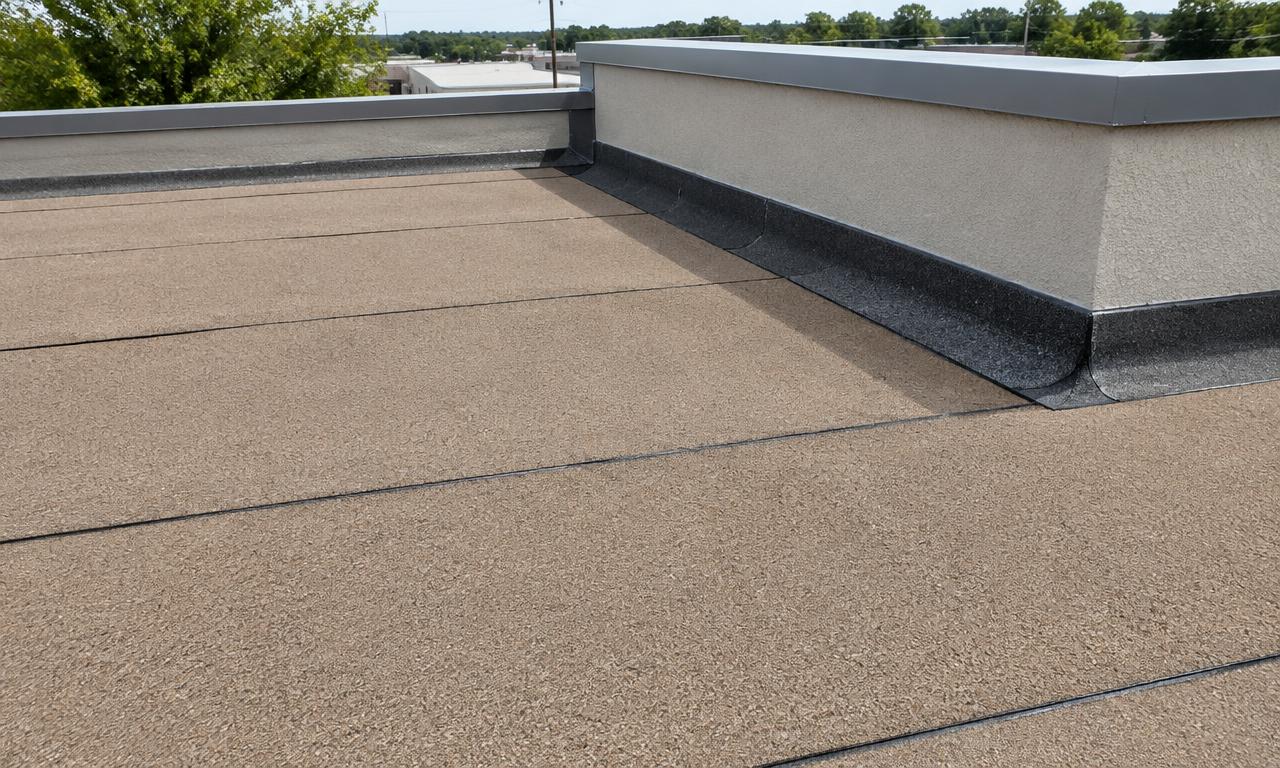
Bitumen is the asphalt part. It is modified with additives that make it more flexible or tougher. The roll has a reinforcing mat inside, often glass fiber or polyester. Many rolls have granules on top.
ASTM D6163 is one standard for SBS-modified sheets with glass fiber mats. It says it is a material spec only. How the roof is built and installed is outside its scope. That means the roll is only part of the story. The system design and install matter just as much.
SBS and APP
SBS stands for a rubber-like polymer. SBS rolls stay flexible in cold weather and can stretch as the building moves. They may be set with heat, hot asphalt, cold adhesive or a self-stick back.
APP stands for a plastic-like polymer. APP rolls are often torch-applied. Each maker sets its own install rules. Ask which type your crew plans and why it fits your roof.
How the layers stack up
A typical modified bitumen roof has several layers. The exact build depends on the deck and the maker's system.
- Deck: steel, wood or concrete.
- Insulation: boards that slow heat flow, often in more than one layer.
- Cover board: a tougher board that protects the insulation.
- Base sheet: the first roll layer.
- Cap sheet: the top layer, often with granules.
- Flashing: extra layers at walls, curbs and edges.
| Method | How it works | Things to ask |
|---|---|---|
| Torch-applied | An open flame melts the back of the roll to bond it | Fire safety plan, trained crew, details where flame is not allowed |
| Hot asphalt | Rolls are set in hot liquid asphalt | Kettle safety, fumes and burns |
| Cold-applied | Rolls are set in a liquid adhesive | Cure time, weather limits and fumes |
| Self-adhered | Factory glue on the roll cuts down on field glue and open flame | Surface prep, primer and temperature limits |
| Mixed methods | Different methods for base and cap layers or for details | Why each method is used where |
Why two or more layers
Most modified bitumen roofs have at least two layers. The laps of each layer are staggered, so a weak spot in one layer is covered by the other. That backup is one reason these roofs are popular.
Ask how many plies are planned and how laps will be staggered. A single-ply modified roof is a different system with different limits.
Torch-applied work and fire safety
Torch work uses an open flame to melt the back of the roll. It can make strong bonds, but it is a major fire risk. Heat can ignite wood, insulation or debris in hidden spots like under edges, near walls and around openings. A fire can smolder unseen.
For this reason, torch work is only for trained crews with a fire safety plan. That often means fire watch during and after work, extinguishers on hand and no flame near certain details. Many crews use self-stick or cold methods at walls and openings instead. Ask how they handle fire safety on your roof.
Hot asphalt and cold adhesives
Some systems set rolls in hot asphalt from a kettle. Hot asphalt can cause serious burns and makes fumes. Crews need training and the right gear. Ask how they keep fumes away from air intakes.
Cold adhesives avoid flame and kettles. They need dry weather and time to cure. Some have strong fumes. Self-stick rolls have factory glue on the back. That cuts down on field glue and open flame. But some products and details still need heat to activate the glue, a primer, or lap glue at the seams. Always follow the maker's guide for that product. Torch work is only for trained crews with a fire watch, never a DIY job.
Common problems
These are typical issues crews look for on older modified bitumen roofs.
- Open laps where layers have pulled apart.
- Blisters, which are bubbles between layers.
- Cracks and alligator-like patterns in the surface.
- Granule loss on the cap sheet, exposing asphalt.
- Split flashing at walls and curbs.
- Water that stays in low spots after rain.
Blisters: what they mean
A blister is a raised bubble where layers have separated. It may hold air or moisture. Small, stable blisters may just be watched. Blisters that grow, crack or sit in high-traffic areas may need repair.
Do not pop a blister yourself. Cutting it open can let water in. A crew can judge whether to leave it, cut and patch it or address a bigger issue.
Repairs
Many repairs involve cleaning the area, cutting out bad material and adding new layers. The repair method should suit the existing roof and, if under warranty, follow the maker's rules.
Ask what method they will use for each repair and why. If they plan torch work, ask about their fire safety plan. If they plan a cold or self-stick patch, ask about prep and cure time.
Coating a modified bitumen roof
Smooth modified rolls are often coated after install to protect them from sun. Granule-surfaced rolls may be coated later to restore them or make them reflect more light.
Not every coating works on every surface. Some asphalt can bleed through certain coatings and stain them. A primer or a specific coating type may be needed. A moisture check and an adhesion test should come first. Our roof coatings page covers this.
Hail and foot traffic
Multiple layers and granule surfaces can help with wear. But hail can still bruise or crack the surface, especially on older roofs. Ask whether the system has impact ratings and what they mean.
Foot traffic can wear granules and crush soft insulation. Walk pads to rooftop gear help.
Safety on the job
Like any roof work, modified bitumen jobs near edges need fall protection. OSHA's rule covers construction work near unprotected edges. Torches, kettles and adhesives add fire, burn and fume risks.
Ask how the crew protects your building, your people and nearby properties.
Warranties
Systems usually come with a maker's warranty and a workmanship warranty. Terms differ by system, layers and installer. The FTC says warranties should be available to read before you buy.
Ask for the full written warranty and its upkeep rules. Ask what voids it.
Comparing bids
Bids should name the base and cap sheets, how many plies, the install method for each layer and the insulation plan. They should explain how walls, curbs and edges will be flashed.
The FTC advises written bids, checking references and not paying everything up front. A clear bid makes it easy to compare and holds the crew to what they said.
Where modified bitumen is common
You will often see modified bitumen on small and mid-size commercial roofs, like strip malls, offices, schools and apartment buildings. It also shows up on low-slope parts of homes, like porch and garage roofs.
It is popular because of its layers and its long history. But it is not the only choice. Single-ply sheets and coatings fit some roofs better. Ask the crew to explain why they suggest it for your roof.
Edges, walls and curbs
Most leaks start at edges and walls, not in the middle. Modified roofs use extra layers, called base flashing, that run up walls and curbs. A metal cap or counterflashing covers the top.
Ask how high the flashing will go and how it will be fastened at the top. Ask which method they will use near walls, where open flame can be risky.
Upkeep for a modified roof
Keep drains clear and look at laps, flashing and the cap surface on a schedule. Watch for granule loss, cracks and blisters.
Some owners recoat smooth or worn modified roofs to protect them from sun. Ask the crew whether that makes sense for your roof and what tests should come first.
What to watch in older roofs
As modified roofs age, the surface can dry and crack. Laps can pull apart. Flashing at walls often fails first.
If many areas show these signs, small patches may not keep up. Ask for a full report with photos so you can weigh repair, coating or replacement.
Going over the old roof, or not
Some modified roofs go over an old roof. That can save on tear-off. It only works if the old roof is dry, the code allows another layer and the structure can carry the added weight.
Many jobs remove the old roof to the deck. That lets the crew check the deck and fix it. Ask which is planned and what tests were done to decide.
Cold weather and modified roofs
Some rolls get stiff in the cold and may crack if bent too sharply. Adhesives and self-stick rolls may not bond well when it is cold.
Each maker lists the lowest temperature for its products. Ask how the crew plans for cold days and whether part of the job should wait for warmer weather.
Questions for the crew
Ask these before you sign.
- Which base and cap sheets will you use?
- Which install method will you use for each layer and at walls?
- Who on your crew is trained for torch work, if any?
- What is your fire safety plan?
- How will you protect the building and people below?
Granules and surface wear
The granules on a cap sheet shield the asphalt from the sun. Over time, foot traffic, hail and weather wear them away. Bare spots look darker and shinier.
A few bare spots near a walk path are common. Wide bare areas let the sun break down the asphalt faster. A crew may suggest new granules set in a coating, a full coating or a new cap sheet. Ask which fits the roof's age and condition.
How our request form works
We serve homes and businesses across the Omaha area. This website is a preview right now. The online form checks your answers, but it does not save or send them yet, so no roofer gets your request from it.
When online requests are turned on, this note will change. Until then, the form is a way to see what we will ask: your town or ZIP, what you see and what kind of help you need. We do not sell your details.
Common questions
Can I patch a modified bitumen roof myself with a torch?
No. Torch work is a serious fire risk and needs training, a fire safety plan and the right gear. Fires can start in hidden spots and smolder after the crew leaves. Leave it to a trained crew.
Is modified bitumen the same as built-up roofing?
They are related. Both use asphalt in layers. Built-up roofs are made on site from many plies and asphalt. Modified bitumen uses factory-made rolls with modifiers. Many roofs mix the two.
What are SBS and APP?
They are two common modifiers. SBS adds a rubber-like stretch. APP adds a plastic-like stiffness and is often torched. Each maker lists how its rolls should be installed.
Why are there granules on top?
Granules on the cap sheet protect the asphalt from sunlight and add some fire and wear resistance. Smooth rolls are often coated after install for the same reason.
Can a modified bitumen roof be coated later?
Often, if the roof is dry and sound and the coating maker approves the surface. An adhesion test and moisture check should come first.
Related help
Sources we checked
Official and standards pages we used to check facts on this page. Rules can change, so confirm with the source.