Quick answer
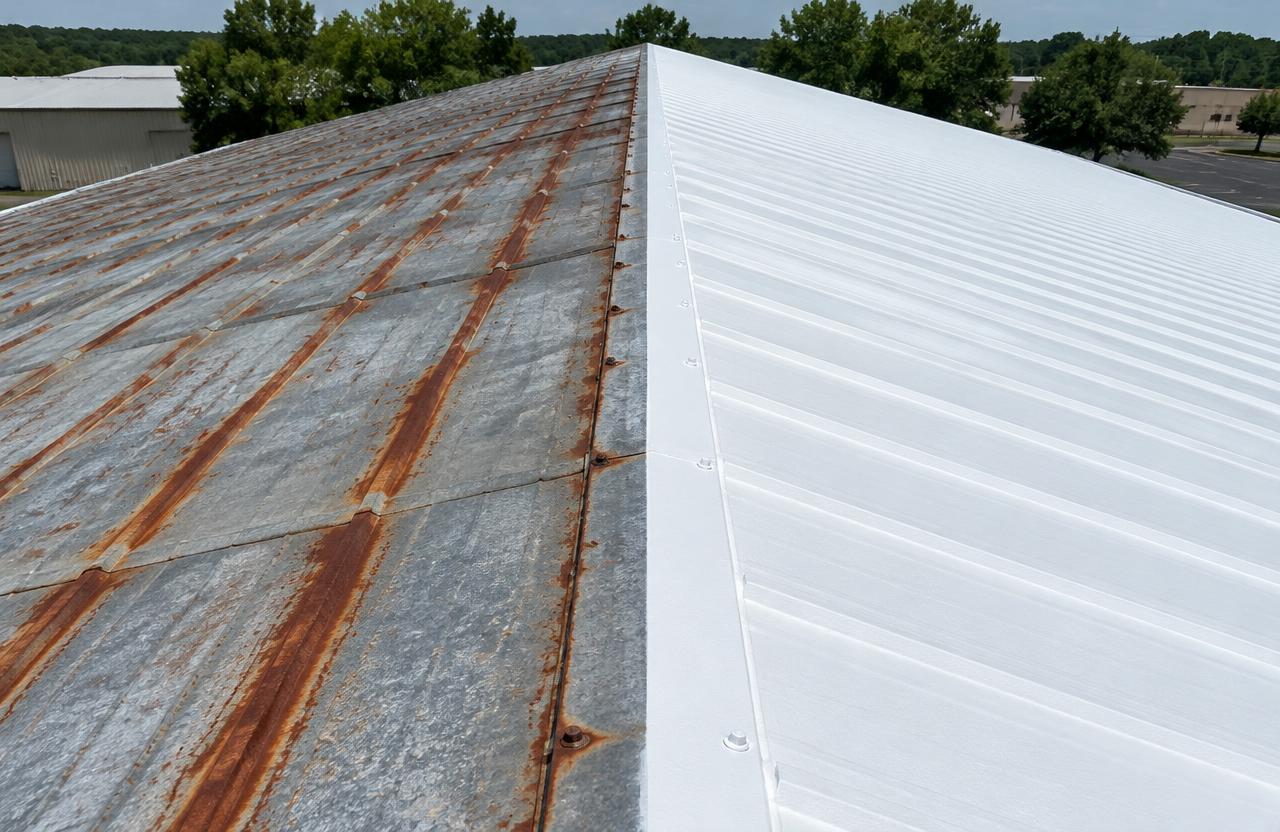
Restoring a metal roof usually means cleaning it, fixing problem spots and putting on a coating system. It can work when the panels and fasteners are still sound. It isn't a fix for badly rusted or damaged panels, a weak structure or a wet roof. There's no single rust percentage that decides it. A coating doesn't add strength. Follow the exact product's prep, primer, thickness and weather limits, and allow for the metal's designed movement.
What metal roof restoration is
Restoration gives an older metal roof a new protective surface. A crew cleans the roof, treats rust, fixes fasteners and seams, and applies a coating system. The coating may be acrylic, silicone or another type.
The goal is to slow wear and stop leaks on a roof that is still basically sound. It is not the same as a new roof. Our general roof restoration and coatings pages cover the wider choice.
Is the roof a good candidate?
A good candidate has panels that are still solid, fasteners that can be fixed and a structure that holds well. Rust may be on the surface but hasn't eaten through.
A poor candidate has holes, thin flaking metal, wide deep rust, sagging or wet insulation. Coating over these just hides the problem for a while. The roof may need panel replacement, a retrofit or a new roof.
Surface rust versus serious corrosion
Surface rust is a thin orange layer on top of solid metal. It can often be cleaned and primed. Serious corrosion goes deeper. The metal gets thin, flakes or has holes.
There's no single percentage that decides if a roof can be restored. A crew should look closely at the worst areas, check how thick the metal still is and compare it to what the coating maker allows.
| What is found | Likely path | Ask the crew |
|---|---|---|
| Light surface rust, sound panels and fasteners | Restoration candidate | What prep and primer does the product call for? |
| Rust holes or thin, flaking metal in spots | Replace those panels, then maybe restore | Which panels, and how will you match them? |
| Loose or failed fasteners | Fastener work first | What size and type does the panel maker list? |
| Wide, deep rust across the roof | Replacement or retrofit study | Can you show photos across the whole roof? |
| Wet insulation or sagging | Moisture and structural review first | Who will check the structure and insulation? |
A coating is not structural
A coating is a skin. It can seal and protect. It can't add strength to thin metal, hold down loose panels or fix weak framing.
If panels are loose, framing is damaged or the roof sags, those need repair by the right pros first. An engineer may need to check the structure.
Repairs before coating
Most restoration jobs start with repairs. That can mean swapping rusted-through panels, replacing worn screws, resealing laps and fixing flashings.
The panel maker lists the right fasteners and sealants. The coating maker lists which repairs must be done before coating. Ask for a repair list with photos.
Cleaning and prep
Coatings don't stick to dirt, chalky paint, oil or loose rust. Prep may include washing, scraping or wire brushing, and treating rust.
GAF's liquid-applied roofing manual, for example, describes surface prep steps for its systems. Each product has its own steps. The roof must be dry before coating.
Primers on metal
Many coating systems call for a primer on metal. Primers help the coating stick and can slow rust. Some are for rusted metal. Some are for galvanized metal.
The exact product spec says which primer, where and how much. GAF's abbreviated spec for a coating over metal lists steps, but notes that the detailed spec controls. Ask the crew to follow the detailed spec.
Seams, laps and fasteners
Seams, laps and screw heads are where metal roofs often leak. Most coating systems treat them first with sealant, tape or fabric and a heavier coat.
Ask how each of these will be treated. Ask for photos of the details before the main coat goes on.
Thickness
Each product calls for a set thickness, often in more than one coat. Too thin, and it wears through early. Too thick in one coat, and it may not cure well.
Ask how thickness will be checked. Wet film gauges during work and dry readings after help. Keep the readings on file.
Weather limits
Coatings need the right weather to go on and cure. Each product lists limits for air and surface temperature, dew point, humidity and time before rain.
A crew should check these on the day and wait if the weather isn't right. Rushing can lead to poor bonds and early failure.
Designed movement
Metal roofs grow and shrink with heat and cold. Some panels are built to slide on their clips. Seams flex.
The coating system should allow for this movement. Some makers call for specific steps at seams so the coating doesn't crack or pin parts that need to move. GAF's silicone-over-metal page, for example, describes its system for metal roofs. Ask how the plan handles movement.
Warranty and records
Coating warranties depend on the product, thickness, repairs and installer. Get the warranty terms in writing before work starts.
Keep a file with the product data, repair list, thickness readings, weather records and photos. It helps with claims and future recoats.
Why metal roofs rust
Most steel roof panels have a thin metal coat, like zinc, under the paint. Over many years, sun, rain and dirt wear that coat down. Then the steel below can rust.
Rust tends to start at cut edges, screw holes, scratches and spots where water sits. That is why a close look at those spots tells you a lot about the whole roof.
Find the leaks first
Before any coating, find out where water is getting in now. Look inside for stains and drips. Note which ones show up in light rain and which only in big storms.
Leaks often come from loose screws, open laps, worn flashing or holes. A crew should find and fix these first. A coating that goes over a hidden leak may trap water under it.
Check under the roof too
Some metal roofs have insulation under the panels. If that insulation is wet, it may stay wet after the roof is coated. It can drip, smell and rust the panels from below.
Ask the crew to look from inside where they safely can. Look for wet or sagging insulation, rust on the underside and stains on the frame. Fix wet areas before the coating goes on.
Gutters, edges and trim
Gutters and trim on metal roofs often rust before the panels do. Water sits in gutters. Trim edges get cut and scratched.
Ask if gutters and trim are in the scope. Some restoration plans coat them. Others replace them. Make sure the bid says which.
Safety during the job
Metal roofs can be very slick, more so when wet or freshly coated. Skylights can look like panels and break under a person. Workers need fall protection.
Keep your staff off the roof. Ask the crew how they will guard skylights and edges. Ask how long the coating needs before people can walk on it.
Care after restoration
A restored roof still needs care. Check it after big storms and on a set schedule. Clear gutters. Watch for peeling, cracks or bare spots.
Many coatings can be cleaned and recoated later. Ask the maker what that takes and when. Keep your records so the next crew knows what is on the roof.
Restoration compared with other choices
Restoration is one path. Others are panel repair alone, a retrofit over the old roof or a full new roof. Each has its own cost and limits.
Ask the crew to explain why they think restoration fits your roof better than the others. Ask what would make them change their mind. A fair crew will tell you when a roof is past the point of coating.
Planning around people below
Coating work can bring smells, overspray and noise from washing. Spray can drift onto cars and walls on windy days.
Ask how the crew will protect air intakes, cars and walkways. Ask which days the work will be loud or smelly. Tell the people inside ahead of time.
What a clear bid shows
A clear bid names the exact coating and primer. It lists each repair, with photos. It says how seams and screws will be treated, the thickness and how it will be checked.
It also lists what is not included. Vague bids make it hard to compare crews. Ask each bidder for the same details.
Mixed metals and runoff
Some metals react when they touch in the wet. Copper runoff onto steel, or the wrong screws, can speed up rust. A coating may slow this, but it does not fix the cause.
Ask the crew to look for spots where two kinds of metal meet. Ask how they will keep them apart or change the part.
How long will it last?
No one can promise a set number of years. Life depends on the product, the thickness, the prep, the weather and how the roof is cared for.
Read the warranty for what it covers and for how long. Plan for checks and a future recoat.
Signs a coated roof needs a look
From the ground or a safe window, watch for peeling, cracks, rust coming back through, or bare spots at seams and screws. Inside, watch for new stains or drips.
Do not climb up to check. Take photos from a safe spot. Call the crew and check your warranty. Small fixes early often stop bigger problems later.
Questions to ask the crew
Use these when comparing metal restoration bids.
- Is my roof a good candidate, and why?
- Which panels or fasteners need repair first?
- Which exact product and primer will you use?
- How will you treat seams, laps and screws?
- How thick will each coat be, and how will you prove it?
- Which weather limits does this product list?
- How does the system handle metal movement?
Common questions
How much rust is too much to restore?
There's no one number. It depends on how deep the rust goes, whether the metal is thin or holed, and what the coating maker allows. A close look and the product's rules decide.
Does a coating make the roof stronger?
No. A coating is a surface layer. It does not replace thin metal, add structural strength or fix loose framing. Those need repair first.
Do all coatings need a primer on metal?
Not all, but many do, especially on rusted or galvanized metal. The exact product's spec says which primer, if any. Follow it.
What about the seams and screws?
Most metal coating systems call for extra work at seams, laps and fasteners, like sealant or fabric and a thicker coat. The exact spec sets this.
Can restoration be done in any weather?
No. Each product lists limits for temperature, dew, rain and cure time. A crew should check them on the day and wait if needed.
Related help
Sources we checked
Official and standards pages we used to check facts on this page. Rules can change, so confirm with the source.