Quick answer
A flat roof drain is the main way water leaves the roof. When it clogs, water backs up and adds weight. Fixing it often takes more than one trade. The roofer handles the roof around the drain. A plumber handles the pipes below. Someone also needs to check the backup path for water, called the overflow.
How water leaves a flat roof
A flat roof is not really flat. It has a gentle slope that moves water to low spots. At those low spots sit drains, scuppers or gutters. A drain is a bowl set into the roof with a pipe that runs down inside the building. A scupper is an opening in the edge wall that lets water spill out the side.
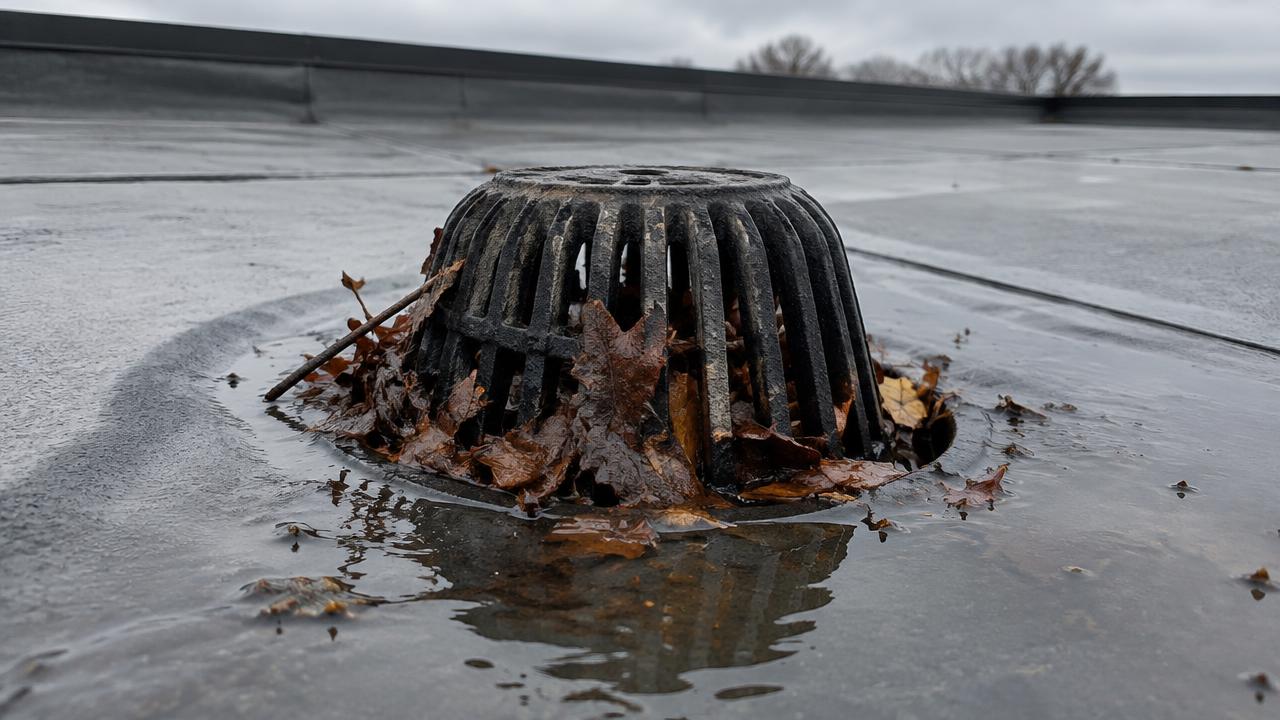
Most drains have a strainer on top. It is a metal or plastic dome or grate. It lets water in and keeps leaves, gravel and trash out of the pipe. A clamp ring holds the roof sheet tight to the drain bowl, so water goes down the pipe and not under the roof.
We serve businesses and building owners across the Omaha area. Drain problems are one of the most common reasons a flat roof leaks or holds water after rain.
Main drains and backup drains
Many roofs with walls around the edge have two ways for water to leave. The main path is the regular drain or scupper. The backup path is an overflow drain or overflow scupper. It is set a bit higher than the main drain. It only takes water when the main path is clogged or can't keep up.
The backup path matters because a roof with walls can act like a tray. If the main drain stops, water keeps rising until it finds a way out. The model plumbing code from the ICC has a chapter on roof drains and backup drains. Your city decides which version it uses, and older buildings may have been built under older rules. A design pro or the local building office answers code questions for your building.
The drawing below shows the idea. It is simple and not to scale.
Signs a drain needs attention
These signs do not tell you the cause. They tell you it is time for a closer look.
- Water still standing around a drain many hours after the rain stops.
- A ring of dirt or silt around the drain where water sat and dried.
- A missing, broken or crushed strainer.
- Plants, moss or bird nests near the drain.
- Water coming out of the overflow scupper during normal rain.
- Drips, stains or rust on the ceiling or pipes right below a drain.
- Water spilling over the roof edge where it was not meant to go.
| Part | What it does | Who is often called |
|---|---|---|
| Strainer (dome or flat grate) | Keeps leaves and trash out of the pipe | Roof crew or trained building staff with fall protection |
| Drain bowl and clamp ring | Holds the roof sheet tight to the drain | Roof crew |
| Roof around the drain (the sump) | Slopes water into the bowl | Roof crew |
| Pipe below the deck | Carries water down and out of the building | Licensed plumber |
| Overflow drain or scupper | Takes water if the main drain backs up | Roof crew and plumber together; design questions go to a design pro |
| Pipe outside or to the city line | Leads water away from the building | Plumber or site contractor |
Roof part, plumbing part, or both?
A drain sits right where two trades meet. Above the deck, the drain bowl, clamp ring and roof sheet are roof work. Below the deck, the pipe, its joints and the line out of the building are plumbing work. A leak near a drain could come from either side.
A roof crew looks at the seal between the roof and the drain bowl. They check if the clamp ring is tight and if the roof sheet is torn or pulled back. A plumber looks at the pipe below. They check for cracks, loose joints and clogs deep in the line. Sometimes a plumber uses a camera to look inside the pipe.
A cold pipe can also sweat in humid weather. That water can look like a leak. Telling these apart may take more than one visit, and it may take both trades. We help owners sort out the roof side and say plainly when a plumber is the next call.
Who should go on the roof
Clearing a strainer sounds simple. But drains are often near roof edges, skylights and roof hatches. OSHA has fall protection rules for work near unprotected roof edges. Staff who go on the roof need training and the right gear.
Do not go on the roof during rain, ice, lightning or high wind. Do not stand in deep water on the roof. If water is very deep, the roof may be carrying more weight than normal. FEMA's snow guidance warns that blocked drains can let melt water pile up on flat roofs. Many owners leave roof access to a trained crew with a safety plan.
Common drain repairs
The right fix depends on what is found. These are common jobs. Bigger work should be quoted in writing first.
- Clearing leaves, silt and trash from the strainer and bowl.
- Replacing a missing or broken strainer with one that fits the drain.
- Tightening or replacing a loose or rusted clamp ring.
- Redoing the roof seal around the drain bowl with parts made for that roof type.
- Adding a drain insert or new bowl when the old one is cracked or rusted out.
- Reshaping the low spot around the drain with tapered insulation, called a sump.
- Sending the pipe side to a licensed plumber when the clog or crack is below the deck.
When the drain is fine but water still sits
Sometimes the drain is clear, but water still sits on part of the roof. That can mean the slope does not lead water to the drain. It can also mean a spot of the roof has sunk or bent. Wet insulation can crush down and make low spots too.
These are different problems from a clogged drain. Our ponding water page covers them. We do not judge roof strength online. If a low spot is deep, growing or near signs of sag inside, a structural engineer should look at it.
Snow, ice and drains
Omaha winters bring snow and freezing nights. Snow can bury drains. Melt water can refreeze around a strainer and block it. When warm days come, water may have nowhere to go.
Before winter, drains and scuppers should be clear. After big snow, watch for water backing up as it melts. Do not chip ice off a drain with tools. That can cut the roof sheet. If ice blocks a drain, call a crew that knows how to clear it safely. If you see signs of strain inside, like a sagging ceiling or popping sounds, leave the building and call 911 from outside.
What to write down before you call
Good notes help a crew find the cause faster. They also help a plumber and a roofer talk to each other. You can write these from inside the building, without going on the roof.
- Which room or area has the drip, and how close it is to a drain.
- Whether it drips only in rain, in snowmelt, or on dry humid days too.
- How long water sits on the roof after rain, if you can see it from a safe window.
- When the drains were last cleaned and by whom.
- Any recent roof work, new units or plumbing work near the drain.
Drains on roofs with no inside pipes
Some smaller buildings have no inside drains at all. Water leaves through scuppers in the edge wall, then into gutters and downspouts outside. These need the same care. A clogged downspout can back water up into the scupper and onto the roof. Leaves in a gutter can do the same. Check outside lines from the ground after storms, and note any water spilling where it should not.
Drain guards, strainers and nearby trees
Strainers come in different shapes. A dome strainer stands up off the roof, so leaves pile around it and water can still get in through the top. A flat grate sits level with the roof. It is often used where people walk, but it can clog faster with leaves.
If tall trees grow near the building, drains may need more checks in fall. Some owners trim branches that hang over the roof. Others add a crew visit right after the leaves drop. Bird nests and trash blown up from parking lots can also block drains. Your roof log can show which drains clog most, so you know where to look first.
Planning drain work with the building running
Drain work often happens while people are inside. A plumber may need to open a ceiling to reach a pipe. A roof crew may need to keep a drain open during rain while they work. Plan who will move desks, cover shelves or close an area.
Ask both trades for a short plan. It should say when they will come, what areas they need, and how water will be handled while the drain is open. Clear plans help avoid a second leak during the fix.
What a clear drain report should include
After a visit, ask for photos of each drain, before and after. Ask for notes on the strainer, clamp ring and roof seal. If the problem is below the deck, the report should say so and name it as a plumbing item. If the roof slope or a low spot is the real issue, the report should say that too.
Keep each report in your roof log. Over time, it shows which drains clog often and why. That helps you plan cleaning, add guards, or fix the slope. Be careful with anyone who will not show photos or who pushes a full new roof without explaining why. The FTC has tips on spotting home and building repair scams.
Common questions
Why does water drip near the drain inside?
It could be the roof seal at the drain bowl, a loose clamp ring, a cracked pipe below or a pipe joint. It could also be condensation on a cold pipe. A roof crew and a plumber may both need to look before anyone knows.
Do we need an overflow drain?
Many plumbing codes call for a backup way for water to leave a roof that has walls around it. Rules depend on what your city adopted and when the building was built. Ask your local building office or a design pro. We do not give code answers online.
Can we just take the strainer off so water drains faster?
No. Without the strainer, leaves and gravel can go into the pipe and clog it deeper, where it is harder to clear. Keep strainers in place and clean them.
How often should drains be cleared?
That depends on trees, birds and roof gear near the building. Many owners have them checked in spring, in fall after leaves drop, and after big storms. Write down what you find each time.
Is a slow drain a structural emergency?
Not always, but water weight adds up fast. If you see a sagging ceiling, new cracks or doors that suddenly stick, leave the building and call 911 from outside. Do not go back in to look.
Related help
Sources we checked
Official and standards pages we used to check facts on this page. Rules can change, so confirm with the source.